

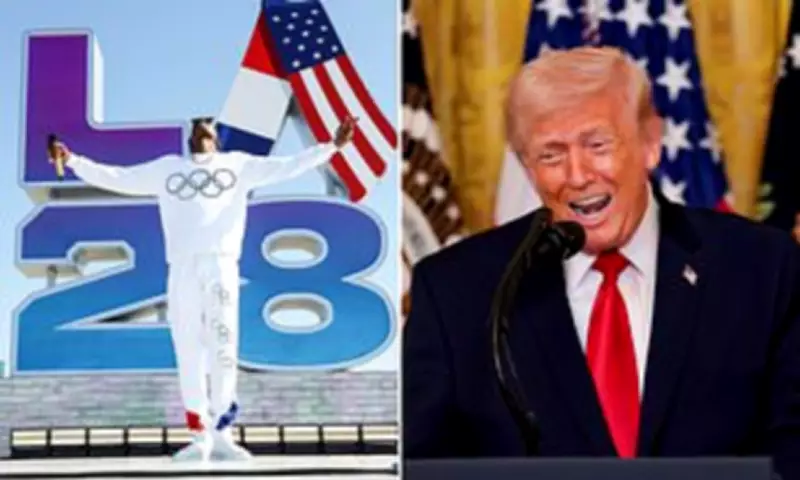
US Officials Face Olympic Ban Over WADA Funding Dispute
The World Anti-Doping Agency is considering unprecedented measures against United States government officials, including potential bans from attending the 2028 Olympic Games in Los Angeles. This dramatic escalation stems from the US government's persistent refusal to pay its annual dues to the global anti-doping organization, a protest that has spanned multiple presidential administrations.
Unpaid Dues Trigger Sanction Proposals
According to documents obtained by the Associated Press, WADA's executive committee will discuss a proposal next Tuesday that could lead to sanctions against countries withholding funding. The United States has accumulated approximately $7.3 million in unpaid dues since 2023, with $3.7 million outstanding from last year and $3.6 million from 2024. This financial standoff represents a bipartisan protest against WADA's handling of doping cases involving Chinese swimmers and other governance concerns.
The proposed rule would establish a three-tiered sanction system for nations failing to meet their financial obligations. Among the most severe penalties under consideration is the exclusion of government representatives from major international sporting events, including World Championships and Olympic & Paralympic Games. This could potentially affect President Donald Trump, Vice President J.D. Vance, and members of Congress who have approved substantial funding for security and logistics for upcoming events.

Historical Context of the Conflict
The funding dispute has deep roots in American skepticism toward the global anti-doping system, which intensified following WADA's handling of the Russian doping scandal preceding the 2014 Sochi Olympics. Tensions escalated further in 2024 when news emerged that 23 Chinese swimmers had been permitted to compete despite positive drug tests, with WADA accepting China's contamination explanation.
Both the Trump and Biden administrations have maintained the payment freeze, with the current administration demanding an independent audit of WADA's operations before releasing funds. The United States has historically been one of WADA's largest contributors, with government payments loosely based on the size of national athletic teams.
Practical Enforcement Challenges
Despite the dramatic nature of the proposed sanctions, significant questions remain about their practical implementation. Rahul Gupta, former director of the US Office of National Drug Control Policy and a former WADA executive committee member, expressed skepticism about the proposal's enforceability.
'I have never heard of a $50-million-budget Swiss foundation being able to enforce a rule to, for example, prevent the United States president from going anywhere,' Gupta stated. 'And the next question you have to ask is: How are you going to enforce it? Are they going to post a red notice from Interpol? It's ludicrous. It's clear they have not thought this through.'
Current ONDCP director Sara Carter reinforced the US position, stating: 'In spite of WADA's increasing threats, we continue to stand firm in our demand for accountability and transparency from WADA to ensure fair competition in sport.'
Timeline and Potential Impacts
The proposal, first introduced in 2024 but rejected following US lobbying, has gained renewed momentum. According to draft documents, the rule would apply to governments that have not paid dues by January 31 of the year following billing. There is no mention of retroactive application in the current proposal.
WADA spokesman James Fitzgerald emphasized that discussions about funding sanctions have been ongoing since 2020 and are not specifically targeted at the United States. 'This initiative is aimed at better protecting WADA's funding so that it can deliver on its mission to protect clean sport,' Fitzgerald explained. 'If WADA's funding is cut, it is ultimately athletes who will suffer.'
The timing of potential implementation remains uncertain. While the next meeting of WADA's Foundation Board isn't scheduled until November, correspondence with European authorities suggests the proposal 'could be implemented without undue delay' through alternative approval mechanisms.

Broader Sporting Implications
The funding dispute has potential implications beyond the 2028 Los Angeles Olympics. WADA officials have indicated that if adopted, the new rules would not apply retroactively to upcoming events including this summer's FIFA World Cup in the United States and the 2034 Salt Lake City Games. However, the ongoing conflict threatens to overshadow these major sporting occasions.
Representatives from the International Olympic Committee, FIFA, and the US Olympic and Paralympic Committee have not commented on how a potential ban on US officials might be enforced at events within American borders. The symbolic nature of such sanctions against a host nation's leadership presents unprecedented challenges in international sports governance.
As WADA seeks greater leverage in its funding collection efforts with a $57.5 million budget projected for 2025, the standoff highlights growing tensions between national sovereignty and global sports governance. The outcome of next week's executive committee meeting could set significant precedents for how international sporting organizations enforce financial compliance among member nations.





