

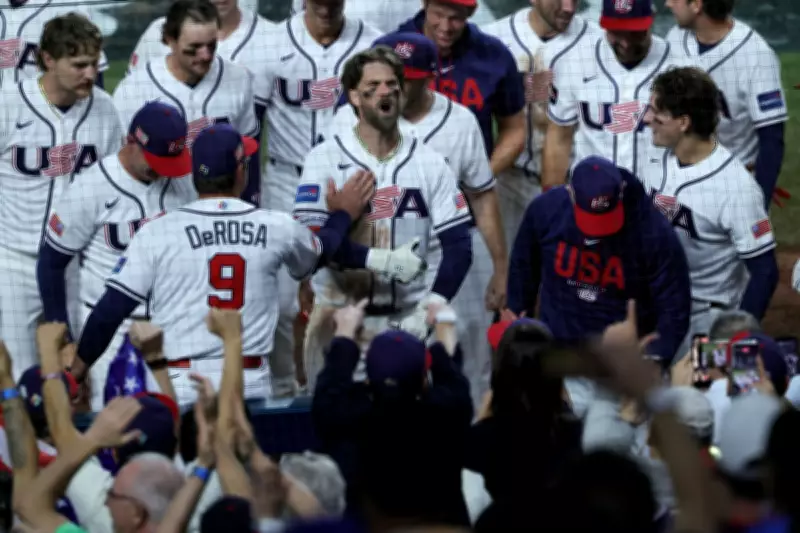
US Baseball Team's Militaristic Display Overshadows World Classic Final Loss
The United States tied the final against Venezuela before ultimately succumbing to a narrow 3-2 defeat in the World Baseball Classic championship match. This thrilling conclusion capped a tournament where other nations danced for joy, while Team USA opted for a performance of toy soldier bravado that starkly contrasted with the global celebration of baseball.
Isolationist Rhetoric Translates to Diamond Disconnect
On the morning of the final, a New York Times briefing headline underscored America's geopolitical stance with "America, alone," referencing strained alliances amid tensions with Iran. This revived America First ideology, echoing historical isolationist sentiments, manifested in Team USA's approach, nearly undermining a tournament that has blossomed into one of baseball's premier successes in its 20th year.
Venezuela's victory was a moment of national pride, marked by heart and dugout drums, while teams like Italy and the Dominican Republic showcased verve and underdog spirit. In contrast, the American cultural export during this global fiesta was an unsettling focus on war themes.

Performative Patriotism and Hollow Gestures
Team USA oscillated between expressions of boredom and adopting chickenhawk personas. Incidents included Cal Raleigh refusing to shake hands with a Mexican teammate while wearing a "Front Toward Enemy" shirt, and manager Mark DeRosa inviting a Navy SEAL to address the squad. After Paul Skenes' semi-final dominance, DeRosa emphasized servicemen and women as inspiration, framing the team's role in militaristic terms.
In the final, Bryce Harper's game-tying homer was celebrated with a military salute and a pointed gesture at his flag patch, evoking 9/11-era symbolism. However, these actions appeared hollow and performative, as America stood guard while others reveled in baseball's joy.
Political Backdrop and Sports Diplomacy
The Trump administration's speculative policies, such as annexation talks and regime changes, have complicated America's global image, challenging athletes' traditional role as "good soldiers" for freedom and democracy. A state department initiative leveraging NFL figures as cultural ambassadors highlights efforts to align sports with foreign policy goals, stoking tensions with allies like Canada.
This environment has forced athletes into a new space, where blind adherence to America First rhetoric risks exposure to hypocrisy. Many players, accustomed to clichés and unexamined patriotism, now face questions about their geopolitical alignment, as seen in the men's hockey team's White House visit amid controversies.
Legacy of the Tournament
The World Baseball Classic served as a vibrant block party, with Canada's quarter-final breakthrough and Italy's espresso-sipping semi-final run. Yet, the enduring image may be Venezuela's sunburst of joy juxtaposed against America's isolated, militaristic masquerade, painfully out of place in a celebration of the national pastime.






