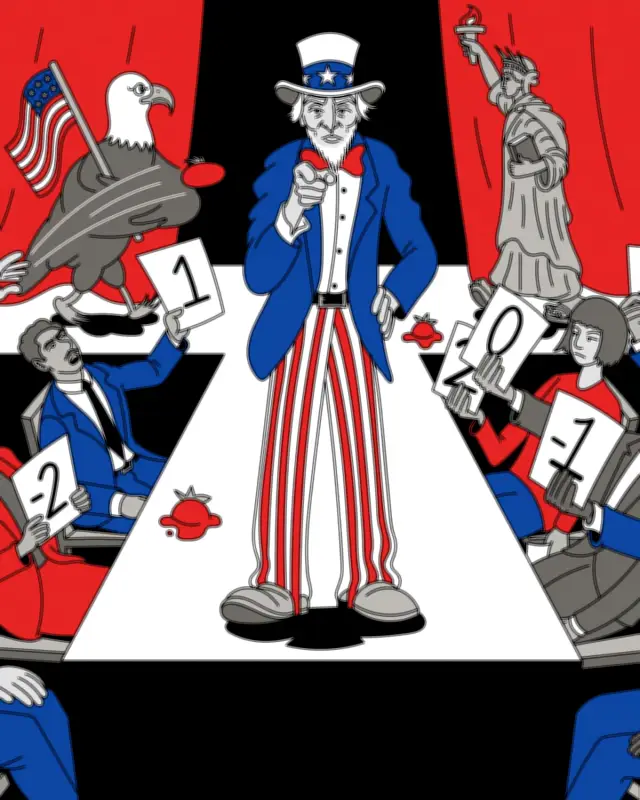
As the United States celebrates its 250th anniversary, a Guardian survey of correspondents around the world reveals a dramatic erosion of trust and admiration. Under President Donald Trump's second term, America is increasingly seen as a rogue power—unpredictable, bullying, and self-interested, even by its closest allies.
China: From Admiration to Rivalry
In Beijing, retiree Wen Feng, 60, calls the US a "troublemaker," a view reinforced by state propaganda. Yet Chinese elites have long sent their children to study in America. That has changed in the past decade, as Trump's tariffs and a growing perception of US gun violence and racism have dimmed the American dream. "Chinese people are very hardworking. We are willing to endure hardship to make money, unlike Americans," said Liu Cheng, 47. China's confidence has grown, and many now see the US as a declining power.
Mexico: Bullying and Betrayal
Mexico's relationship with the US has soured dramatically. Nearly 70% of Mexicans view the US unfavorably, up from 40% under Joe Biden. Trump's designation of Mexican cartels as terrorist organizations and pressure to allow US troops into Mexico have revived bitter memories of the 1846 invasion. Arturo Sarukhan, former Mexican ambassador to Washington, calls it "the worst moment in Mexico-US ties in modern history." Immigrant Luis Roberto García, deported after building a life in Texas, says the American dream has "disintegrated."

Iran: Complex Feelings of Admiration and Anger
In Iran, attitudes are fractured. Student Ali admires Central Park but feels betrayed by Trump, who promised help to protesters then unleashed a conflict that killed over 3,300 Iranians. Business owner Soroush now believes Trump was right to leave the 2015 nuclear deal, saying the regime "poured every dollar of sanctions relief into missiles and drones." But activist Pouran Nazemi says civilians are trapped between internal repression and external pressure, pointing to strikes that killed over 100 children at a school in Minab.
Ukraine: Ally No More
Ukrainian approval of US leadership has plummeted from 66% in 2022 to just 7% now, the largest drop in Gallup's 20-year polling history. The US still shares vital intelligence, but Trump has insulted President Zelenskyy, belittled Ukraine's war effort, and suggested it was Ukraine's fault for "getting into a war" with Russia. As novelist Andrei Kurkov wrote, "We are looking more to our neighbours in the West."
Israel: Deep Ties Strained
Israel handed the US a prime Jerusalem plot for a new embassy, but tensions are high. Trump's expletive-filled attacks on Prime Minister Netanyahu and the decision to negotiate with Iran have sparked fury. Nadav Haetzni wrote in Israel Hayom, "Help is not on the way. Only strength and self-reliance will ensure our survival." Yet Israel's air force flies American jets, and US air defenses are critical.
Canada: A Friendship Betrayed
Trump's talk of annexing Canada and imposing tariffs has turned a once-warm relationship hostile. A hat reading "CANADA IS NOT FOR SALE" went viral. Prime Minister Mark Carney called for a new global order, saying, "Many of our former strengths, based on our close ties to America, have become weaknesses." Trump dismissed the USMCA trade deal as "irrelevant."
France: Alarm at Trumpism
Only 8% of French voters see the US as an ally sharing their interests and values. Trump's approval rating in France is 75-80% negative. Yet, as Coralie, a Parisian who lived in the US, notes, "There's still only one place to scale a promising European startup."
Russia: Hopes for a Grand Bargain Fade
Russian attitudes toward the US improved after Trump's return, but enthusiasm waned as sanctions remained and Washington showed no sign of accepting Russia's core demands over Ukraine. Analyst Hanna Notte says, "It was as if Putin's project to undermine the world order was being blown apart by an even greater disruption." Putin still hopes for rapprochement, but many in Moscow now see the US as a key player in the enemy camp.

United Kingdom: Special Relationship in Crisis
A House of Lords report concluded that Britain "can no longer assume that the US will continue to guarantee European security." Polling shows Britons consider the US as much a security threat as China. The UK is now exploring a European defense alliance, with Ukraine potentially defending Europe in the US's absence.
Japan: Disappointment, Not Anger
Older Japanese feel betrayed by a longtime ally, while younger generations view Trump as a social media personality to laugh at. American cultural influence is waning: Hollywood's box office share in Japan fell from 70% in 2000 to under 25% in 2024. Producer Kosuke Takaya says, "Under Trump, the US can't be relied upon as it once could."
Cuba: An Abusive Relationship
A Cuban journalist compares ties to an abusive relationship: "Our free will doesn't exist. They gaslight us." Despite a 67-year US embargo and recent siege, some Cubans now suggest US intervention would be preferable. A fruit vendor told a reporter, "C'mon Marco, get it over with," referring to Secretary of State Marco Rubio.
India: Strategic Partner Turned Transactional
Indian student arrivals in the US slid 44% last year due to visa curbs and racism. Analyst Michal Kugelman says the Indian public has "a much darker view of the US." Defense cooperation continues, but trust is eroding. "Rebuilding trust will take time," he says.
Australia: Shared Values? Not at the Moment
Australians are "deeply saddened" by America's convulsion, says Emma Shortis of the Australia Institute. The US's cultural influence remains, but faith in the system snapping back is fading. Australia now questions its reliance on a protector that appears neither great nor powerful nor friendly.
South Africa: Bullied by a Protector
Trump's false claim of "white genocide" led to refugee status for white South Africans, baffling most citizens. China's popularity in South Africa overtook that of the US last year. Entrepreneur Ben Ntshangase says, "It feels like I'm being bullied by someone who's supposed to be the protector of everyone else."