It's a question that has puzzled scientists for centuries: what happens in the moments before death? Now, researchers from Baylor College of Medicine have made significant progress toward solving this mystery. In a new study, they discovered that the human brain can process complex language even when in an unconscious state induced by general anaesthesia.
Key Findings
Dr. Sameer Sheth, an author of the study, explained: 'Our findings show that the brain is far more active and capable during unconsciousness than previously thought. Even when patients are fully anesthetized, their brains continue to analyze the world around them.' This challenges existing notions about the role of consciousness and cognition.
Dr. Sheth added: 'This work pushes us to rethink what it means to be conscious. The brain is doing much more behind the scenes than we fully understand.'

Research Methodology
Consciousness is a fundamental component of cognition, but until now, what occurs in the brain during unconsciousness remained elusive. Writing in the journal Nature, the researchers noted: 'A central question in cognitive neuroscience is the extent to which complex information processing depends on conscious awareness. Prominent theories of consciousness propose that sophisticated pattern recognition, semantic interpretation and predictive processing all require conscious access. At the same time, evidence from psychology and neuroscience suggests that substantial processing can occur outside awareness.'
To investigate, the team recorded brain activity in patients under general anaesthesia during epilepsy surgery. They focused on the hippocampus, a region associated with memory. Patients were exposed to repetitive tones interrupted by occasional different sounds. Results showed that nerve cells in the hippocampus could distinguish these unusual tones, and this ability improved over time, suggesting learning occurs in the unconscious brain.
Language Processing Without Awareness
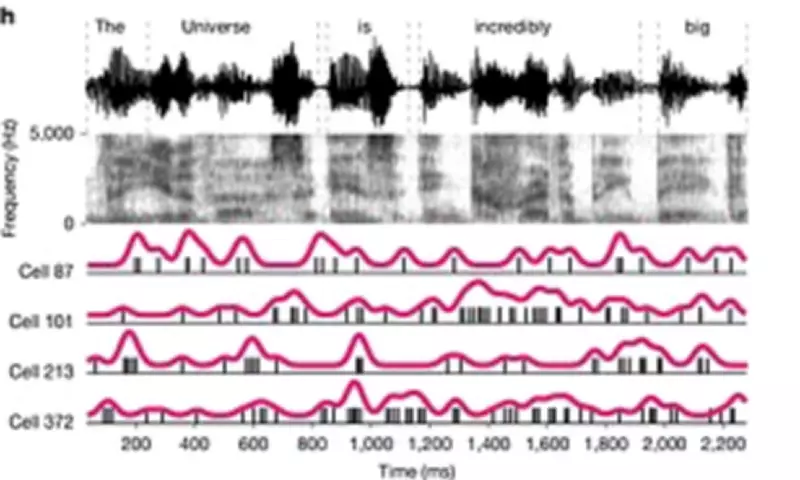
Next, researchers played short stories to the patients. Again, the hippocampus showed signs of real-time language processing, differentiating between specific nouns, verbs, and adjectives. Remarkably, the brains could even predict upcoming words in a sentence. Co-author Dr. Benjamin Hayden remarked: 'This kind of predictive coding is something we associate with being awake and attentive, yet it's happening here in an unconscious state.'
Overall, the findings indicate that language processing does not require consciousness. However, the researchers caution that more work is needed to determine if the brain can process language in the seconds before death. 'Anaesthesia has an uncertain relationship with waking life,' they wrote. 'Moreover, it remains unclear whether our findings will apply to other non-conscious states, such as sleep and coma.'
Related Research on End-of-Life Dreams
This study follows recent research on end-of-life dreams and visions (ELDVs). Experts from Azienda USL–IRCCS di Reggio Emilia surveyed over 200 carers of terminally ill patients. Common themes included vivid dreams featuring lost loved ones and symbols of transition like doors, stairways, and light.
What Does Dying Feel Like?
In October 2017, scientists reported that consciousness may continue after the body shows no signs of life, meaning individuals could be aware of their own death and hear medical staff pronounce it. Dr. Sam Parnia from New York University Langone School of Medicine studied cardiac arrest survivors and found they could recall conversations and visual details verified by medical staff. Doctors define death as when the heart stops beating, cutting off blood supply to the brain. Brain function halts almost instantly, with no brainwaves detected within 2 to 20 seconds. However, cellular death can take hours after the heart stops.