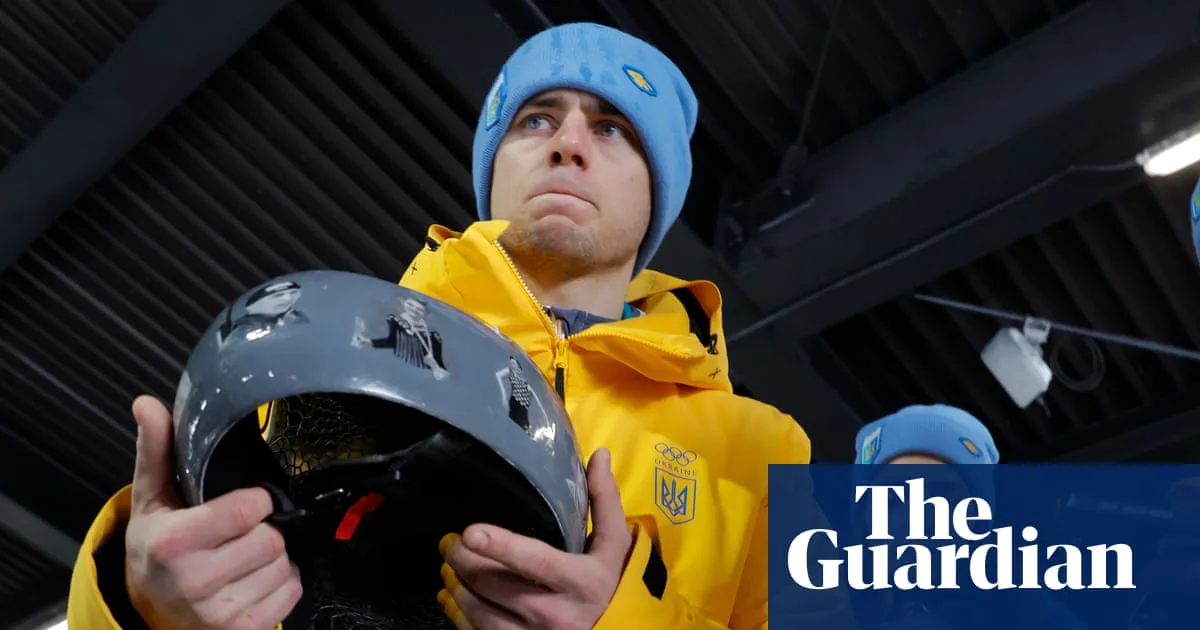
Vladyslav Heraskevych, a Ukrainian skeleton racer, has accused the International Olympic Committee of fuelling Russian propaganda after being barred from competing at the Winter Games for refusing to remove a helmet honouring Ukraine's war dead. The 27-year-old was informed minutes before his event that his accreditation had been rescinded, following a last-ditch meeting with IOC president Kirsty Coventry, who left in tears after failing to change his mind.
The helmet, featuring images of 24 athletes and children killed during Russia's invasion of Ukraine, was deemed by the IOC to violate its charter prohibiting political expression on the field of play. Heraskevych, who had a genuine chance of winning Ukraine's first medal, described the decision as a 'terrible mistake' that 'plays along with Russian propaganda'. He said: 'I was at many funerals... I want to honour them, and I want to honour their families.'
The IOC offered alternatives, including allowing the helmet during practice runs and a black armband in competition, but Heraskevych insisted on wearing it during the race. Coventry stated: 'No one is disagreeing with the messaging... But this is literally about the rules and the regulations.' The IOC later reversed its decision to strip his accreditation, allowing him to stay in Milano Cortina, but he remains barred from competing.

Ukrainian President Volodymyr Zelensky condemned the ban, saying it 'plays into the hands of aggressors' and praised Heraskevych's courage. 'Having courage is worth more than any medal,' he said. The IOC has maintained that the field of play must remain free from political expression, but Heraskevych and Ukrainian officials argue that the helmet is an act of remembrance, not politics.