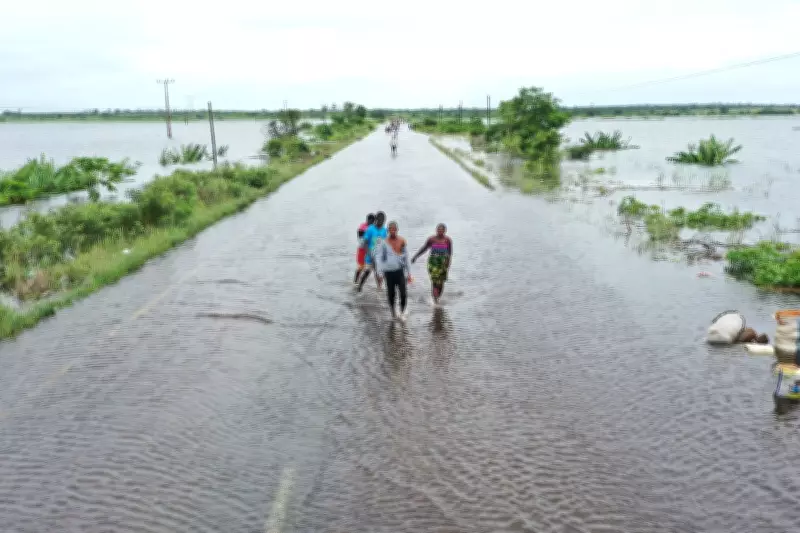
The UK government is betting on private investors to fill the gap in climate aid after sweeping cuts reduced the country's contribution, development minister Jenny Chapman has told The Independent.
Background on Climate Finance
A core tenet of the 2015 Paris Agreement is that rich countries must provide climate finance to assist developing nations that have contributed little to the climate crisis but suffer its worst impacts. The UK has historically been a leader, contributing £11.6 billion from the aid budget over five years from 2021/22 to 2025/26. However, recent weeks have seen dismay among development organisations as the amount of UK aid for climate finance is set to fall by almost 15 per cent, to £6 billion over the next three years.
Government's New Approach
Baroness Chapman said the government aims to supplement reduced grants by leveraging more money from private investors. “We are absolutely aiming to continue growing climate finance year on year,” she said. “We met the £11.6bn target, and we aim to go further by leveraging additional finance, even where there is less grant-based funding within that total.”

Critics point out that while renewable energy projects attract private investment, efforts to adapt countries to climate impacts struggle because they are public goods rather than profit-making ventures. The UK's new strategy follows years of criticism that rich countries are not doing enough. A major climate finance target of $100 billion by 2020 was missed by three years, and an updated target of $300 billion by 2035 is seen as insufficient.
Role of British International Investments
At the heart of the new strategy is British International Investments (BII), the UK's development finance institute. BII invests in projects with returns as low as two per cent, aiming to create a “halo effect” that encourages private financiers. Critics have targeted BII for focusing on investor-friendly deals, including luxury hotels. However, a new BII strategy aims to leverage £15 billion of new investment over five years, with £8 billion from BII and the rest from private investors. Some 40 per cent is expected to qualify as climate finance, with 25 per cent directed to least developed countries.
Baroness Chapman said the strategy reflects a “new UK approach to development”, moving “from traditional aid grants to long-term partnerships that bring investment, expertise and international finance”.
Concerns from Development Organisations
Others in the development space express concern that the investment-focused approach cannot cover all climate finance needs, especially adaptation. Last week, the UK notified the UN's Green Climate Fund it will halve its planned contribution from £1.62 billion to £815 million. International Development Committee chair Sarah Champion said: “The minister talks about aiming to grow climate finance year on year, but the sad reality is that we are reducing the UK’s contribution to the UN’s largest dedicated climate fund.”
High-profile economists have warned the private sector will struggle to fund adaptation. Avinash Persaud of the InterAmerican Development Bank said: “You cannot charge for a seawall because everyone benefits from it; it is a classic public good… the private sector is not funding adaptation.” Research from Mercy Corps found only three per cent of adaptation finance needs in developing countries are met by the private sector.
Catherine Pettengell, executive director at Climate Action Network UK, said: “Cutting climate finance, and deprioritising grant finance to countries and communities on the frontline of the climate emergency, is totally the wrong approach from this government.”
Defence of the Strategy
Baroness Chapman defended the approach, saying private finance can be mobilised for adaptation with grant finance catalysing investment. She also defended cutting the Green Climate Fund contribution, noting the UK remains one of its largest contributors and will continue to support its impact for vulnerable countries.