The UK Government has confirmed a new Income Tax allowance for pensioners, effective from April 2027, when the full New State Pension is set to exceed the £12,570 Personal Allowance for the first time.
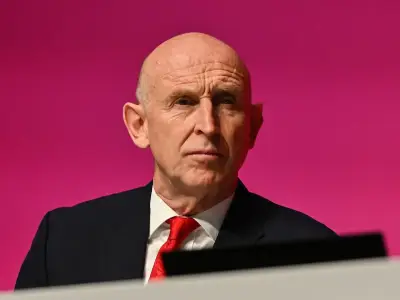
Chancellor John Healey announced the measure in the Autumn Budget on Wednesday, aiming to protect pensioners on the lowest incomes from small tax bills resulting from State Pension increases under the Triple Lock. The new Pension Tax Allowance will safeguard individuals whose total income does not exceed the full New State Pension, with relief gradually withdrawn for those with additional income.
The protection will apply for three tax years, from 2027/28 to 2029/30, as outlined in the Budget 2026 tax documents.
Who Qualifies for the New Pension Tax Allowance?
The allowance is designed to protect pensioners on the lowest incomes from small tax bills when State Pension payments rise above the standard Personal Allowance. Under the Budget proposals, the Pension Tax Allowance will be calculated using the basic rate of Income Tax, 20 per cent, and the difference between the full New State Pension and the Personal Allowance.
For pensioners whose total income exceeds the full New State Pension, the allowance will be gradually withdrawn at a rate of £1 for every £3 of additional income. This means some people receiving additional retirement income may still benefit from partial protection, although the amount of relief available will reduce as their total income increases.
New State Pension Payment Rates from April 2027
The annual State Pension uprating will be determined by the earnings growth measure of the Triple Lock, which was higher than September's Consumer Price Index (CPI) inflation rate of 3.5 per cent and the minimum guarantee of 2.5 per cent.
The 3.9 per cent increase will see people receiving the full New State Pension get almost £490 more over the 2027/28 financial year.
- Full New State Pension: Weekly £250.70 (from £241.30); Four-weekly £1,002.80 (from £965.20); Annual £13,036 (from £12,547)
- Full Basic State Pension: Weekly £192.10 (from £184.90); Four-weekly £768.40 (from £739.60); Annual £9,989 (from £9,614)
It is important to note that the amount someone receives depends on their National Insurance contribution record, and not everyone qualifies for the full rate. Additional State Pension elements, including SERPS and State Second Pension, will increase by 3.5 per cent in line with September CPI inflation rather than the Triple Lock.
How State Pension Is Taxed
Under existing rules, the State Pension counts as taxable income, although HM Revenue and Customs (HMRC) does not deduct tax before payments are made. HMRC calculates a person's Income Tax liability by combining their State Pension with other taxable income, including workplace or private pensions, earnings from employment, taxable benefits and income from savings or investments.
People whose total taxable income exceeds their available tax allowances may have Income Tax to pay. Where someone also receives a workplace or private pension, HMRC will usually collect tax due on their State Pension through an adjustment to their tax code. For people who do not have another source of income from which tax can be deducted, HMRC may issue a Simple Assessment tax bill setting out how much Income Tax is owed and when it must be paid.
The new Pension Tax Allowance will change the position for lower-income pensioners from April 2027 by reducing or removing small Income Tax liabilities that would otherwise arise. The standard Personal Allowance is currently £12,570 and is frozen until April 2031, meaning future increases in State Pension payments and other retirement income could result in more pensioners exceeding the tax-free threshold. The Personal Allowance applies across the UK, although Income Tax bands and rates on pension income differ in Scotland.
HMRC provides a free online tool to check whether Income Tax is payable on pension income, along with guidance on how the State Pension is taxed.
Future Changes to the Triple Lock
The UK Government has also announced plans to adjust the Triple Lock mechanism from April 2030, while continuing to protect the State Pension against inflation and maintain its value relative to average earnings over time.
Olly Cheng, Financial Planning Divisional Lead at Rathbones, welcomed the move but warned that younger generations should not rely solely on the State Pension to fund their retirement. He said: "Pensioners relying solely on the State Pension have precious little financial wiggle room, so protecting them from being dragged into the income tax net is welcome."
He added: "The recent decision to adjust the triple lock from April 2030 is a timely reminder that the rules governing the State Pension are not set in stone. The State Pension can provide the foundations, but your own pension and savings will determine how much financial freedom you have in retirement."
However, Kate Smith, Head of Pensions at Aegon, raised concerns about the different treatment of pensioners who have managed to build up additional retirement savings. She said: "Creating a more generous tax position for those who have not built-up additional retirement savings could be seen as unfair and adds a new layer of complexity to an already complicated system."
David Brooks, Head of Policy at independent financial services consultancy Broadstone, also questioned whether the tax system continued to provide sufficient incentives for lower-income workers to save towards retirement. He said: "With the State Pension reaching the personal tax allowance, policymakers will need to think more carefully about the incentives facing lower and moderate earners. For some workers, particularly those expecting to rely heavily on the State Pension, the value of additional pension saving becomes less straightforward than it once appeared."