

The $15 Million Distraction Overshadowing UFC 326's Marquee Main Event
Dana White's expensive acquisition of boxer Conor Benn has reignited the fierce debate over whether the UFC's top mixed martial artists are being adequately compensated for their services. As UFC 326 approaches, this financial controversy threatens to distract from what should be a celebration of two legendary fighters.
White's Controversial Investment in Boxing Talent
The UFC president made his priorities abundantly clear when he reportedly funneled $15 million into the pocket of Conor Benn, a prominent but not elite-level boxer. This staggering payment - which White neither confirmed nor denied when questioned by Piers Morgan - was for a single co-main event bout against Regis Prograis, a former two-time super-lightweight champion now past his prime and fighting outside his natural weight class.
These contract terms simply do not exist within the UFC structure, even for the organization's biggest, most accomplished, and most beloved stars. The disparity has created palpable tension throughout the MMA community as fighters witness unprecedented sums being directed toward boxing while their own compensation remains comparatively modest.

UFC Stars Voice Their Discontent
Fighter pay has always been a pressing issue in mixed martial arts, famously leveraged by Jake Paul in his criticisms of White. However, the UFC head's apparent undervaluing of his own employees has never felt more pertinent than in the wake of the Benn signing.
This development has prompted top UFC stars to speak out with unprecedented candor. "When you see somebody get paid that amount of money from the same person that's not paying you on this side, it's just disheartening," British welterweight Michael "Venom" Page lamented to Sky Sports.
Former bantamweight champion Sean O'Malley and Demetrious Johnson, who was notoriously underpaid during his record-setting flyweight title reign, similarly voiced their disbelief. Their collective frustration highlights a growing discontent within the UFC ranks.
Holloway and Oliveira: Undervalued Legends
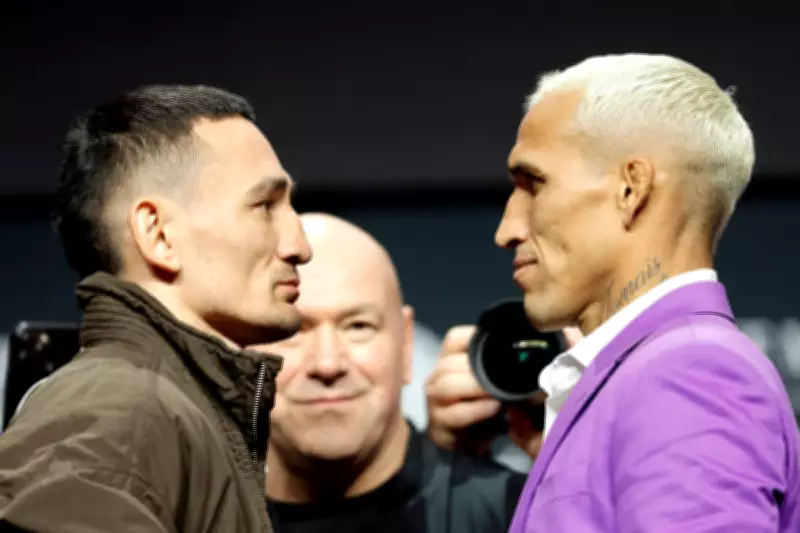
Max Holloway perfectly encapsulates what it means to be a fan favorite in the UFC. The former featherweight champion and reigning "Baddest Motherf***er" is a bona fide legend who has enthralled audiences at the sport's highest level for an entire decade. In the boxing ring, he would command tens of millions per appearance. In the Octagon, he earns barely a fraction of that amount.
Nor will his opponent, fellow icon Charles Oliveira, fare much better financially. The frantic submission artist assembled one of the most entertaining lightweight title runs in recent memory. Despite barely speaking English - typically considered essential for transcending American audiences - he is unequivocally adored by virtually the entire fanbase, demonstrating a special quality that few mixed martial artists possess.
This main-event matchup represents the kind of super-fight that makes combat sports enthusiasts salivate. It's a proper running back of a battle that fans felt almost robbed of when their first meeting nearly 11 years ago ended in first-round injury misfortune for "Do Bronxs." Both fighters have since proven that their best was yet to come.
Timing Creates Inescapable Distraction
Unfortunately, this highly anticipated bout arrives with an inescapable distraction thanks to its unfortunate timing - just one week after Benn's Zuffa Boxing signing and a mere day after Tom Aspinall was unveiled by Matchroom in Eddie Hearn's counter-strike to the UFC's boxing venture.
Holloway and Oliveira have given immeasurably to their sport, directly contributing to the profits of White and his company. They were established stars long before the Conor McGregor phenomenon boosted the UFC's mainstream profile, witnessing the organization's transition to mainstream acceptance before stamping their own marks at the pinnacle of the sport.
Now, at a time when matchmaking decisions often leave fans uninspired, both represent two of the sparingly few marquee attractions remaining who consistently draw massive audiences. As decorated UFC stalwarts and loyal "Dana White guys," they deserve financial recognition commensurate with their contributions.

The Financial Disparity in Stark Relief
This isn't to suggest that Holloway or Oliveira merit $15 million per fight, but their service unquestionably warrants a more substantial piece of the financial pie - the same pie that White has been feeding to Benn by the bucket load.
The pay situation has admittedly shown some improvement recently, thanks to the UFC's new broadcasting agreement with Paramount. Fighter bonuses have doubled from $50,000 to $100,000 - a positive step forward, with TKO (the UFC's parent company) president Mike Shapiro insisting they take the "increase in fighter pay very seriously."
Yet these improvements represent mere drops in the ocean, particularly when White has now demonstrated his capacity to pay mammoth salaries when sufficiently motivated and when he can secure backing from Turki Alalshikh and Saudi entertainment company Sela. While MMA salaries are typically kept confidential, it's believed that the career-high paydays of both Holloway and Oliveira are unlikely to have exceeded even one-fifth of what Benn has been guaranteed for his inaugural Zuffa appearance.
Collective Action Needed for Meaningful Change
With Benn's compensation package grotesquely disproportionate to that of his MMA counterparts, Holloway recognizes that fighters must unite and recognize their collective value if the pay issue is ever to be genuinely resolved. "The main thing I would say is know your worth, know what it is. It's going to suck. At the end of the day, hold your ground. You should know what your worth is," Holloway emphasized on Demetrious Johnson's YouTube channel.
He also recalled the instance when heavyweight contender Derrick Lewis undermined Jon Jones' negotiations for a $10 million deal to fight then-champion Francis Ngannou by offering to step in for just one-tenth of what Jones was requesting. "We cannot be doing that, brother. You needed to almost stand in Jon's corner," Holloway remarked pointedly.
The response from fighters must be collective and coordinated. For too long, questions about fighter compensation at UFC press conferences have been routinely brushed aside, with even the most influential stars previously unwilling to rock the boat by criticizing the organization's pay structure. This latest financial slap in the face should represent a definitive turning point.
Proving Their Worth in the Octagon
While no immediate changes will result directly from Saturday's event, what Oliveira and Holloway can accomplish is delivering an absolute barnstormer of a fight. They have been proving their worth for years, and in the UFC's spiritual home of Las Vegas, they can redirect focus back to the athletes themselves, demonstrating just how skewed White's financial priorities have become - right under his own nose.
These two warriors have earned their opportunity to showcase why they deserve greater respect and compensation. Their performance at UFC 326 may not immediately alter the economic landscape of mixed martial arts, but it will certainly remind everyone watching why these athletes merit far more than they currently receive.





