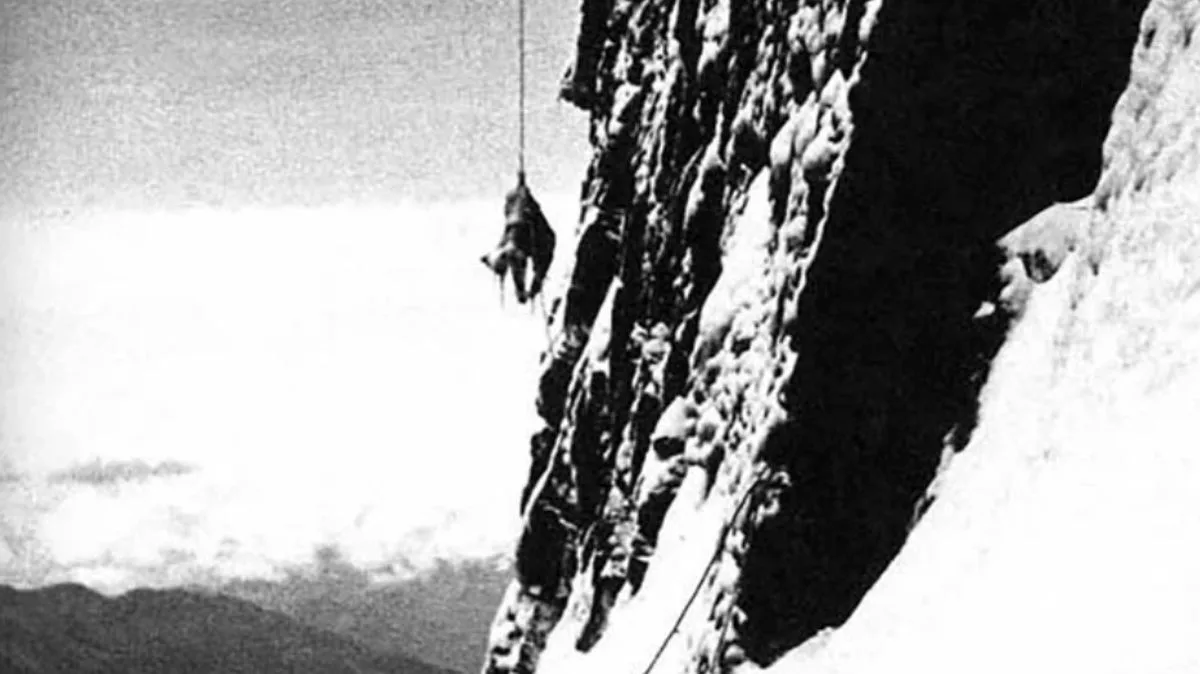
In one of mountaineering's most harrowing tragedies, a climber was left dangling just within reach of his rescuers for two days on the North Face of the Eiger, known as 'Die Mordwand' (the Murder Wall). The 1936 disaster claimed the lives of four climbers and remains a chilling tale of survival and loss.
Toni Kurz, born in 1913 in Berchtesgaden, Bavaria, was a skilled mountaineer who turned his passion into a profession. After an apprenticeship as a metalworker, he joined the elite German mountain infantry in 1934. His climbing partner, Andreas Hinterstoisser, shared his ambition, and together they tackled new routes across the Alps.
In July 1936, Kurz and Hinterstoisser, along with Austrian climbers Willy Angerer and Edi Rainer, attempted the first ascent of the Eiger's North Face. Despite poor equipment, they made progress, with Hinterstoisser executing a famous diagonal traverse now known as the Hinterstoisser Traverse. However, a fatal mistake—removing the rope after crossing—left them unable to retreat when a storm hit.

Angerer was injured by falling debris, and as the storm worsened, Hinterstoisser slipped to his death. Angerer died from exposure, and Rainer fell while trying to lower him. Only Kurz remained, clinging to the wall as villagers at Kleine Scheidegg watched. Swiss guides attempted a rescue, but Kurz had to cut away the bodies of his companions to descend.
After hours of effort, Kurz realised his rope was too short to reach the rescuers. Exhausted and hypothermic, he uttered his final words: 'I can't go on.' He died within arm's reach of help. The tragedy stunned Europe and inspired Heinrich Harrer's book 'The White Spider'. Features on the mountain now bear the climbers' names, including Hinterstoisser Traverse, Rainer's Overhang, and Kurz's Last Stand.