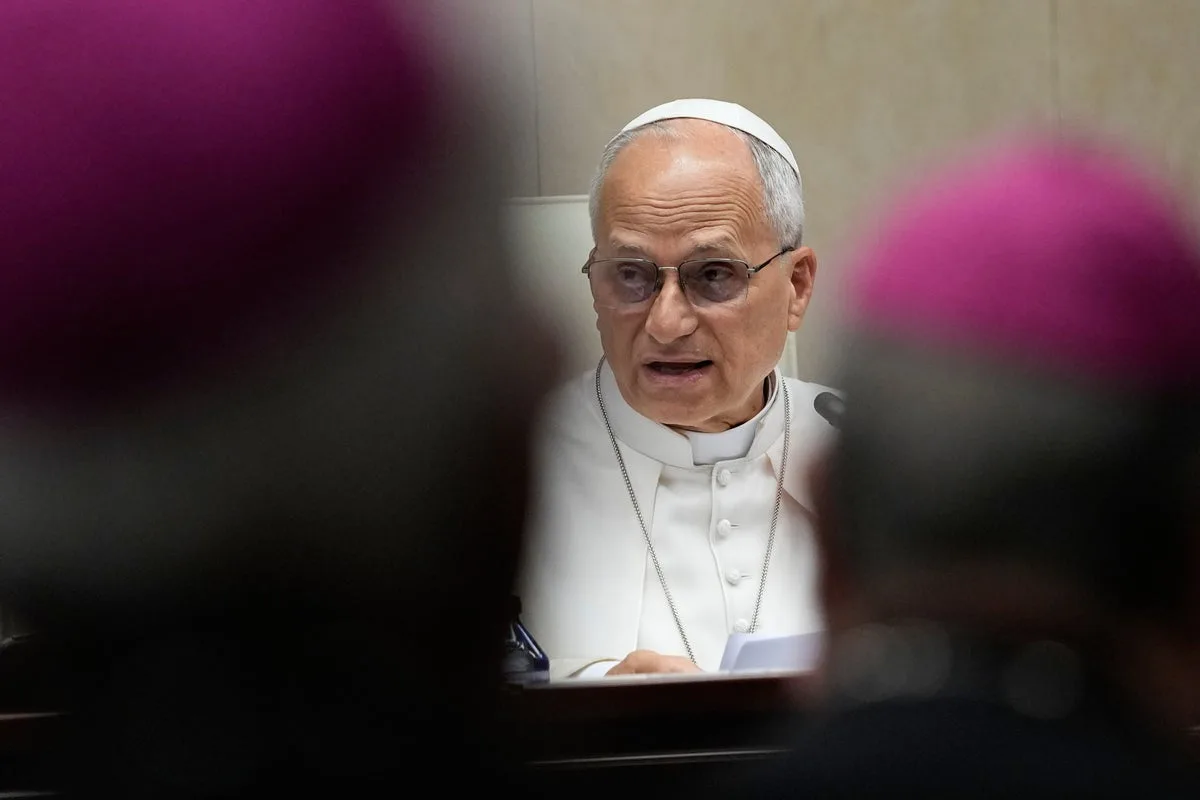
Spain is addressing sexual abuse within the Catholic Church with a new reparations program, approved by the Spanish bishops conference and the government months before Pope Leo XIV's planned visit starting Saturday. The program gives victims a year to apply, with 420 people having done so far, and notably gives the government the final word on payouts.
Background of Abuse and Reckoning
In the 1970s, in a devoutly Catholic Spain still ruled by dictator Francisco Franco, Paula Alonso-Pimentel was sent for catechism at age 8 to a religious school in Valladolid. There, she says, a Marist priest sexually abused her for a year. More than 50 years later, she is seeking reparations. Spain's long-delayed reckoning with sexual abuse within the Catholic Church entered a new phase this year with the launch of a reparations program for cases involving accused clergy members who have died or whose alleged crimes are too old to be prosecuted.
Across the world, clergy sexual abuse and cover-up scandals have rocked Catholic dioceses, damaging the Church's reputation. In Spain, some victims have been reassured; others remain skeptical, arguing that the window for reparations claims is too short and questioning whether it can succeed without enforceable, transparent payments.
Alonso-Pimentel's Story
Alonso-Pimentel shares some skepticism but hopes the abuse will finally be addressed. "It must cost them, the Church," she said. "It must cost them because this cannot come for free." For years, she buried the memories. After Pope Francis convened a global summit in 2019 on clerical abuse, she wrote to the Marist order seeking details about the priest. All she received was his name. When the Spanish church launched its own extrajudicial program, she did not apply, deterred by the institution's attitude. She hopes the new church-state model will be more equitable.
The New Reparations System
The new system calls for Spain's ombudsman to review each case through an independent team of experts and propose compensation—symbolic, psychological, or economic—that the church will then assess. If no agreement is reached, the case goes to a joint committee with representatives from the church, the ombudsman's office, and victims groups. If that committee can't agree, the ombudsman has the final word.
With El País' creation in 2018 of a database of clergy sexual abuse cases, Spain began confronting a legacy of abuse by priests and cover-up by bishops. In 2023, the ombudsman delivered an 800-page report estimating hundreds of thousands of possible victims. Spain's bishops rejected the estimate, saying its own investigation had uncovered 728 sexual abusers within the church since 1945, with 60% of alleged perpetrators now dead.
Church's Previous Efforts
In 2024, the bishops unilaterally created a system to assist victims on a case-by-case basis, months after the government announced its intention to force the church to compensate victims. The church's in-house system lacked outside oversight, leading many victims like Alonso-Pimentel to avoid it. "You can't be a judge and a jury in your own case," she said. Earlier this year, the bishops conference said it had paid around 2 million euros to victims but acknowledged the utility of the new state-church model. "It's opening a new door for the process," said Josetxo Vera, the conference's communications director.
Concerns and Criticisms
Some worry the new program shares weaknesses with the church's previous effort. A key concern: there is no scale for reparations based on severity of abuse, with cases evaluated individually. Also, it isn't legally binding. "I see this protocol as being quite fragile," said Anne Barrett Doyle, co-director of Bishop Accountability. "It has a very short time frame. It has no matrix to establish minimum awards."
Ahead of Leo's visit, Spanish activist Miguel Hurtado has cited his own abuse case to highlight potential weaknesses. More than two decades ago, Hurtado says a monk sexually molested him when he was a 16-year-old Boy Scout at the Montserrat Abbey. The monastery acknowledged multiple cases of abuse by the monk but did not assume responsibility to formally compensate victims. Hurtado is disappointed that Leo will visit the monastery despite the allegations. He fears the new system could leave many victims in the dark. "The problem is that it's built on sand," Hurtado said.