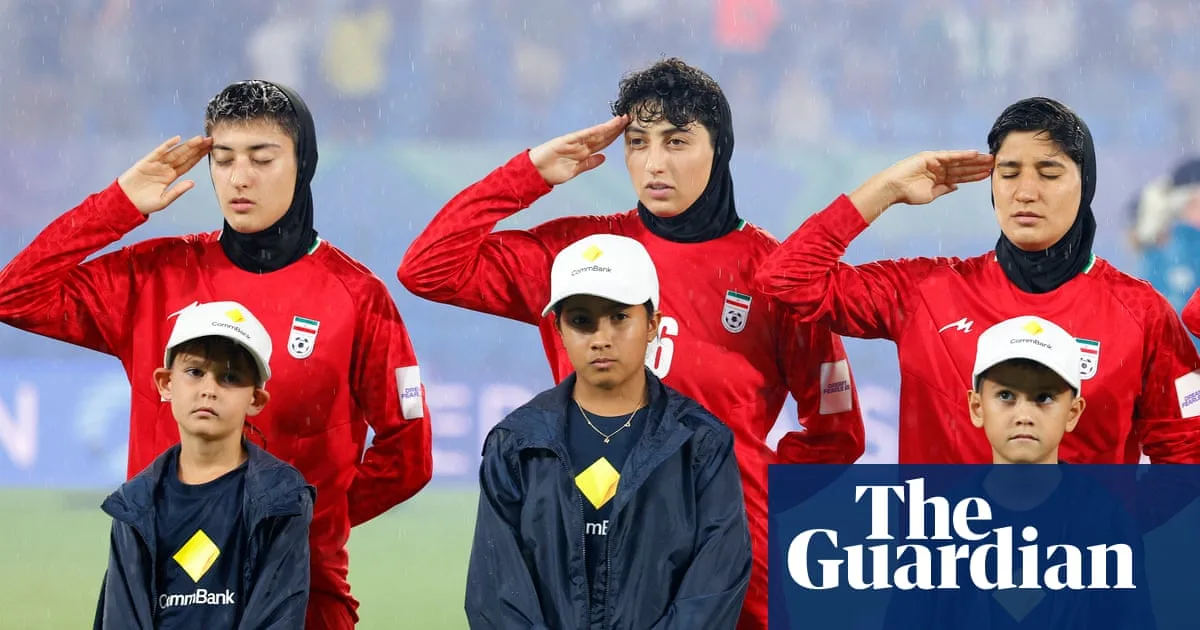
Five members of the Iranian women's football team have sought asylum in Australia after their participation in the Women's Asian Cup on the Gold Coast. The players, who were staying in a hotel under supervision, managed to slip away from their handlers and are now under police protection. Their decision comes amid fears for their safety if they were to return to Iran, following a state-linked commentator labelling them 'wartime traitors' for failing to sing the national anthem in an earlier match.
The team's situation is complicated by the volatile Middle East context, with US and Israeli missile strikes affecting their home country. Players who choose to stay in Australia risk severing ties with family and friends, who may face repercussions under the Iranian regime. Daniel Ghezelbash, director of the Kaldor Centre for International Refugee Law at UNSW, noted the urgency, as Iranian officials would likely seek to expedite the team's departure from Australia.
Protesters briefly blocked the team bus after their final match, signalling for help. Some players appeared to return the gesture, but it remains unclear what each individual wants. The president of players union Fifpro for Asia, Beau Busch, confirmed his organisation is working with the Australian government, Fifa, and the Asian Football Confederation to protect the players' human rights. He emphasised the need for the players to have agency over their next steps, whether staying or returning.

The Liberal opposition has called on the Labor government to provide asylum if requested. Human rights experts argue Australia has an obligation under the Refugee Convention to protect the players from returning to a country where they face persecution, even if formal asylum claims have not been lodged. However, the players' monitored status may hinder their ability to initiate such claims. Legal experts are also considering whether exit trafficking laws apply, as coercive or deceptive means to remove the players from Australia could constitute an offence.