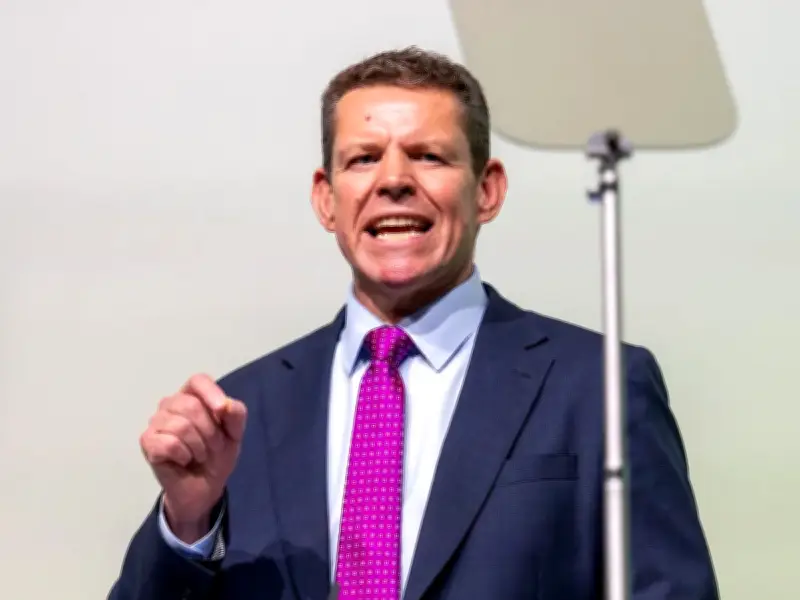
First Minister of Wales Rhun ap Iorwerth delivered a message of hope in his first Plaid Cymru conference speech as party leader, telling the gathering: “This is not as good as it gets for Wales.”
The Ynys Mon MS addressed the event at Venue Cymru in Llandudno, saying the party’s victory in May’s Senedd election had been “rooted in two key values - hope and trust,” adding, “hope and a belief that things could get better.”
He spoke of many of the social, economic, political and public services challenges Wales faces, saying: “I know that this is not as good as it gets for Wales.... Today, we offer a new hope for Wales.”
New Deal for Wales
In a speech peppered with soaring rhetoric, he spoke of empowering communities, helping people with the cost of living, addressing the destructive legacy of complacency on climate change and tackling the poison of the far right. He promised “a new deal for Wales; a new ambition for Wales,” telling the conference: “A new dawn has broken and in that new light, we have a new Wales to build.”
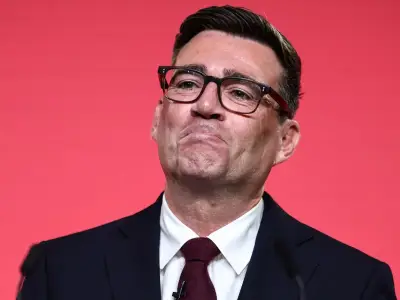
The First Minister told the conference he had asked Westminster leader Andy Burnham for what he called A New Deal for Wales, which would include more funding, extra powers over rail, policing and justice, welfare and the Crown Estate.
He said: “I do believe the new Prime Minister and I both want to have a constructive and positive relationship. I’ve looked him in the eyes and said do not undermine Wales as a nation... do not bypass our Senedd. And he looked me in the eyes and promised he would not. I will hold him to that. Wales will hold him to that. So today I can confirm that I have written to the Prime Minister with a formal ask - A New Deal for Wales.”
He said this would “redress the historic unfairness of our fiscal and constitutional settlement and to put Wales on an equal footing with Scotland as a bare minimum.”
Devolution and UK relations
The First Minister did not use the word independence once in his speech, however he spoke of his desire to see the nation have greater autonomy. Referring to the Senedd election, he said: “That election wasn’t the end of a campaign, but the beginning of our work to give flight to a nation whose wings have been clipped for far too long. In May, the stars aligned in Wales, Scotland and the north of Ireland. The UK constitution now sits within a very different constellation. Three leaders of government, three countries with different journeys, but a shared principle binding us together.”
Mr ap Iorwerth met the first ministers of the UK’s other devolved nations - SNP leader John Swinney, and Sinn Féin vice president Michelle O’Neill in Cardiff to declare that “Westminster’s time is coming to an end”.
He told the conference: “We’ll seek practical ways of working together on issues that matter to the people that we serve, finding common ground where we can. But that shared principle between us is a rather simple one - to ensure that it is the people of our nations who decide their own future.”
Yet he could promise nothing more than his “hope” that Mr Burnham would listen. He said: “It remains my hope that the Prime Minister will listen in a shared spirit, and that he’ll see that the respect agenda between Welsh and UK Governments must work both ways. If he fails, Wales will know again that our best interests will never be served by Westminster, and that it matters little whether who lives in Number 10 Downing Street is an Evertonian or an Old Etonian.”
Climate, budget and health
During his speech, he paid tribute to the firefighters who were stretched to breaking point this summer to tackle wildfires. He said: “Let me pay tribute to those extraordinary fire services whose resilience in the face of weeks of unrelenting pressure left us all in awe. Twelve-hour shifts, often more. Thirty plus degree conditions before even facing the flames. Exhaustion and exasperation. Bringing one fire under control only for another to break out elsewhere. We can’t thank them enough, or the armed forces and other agencies who supported them.”
He continued, pledging action on climate change and saying: “When it comes to addressing the climate crisis and all its consequences – whether direct or indirect – we will pay a heavy price for inaction. That’s why I have convened a summit this month bringing together fire services and other key partners to discuss how we can improve our resilience in a changing world.”
Yet he admitted “difficult decisions” would have to be taken as part of the budget setting process for the coming year. He said: “We face real-terms reductions in funding from the UK government, higher inflation, continuing economic uncertainty, and significant spending pressures across many areas of our budget. It will be a tough budget. There will be difficult decisions.” And he warned his party would have to compromise to win the support from opponents in the Senedd that it needs as a minority administration.
He said: “The budget arithmetic requires us to be disciplined and resourceful. The Senedd arithmetic demands a serious and collaborative approach with other parties – something I have promoted and sought to adopt from the outset. We’ll have to drive efficiency, improve productivity and find savings where we can; through consolidating and streamlining services, avoiding duplication and focusing on outcomes. Because tackling inefficiencies is something that can and must be done, free of the damaging approach of the parties on the right.”
On health, the First Minister insisted action was already being taken to tackle waiting lists. He said: “There is little left unsaid about our NHS, but one thing bears repeating – too many aspects of the service are unfair on patients and on our brilliant staff, unsustainable for the future, and this government is determined to change that. My colleague [health minister] Mabon ap Gwynfor has taken on one of the hardest jobs in government, and from day one, he showed a determination that this Minister would do things differently on health. Within weeks of taking office, we had announced a £145million package to help bring down waiting lists. But it’s not just how much money, it’s what you do with it. There’s new thinking on diagnosis and treatment. We’ve established an Expert Steering Group to guide us on establishing up to ten new surgical hubs. And we’re putting preventative health at the heart of our agenda, seizing the opportunities which lie in preventing ill-health before it starts or progresses, and in narrowing the wide gaps in health outcomes within communities.”
He also attacked the UK government on rail spending, saying: “Wales is still getting only 1% of rail investment. The Secretary of State for Wales has the audacity to accuse us of sitting on our hands when his Labour UK Government is sitting on the billions owed to Wales from the injustice of HS2, just like the Conservatives did. That’s why we’re demanding funding to be brought forward now – not the 2030s, not future Spending Reviews – to accelerate delivery of the rail projects they’ve promised, and to allow us to invest in our transport infrastructure.”