Almost five months into his job as First Minister, Rhun ap Iorwerth is not shy about the fact he is Wales' first nationalist leader, holding a staunch conviction that he is the only voice to stand up for Wales. In his view "no Westminster leader will genuinely prioritise Wales".
Mr ap Iorwerth made the comments as he prepared to return to Llandudno, the place where he first celebrated May's historic election win. It is where he heard his own name announced as one of those elected, before travelling down to Cardiff for the moment he'd spent years dreaming of – a hero's welcome as Wales' new leader.
Conference speech to set out 'new deal for Wales'
Now the Bangor Conwy Mon MS is preparing to deliver a speech at his party's conference – their first as a party in government – where he will set out his argument that he believes will prove he is the man who cares about Wales. He will call on Westminster and the new Prime Minister Andy Burnham to deliver "a new deal for Wales".
Reflecting on the first five months in the job, the former BBC journalist said that while nothing could have fully prepared him for taking on the biggest job in the country, after decades watching Welsh politics so closely nothing has come as too much of a surprise. It's still "very special" to think he and his team have the opportunity to mould the future of Wales and allow the nation to reach its potential.
Independence stance and criticism
As the above might suggest, the Plaid Cymru leader has not shied away from the fact that he is Wales' first nationalist leader, who, one day, would like to see Wales stand on the world stage as an independent nation.
In the run-up to the Senedd election on May 7, it seemed clear Plaid Cymru wanted to offer reassurance to the many who lent his party the vote that landed them a historic victory that, while he supported independence, it would not be the overarching priority for his government in its first Senedd term. He repeatedly committed to not pursuing any independence referendum in the parliamentary term.
While he has not moved away from these assurances, independence is a topic that has repeatedly reared its head during these first few months. While it is perhaps to be expected – he has never shied away from supporting Wales' right as a nation to self-determination – a lot of it is an easy stick for his opponents to beat him with.
This attention has not all been unwarranted, however, with plenty of Mr ap Iorwerth's opponents arguing it is coming from the man himself. Two weeks ago, he hosted the leaders of the SNP and Sinn Fein at a Cardiff hotel for a conference that some journalists had suggested was a plot for the "break-up of the United Kingdom".
Instead, less dramatically than that, they signed a memorandum of understanding which states the common theme they said they agreed on – their right to self-determination – something that wouldn't be a surprise to anyone who had paid attention to their politics before.
However, Mr ap Iorwerth and the other party leaders had called the UK media to watch – and watch they did. It was clear that he was in a different place to the other leaders – he knows that support for independence is lower here and has said it is something he wants to bring Wales on a journey towards. But that meeting grabbed headlines and allowed critics to present him as part of a cabal to break up the UK.
He handed an easy attack line to his opponents who, when he tries to talk about health, education, poverty, or jobs, will throw back at him that he is distracted by the independence question – something they consistently have done since returning to the Senedd.
But does he regret it? He says no. "I have always been of the opinion that no Westminster leader will genuinely prioritise Wales," the Plaid Cymru leader said. He added that he sees himself as the only party leader who believes in Wales.
Devolution demands and budget outlook
In a letter to the PM ahead of the conference, Mr ap Iorwerth outlined his hopes for this "new deal", calling for greater devolution – of the Crown Estate, of policing, and justice – and the same tools "already available to Scotland". When asked what would be the one thing he wanted from Mr Burnham most, he said he wouldn't "settle" for just one thing.
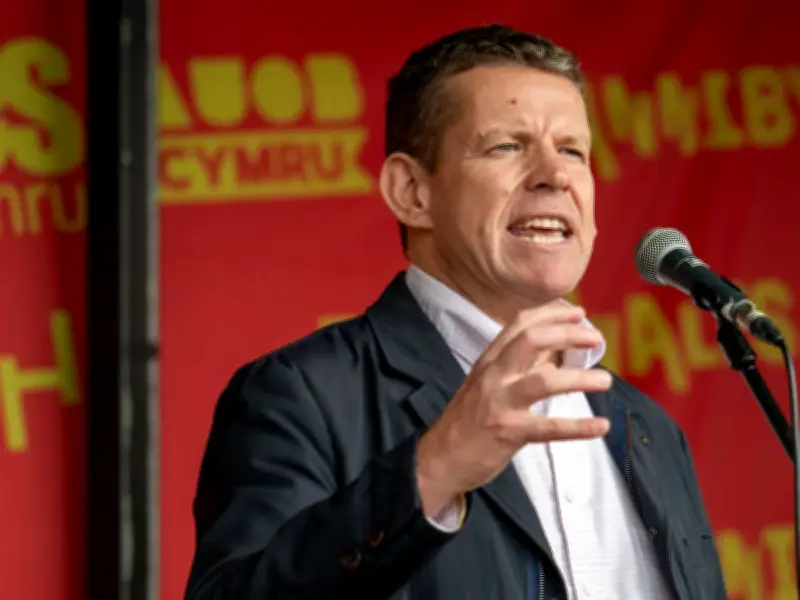
Mr ap Iorwerth has been criticised by his opponents for 'focusing on independence' (Image: Senedd Cymru). It's safe to say no one can expect Mr ap Iorwerth to stop, in his words, sticking up for Wales and making the case that the Westminster model is doing the people of Wales a disservice.
In a full interview, he also spoke about the defection of Reform MS Sarah Cooper-Lesadd to Plaid Cymru and whether he would be open to more members crossing the Senedd chamber; his priorities for devolution and what he would like to see from Andy Burnham; the upcoming budget; and offered a reflection on his first five months in office.
Interview highlights
Asked whether it was right to hold the conference with Sinn Féin and SNP leaders, Mr ap Iorwerth said: "Is it right for the leader of Plaid Cymru to speak with other like-minded people about how we can work together? I absolutely think it is, and the response has been really positive to that. I don't believe in Wales being insular, and we look to friends and colleagues elsewhere for where we can cooperate with them."
On independence, he said: "I'm the only party leader in the Senedd who genuinely believes in Wales and, as I'll be saying in my conference speech, I have a vision for the future of Wales. First and foremost, my work is to deal with the issues right now that people are facing within their everyday lives: the long waiting lists, the poor education standards, poverty that is blighting too many lives, the lack of economic opportunity, the opportunity that we have to roll out our childcare offer."
On devolution, he said: "What we're saying very clearly is that there are a package of things that UK Government needs to do to show that it is serious about understanding what devolution is to Wales and how we need to enhance that devolution moving forward. We have to have a fundamental fairness when it comes to the way Wales is funded. Labour criticised us this week for somehow sitting on our hands on a number of issues; they are literally sitting on £5bn worth of money that's owed to Wales because of HS2.
"When they were in opposition, they said the Conservatives should pay up; well, now we say Labour should pay up. So we need to see movement on that. We need the fiscal flexibilities that allow us to spend money in a way that works for the people of Wales. It's about giving us the powers over our natural resources; it's about devolving the Crown Estate to make that happen; giving us the rights to mould the future of policing and justice as every independent assessment has pointed to needing."
On the budget, he said: "Budgets are a fundamental part of the structure of the way Wales is governed. It happens every year. It has happened every year since the dawn of devolution, and what governments have to do is try to find ways of getting those budgets passed. Budgets have always been passed. We approach it in an open and transparent way, in seeking to find common ground with other parties to do what we all, not just the party of government, need to do for the people of Wales."
On his first five months, he said: "It's an incredible honour to be in this role. It is an incredibly intense job, full of opportunity. We had a plan which stood us in good stead. We had actions that we were ready to take immediately, we hit the ground running, and in doing so, my feet haven't touched the ground in the last five months. It's about doing things every single day. And it is really embracing the opportunities that come with the job.
"It's not just me, it's me and a brilliant team of ministers, and a great team of campaigners and Senedd members all geared towards what we have always been here to do, which is to build a nation and to allow Wales to reach its potential. To be in the position where we're leading the Welsh Government and able to mould that future for Wales is something very, very special indeed."
On whether anything surprised him, he said: "Anything that surprised me? I mean, on one hand, I have watched Welsh politics and politics in general for decades as a journalist and as a member myself, so on one hand you have an idea what it is that a First Minister is able to do. On the other hand, nothing can quite prepare you for becoming First Minister. But the preparation was around what we wanted to do, the careful thinking about what we could achieve for Wales. Turning that then into action has been something that is a huge honour. We're doing this for Wales, not for us, after all."