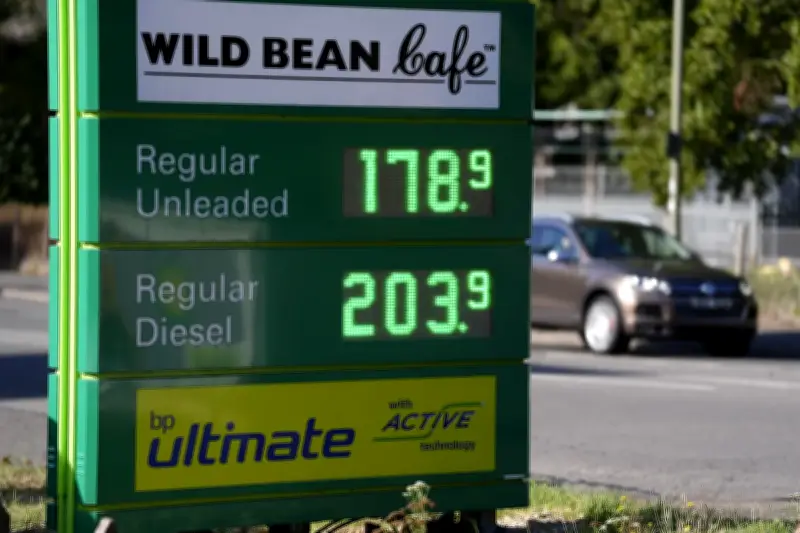
Average diesel prices have topped £2 a litre for the first time, reaching a new record high, as the Government moved to reassure the public that supplies remain robust.
Transport minister Keir Mather said people should not be concerned about shortages, citing the "inherent resilience" built into the system and the UK's diverse range of supply sources.
Record high prices
The RAC said average prices are now 200.01p a litre. The previous record was 199.09p, set in June 2022 following Russia's invasion of Ukraine.
The price surge comes as Britain joined crisis talks with Brussels to discuss whether to release fuel stocks amid rising costs. The US has pressed European countries to use their reserves, with treasury secretary Scott Bessent saying they should "immediately" begin to do so.
Earlier, US President Donald Trump said he "may" call for Europe to draw down on their stores.
Supply and imports
The UK imports nearly 55% of its diesel, with the US providing nearly a third of that amount. Diesel prices have soared in recent months due to disruption to global supplies caused by the US-Israeli war against Iran and the ongoing conflict between Russia and Ukraine.
Mr Mather told Sky News on Friday: "I want to reassure people this morning that the United Kingdom has got a diverse range of supply when it comes to diesel."
He added: "We have resilience built into our system for that reason. We are working very closely with our US counterparts to stress the importance of that relationship, and the importance of sustaining flows of diesel around the world, but also working through international fora in the International Energy Agency and partners in Europe from whom we get a proportion of our diesel imports as well."
He also noted that the freeze in fuel duty remains in place.
Impact on households
RAC head of policy Simon Williams said the price rises are showing "no signs" of slowing down. He said filling an average family car now costs £110, almost £32 more than at the start of the US and Iran war.
He said: "This will be very challenging for households and companies that drive a lot of miles, from commuters, haulage and delivery firms, businesses with large fleets all the way through to sole traders."
As a member of the International Energy Agency, the UK is required to keep oil stocks equal to at least 90 days of net oil imports in reserve, which can be used to respond to severe supply disruptions.
If Washington were to ban diesel exports to prop up US supplies, Britain would have to compete with other countries for alternatives. EU member states are set to meet the European Commission on Friday to discuss the issue.
Mr Mather was asked on LBC whether he agreed with Mr Trump about Europe using reserves, and said: "We're working closely with our European partners on diesel supply. It means we're continuing those discussions about how we retain our resilience and robustness of our supply chains. President Trump is welcome to make those comments, we've got to focus here at home about ensuring that we have diversity of supply into our economy. Our European partners are absolutely central to that, particularly the flows of diesel coming through the Netherlands."