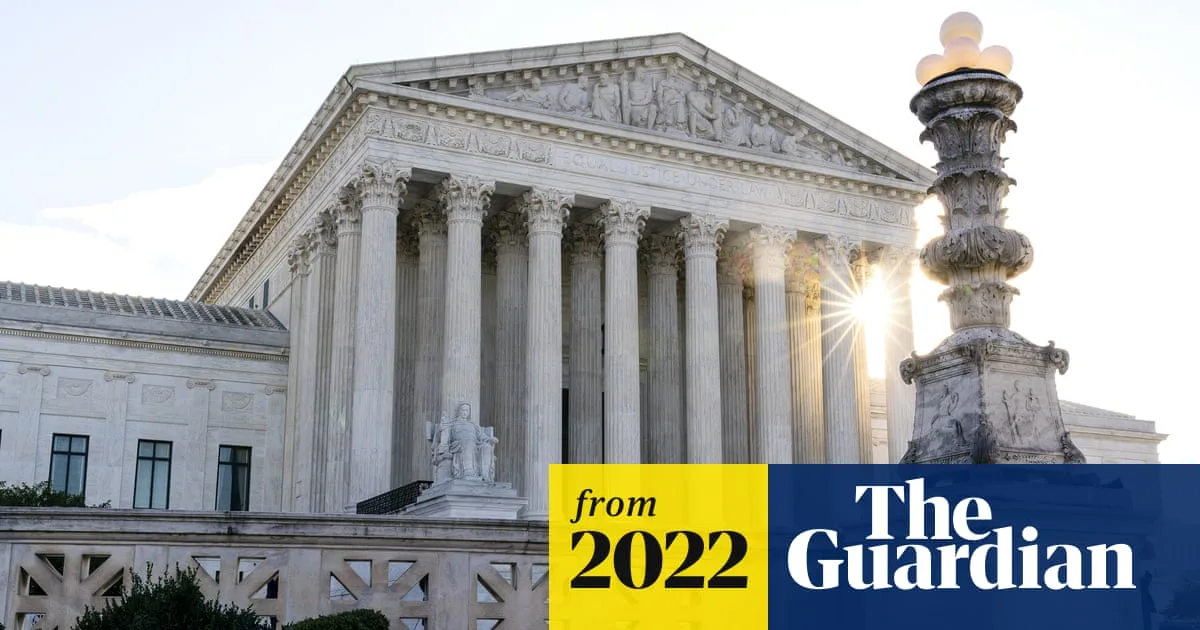
The US Supreme Court has ruled that there is no constitutional right to abortion, overturning the landmark Roe v Wade decision of nearly 50 years ago. The ruling in Dobbs v Jackson Women's Health Organization, which concerned a Mississippi ban on abortion after 15 weeks, was handed down by a conservative majority and will fracture reproductive rights across the United States.
The majority opinion, written by Justice Samuel Alito and joined by four other conservative justices, held that the constitution makes no reference to abortion and that no such right is implicitly protected. Chief Justice John Roberts said he would have upheld Mississippi's law but not overruled Roe v Wade. The court's three liberal justices dissented, arguing that the majority opinion means that from the moment of fertilisation, a woman has no rights to speak of, and that under state restrictions some women will be forced to bear a rapist's child or a young girl her father's.
President Joe Biden called the ruling a 'tragic error' and said Republicans celebrating it were 'wrong, extreme and out of touch'. He warned that a concurring opinion by Justice Clarence Thomas, who explicitly called for reconsideration of rights relating to contraception and same-sex marriage, pointed America down 'an extreme and dangerous path'.
At least 26 states are expected to ban abortion immediately or impose severe restrictions. Texas Attorney General Ken Paxton celebrated the ruling, declaring: 'Abortion is illegal here.' Protests erupted outside the Supreme Court and in cities across the country, while Democratic-run states vowed to uphold abortion rights and welcome patients from neighbouring states with bans.
Legal experts noted the rarity of overturning settled law so swiftly, and economists estimated the bans could result in 60,000 additional births a year, affecting 41% of women of reproductive age and hitting young, poor, Black and brown women hardest.