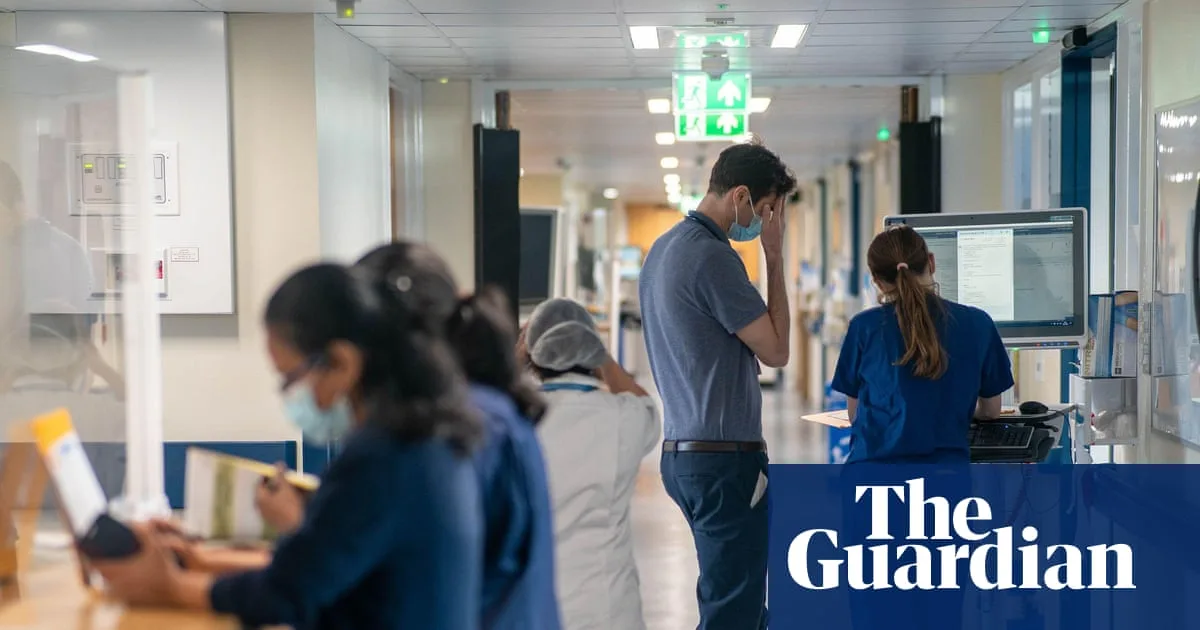
Political badges, including those expressing support for Palestine or Israel, have no place in the National Health Service (NHS), according to a government-commissioned review into antisemitism. The report, led by Lord Mann, the government's independent adviser on antisemitism, calls for 'national and unambiguous' guidance on the use of NHS branding, including on social media and in workplace settings.
Antisemitism a National Emergency
Lord Mann described levels of anti-Jewish racism in the UK as constituting a national emergency, citing evidence of routine ostracism of Jewish people. He reported that some Jewish patients are avoiding treatment and staff are leaving the NHS due to antisemitism concerns. 'It will take clear leadership across the NHS and the health sector as a whole to rebuild confidence and trust across communities, including the Jewish community, that the NHS is equally for them,' he said.
Recommendations and Government Response
The review makes 36 recommendations, all of which the government has accepted. These include restricting NHS staff from displaying political identifiers while at work. 'The firm position of this review is that political identifiers do not have a place in the NHS,' the report states. It adds that saying 'Free Palestine' or 'I love Israel' are reasonable beliefs, but displaying such views on public-facing NHS profiles may be a barrier to patients.
Lord Mann urged precise guidance on acceptable symbols, not vague or open to interpretation. The review also calls for clear rules on the use of the NHS brand, including on uniforms, official social media, meeting rooms, digital backgrounds, and equipment like laptops or iPads. The Department of Health and Social Care (DHSC) strictly controls the NHS identity and takes unauthorised use seriously.
Incidents of Antisemitism
Speaking to media, Lord Mann recounted a 'horrific' incident where a Jewish employee found his locker smeared with bacon fat. He told the BBC Radio 4 Today programme that political symbols should not be worn: 'Don't do it, don't have it.' He used the example of a dentist: 'I don't expect my dentist to be wearing an 'I love Palestine' badge or an 'I love Israel' badge on their uniform.'
The peer said it will be up to the NHS to decide what counts as a political symbol, but the review specified that uniform policy 'should not inhibit freedom of religious belief.' He also suggested that football team symbols on uniforms are an 'unnecessary distraction.'
Guidance on Uniforms and Demonstrations
The review noted that guidance on wearing uniforms outside the workplace has been ignored in some cases, and the lack of a requirement to follow it leads to inconsistency. On political demonstrations, Lord Mann said NHS imagery should not be used as part of them.
DHSC said new guidance on uniforms 'isn't about restricting staff from wearing religious or professional symbols' but will set out a common-sense approach to ensure patients and staff feel respected. The guidance will be published shortly.
Broader Reforms
Lord Mann's review, commissioned last October, aims to benefit everyone experiencing hatred or abuse in the health service. DHSC announced a new staff standard setting minimum expectations for preventing and responding to racism, mandatory anti-racism training for trust chairs and chief executives, and updated equality training for 1.5 million staff to include antisemitism and anti-Muslim hostility.
Health Secretary James Murray said the review finds that racism, including antisemitism, remains a persistent issue within the NHS and wider society. He announced that all NHS trusts will be asked to adopt the government's definition of anti-Muslim hostility, published in March, which covers criminal acts, prejudicial stereotyping, and unlawful discrimination against Muslims.