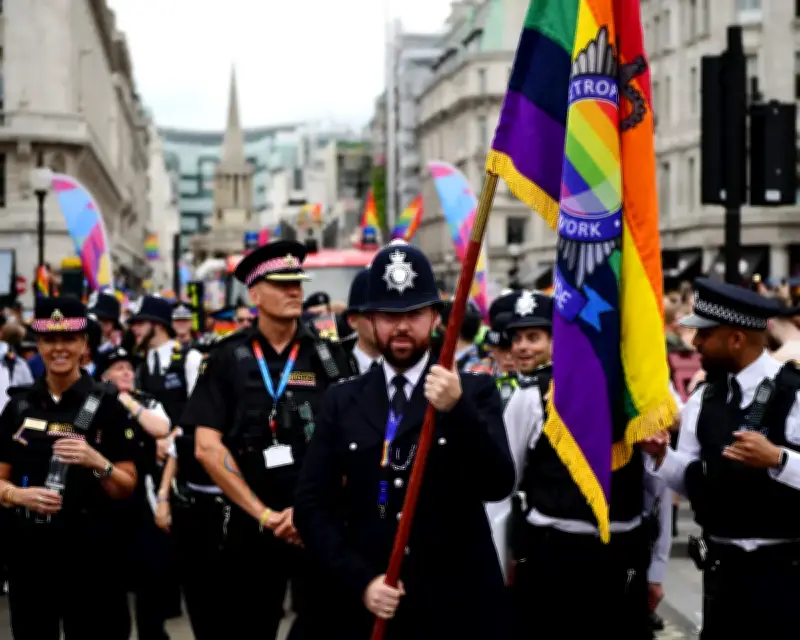
Home Secretary Shabana Mahmood has said police in uniform should not participate in LGBTQ+ pride events, arguing that campaigners on gender identity at such marches make the presence of officers look like a political act. The decision, reported on 18 November, also includes ending the police's previous anti-racism commitment and a shift away from engaging with activist groups, in favour of a "new impartiality standard".
Criticism of New Standard
In a letter to the Guardian, Chris Sinha from Cringleford, Norfolk, argues that Mahmood's stance is not non-political. He says it represents a return to a past policy of treating those who oppose bigotry and violence against racialised and marginalised communities as the problem. Sinha claims the standard panders to the far right's attempt to portray racists as victims, equates anti-racists with racists, and is reminiscent of Donald Trump's remarks about neo-Nazis and their opponents, that "there were very fine people on both sides". He concludes that official neutrality between racism and anti-racism is institutionally racist.
Historical Context and Reaction
Dr Peter Purton from Southall, London, writes that he is one of those gay men whose early years of campaigning for equality were at a time when the police were ruthlessly persecuting the community. He notes that after decades of struggle, the 2010 Equality Act recognised LGBTQ+ people as equal citizens, allowing police officers to take part in Pride parades. He says Mahmood's decision sends a signal that equality is not recognised by a Labour home secretary, and agrees with a Guardian editorial that bigoted mythology is not defeated by appeasing it.