

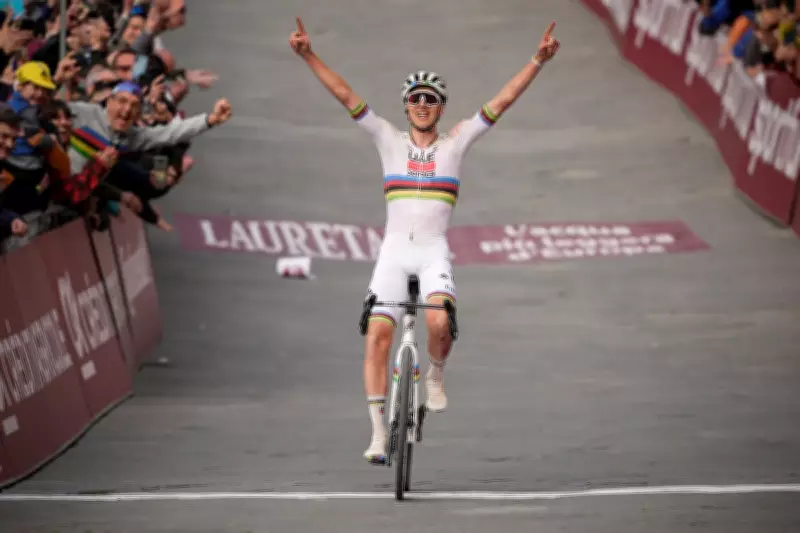
Cycling's Dominant Force Confronts Emerging Challengers in Tuscan Classic
The 2026 cycling season commences with a compelling narrative at Strade Bianche, where the indomitable Tadej Pogacar faces not just familiar rivals but a new generation of talent threatening to redefine the sport. The Slovenian superstar, now 27 and at the peak of his powers, enters as the overwhelming favourite for the iconic Tuscan race, yet whispers of change echo through the peloton.
The Unsettling Parallels of a Prodigy
Seven years after Pogacar announced himself with a maiden professional victory on Alto da Foia, 19-year-old French phenom Paul Seixas has remarkably replicated that feat on the same punishing climb. The teenager from Lyon has since demonstrated Pogacar-esque qualities, soloing to a dominant win at Faun Ardeche with a style eerily reminiscent of the four-time Tour de France champion.
Seixas represents more than just promising talent; he embodies the financial ambition of his Decathlon CMA CGM squad, which has shed longtime sponsor AG2R La Mondiale to pursue top-three team status within three seasons. As last year's European bronze medallist, Seixas navigates a sport notorious for discarding brilliant young riders who falter under pressure, with French cycling's history offering cautionary tales like Thibaut Pinot and David Gaudu.

The Romantic Challenge of Strade Bianche
The sweeping white gravel roads of Tuscany host one of cycling's most romantic contests, a race that captures the imagination despite lacking Monument status. Pogacar has dominated recent editions, winning three of the last four with solo breakaways that saw him disappear in plumes of white dust before conquering the brutal Via Santa Caterina ascent into Siena's honey-coloured centre.
This year presents subtle alterations that could favour challengers. The 203km parcours features 18km less gravel than 2025, a deliberate modification by organisers RCS to encourage more competitive racing and prevent another Pogacar procession. The Slovenian's invincibility showed rare cracks last year when he crashed under pressure from Britain's Tom Pidcock on a descent, though he remarkably recovered to win by nearly ninety seconds.
A Peloton Poised for Opportunity
Pidcock remains a serious contender despite a disappointing 48th-place finish at Omloop Nieuwsblad, with his coach Kurt Bogaerts declaring Strade Bianche "one of the races that [Pidcock] gets out of bed for." The Briton anchors Pinarello Q36.5, a second-tier team challenging the financial hegemony of super-squads like Pogacar's UAE Team Emirates-XRG through sheer ambition and tactical nous.
This marks Pogacar's seasonal debut, leaving his current form unknown and granting rivals hope. The race welcomes Classics specialists and mavericks alike, with swashbuckling Frenchman Julian Alaphilippe likely to launch romantic if potentially doomed attacks. Wout van Aert's participation comes amid a crash-disrupted winter, while Irish puncheur Ben Healy enters as a major contender following a stellar 2024 featuring Tour de France stage victory and World Championships bronze.
The unpredictable nature of Strade Bianche perfectly suits riders like Healy and American cowboy Quinn Simmons, who demonstrated an ability to match Pogacar on difficult terrain at last October's Il Lombardia.Shadows and Springboards Within the Hierarchy
Seixas may share the young super-talent spotlight with Pogacar's own teammate Isaac del Toro, who possesses the capability to shine unexpectedly despite likely serving as a springboard for the Slovenian's attacks. Del Toro has previously outmanoeuvred teammates, notably Juan Ayuso at last year's Giro d'Italia, suggesting internal dynamics could influence the race outcome.
While wishful thinking may currently dominate predictions, this spring's results could initiate cycling's next era. The trend toward increasingly brutal courses may be challenged by RCS's parcours adjustments, potentially reversing a decade-long pattern. Even if punishing routes persist, talents like Seixas refuse to concede dominance to Pogacar, instead planning to confront the champion directly.

Such determination could provide the shake-up cycling requires, as the sport's established hierarchy faces its most intriguing challenge in years. The white roads of Tuscany may reveal whether Pogacar's reign continues unchallenged or whether a new generation begins rewriting cycling's narrative.





