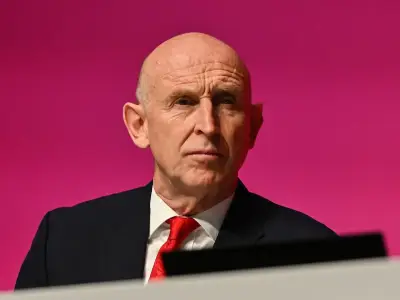
Chancellor John Healey has announced a new Pension Tax Allowance that will exempt state pensioners from Income Tax on their DWP state pension payments, provided they meet three key rules. The measure, first announced by former Chancellor Rachel Reeves, applies from April and is set to be confirmed in the Budget on Wednesday, October 28.
The exemption comes because, from April, the state pension was due to rise above the £12,570 personal allowance threshold, which would have made the state pension payments themselves taxable even for those with no other income.
What the Chancellor said
Mr Healey said: “For pensioners, I am delivering the new pension tax allowance – so that pensioners with income up to the value of the full new state pension will not pay income tax in this Parliament.”
Andy Burnham and Chancellor John Healey will confirm the triple lock figures as part of their Budget on Wednesday, October 28, and have committed to carrying forward the tax exemption for state pensioners first announced by Rachel Reeves, now called the Pension Tax Allowance.
Triple lock uplift confirmed
The triple lock is set to be axed, but not until 2030. Next April, the state pension will see an annual rise in line with inflation, wages, or 2.5% – whichever is higher, as normal.
The Office for National Statistics (ONS) said on Wednesday that the rate of Consumer Prices Index (CPI) inflation was 3.5% in September, accelerating from 3.1% in August. This does not beat the 3.9% wage growth figure already published, confirming the Triple Lock calculations with confirmed uplift figures.
Someone on the full new state pension, who reached state pension age after April 2016, would receive £250.70 per week from next April – up from £241.30 per week currently, if they have a full National Insurance record, or £13,036 per year.
Three key rules for exemption
The Government has re-announced that state pensioners who are wholly dependent on the DWP’s new state pension – with no private pension – or the old “basic” pension, “with no increments” will not have to pay tax even if they break the threshold, keeping Rachel Reeves' policy in place.
Many state pensioners will not qualify for this exemption and will remain liable to pay tax on their state pension, as they always have, particularly those with a private pension or savings. The state pension has always been taxable, and households still working, for example, would lose some of their DWP state pension payments to tax once their earnings and state pension together exceeded the £12,570 threshold.
This will continue in April, but it will mark the first time that the state pension payments themselves already break the threshold, at £13,036.
Further details are anticipated in the Budget as to who will lose the exemption and the loopholes that will allow a pensioner to keep it, but three rules have already been confirmed:
- A state pensioner must have no other income. Only the state pension payments from the DWP are exempted. This applies to both new and older state pensioners, although older pre-2016 state pensioners would not exceed the limit in 2027 anyway from the basic state pension alone.
- The state pensioner loses the exemption if they have any wage from work, property income or savings interest at all. It is not yet clear if the Savings Allowance would count against this or be excluded.
- Older state pensioners who have "increments" such as Additional Pension (AP), Second State Pension or any other SERPs scheme, now defunct to new claimants but still paid out by the DWP each week, will not be given an exemption and will pay tax on all of their DWP state pension payments, both increments and basic payments.
Claire Trott, head of advice at St James’s Place, said: “While the uplift in income will be welcomed by many, it also marks a significant milestone, with the full new state pension exceeding the £12,570 personal allowance for the first time.
“Although those receiving only the state pension are not expected to face a tax bill, pensioners who draw on other sources of income, such as workplace or private pensions, savings or earnings from work may find themselves with a higher tax liability as a result.
“It’s therefore worth taking a closer look at your retirement income ahead of April to make sure you understand what the changes could mean for you and plan accordingly.”