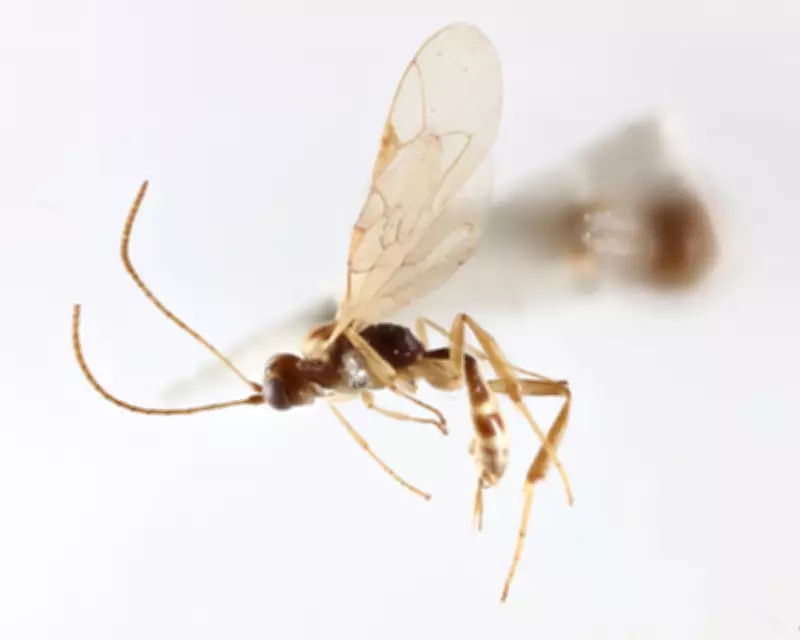
Sir David Attenborough has been honoured with a new genus of parasitic wasp named after him on his 100th birthday. Scientists at the Natural History Museum in London have described Attenboroughnculus tau, a tiny ichneumon wasp measuring just 3.5mm in length, found in the museum's collections.
A Forgotten Specimen
The specimen was originally collected in 1983 in the Valdivia province of Chile but remained in an unsorted drawer until recently. Augustijn De Ketelaere, a volunteer, spotted its unusual characteristics during a detailed examination of the ichneumonid collections. Dr Gavin Broad, principal curator for insects at the museum, led the study and noted that the wasp is so distinct from its closest relatives that it cannot fit into any established genus.
Taxonomic Significance
The species name, tau, refers to a striking T-shaped marking on the insect's abdomen. Nothing is yet known about its habits or life-cycle, except that its eggs are laid inside another animal. Dr Broad speculated that, like its Australian relatives, it might attack spider egg sacs. He added that the vast majority of ichneumonid wasps remain undescribed, with new species discovered even in Britain each year.

A Personal Connection
Dr Broad shared that he learned about taxonomy from Attenborough's Life on Earth series as a child, which inspired him to become a taxonomist. He hopes Attenborough will be pleased with the honour, though he joked that the broadcaster might not be as excited as he was about the echidna named after him in 1998. Attenborough has previously called the Natural History Museum one of his favourite buildings.
Encouraging Further Discoveries
Jennifer Pullar, science communications manager at the museum and co-author of the paper published in the Journal of Natural History, expressed hope that this discovery will inspire scientists worldwide to re-examine their collections for hidden species. The new genus highlights the potential for historic collections to yield unique scientific finds that contribute to our understanding of biodiversity.