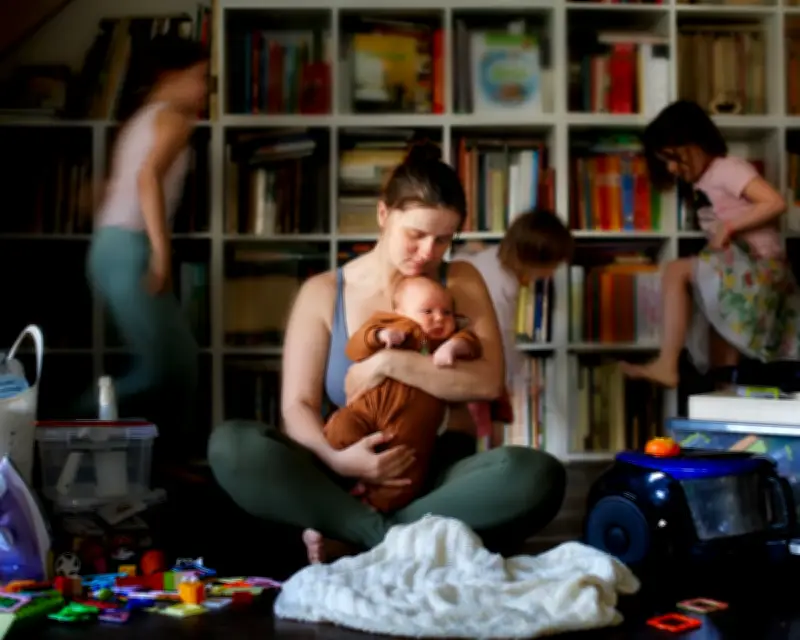
Amid the social and political panic about falling birthrates, a major new report from the thinktank Theos aims to make the experience of becoming a mother more visible. The study, for which journalist Lucy Jones wrote the foreword, covers subjects such as mortality, tax, sleep, debt, the body, and politics. It finds recurring themes that society should take notice of.
Mothers Feel Undervalued and Invisible
One of the most striking findings is that many mothers feel “undervalued”. While most people in the study thought that childcare was as vital to the economy as paid work, the maximum state maternity pay in the UK – from six weeks to 39 weeks after giving birth – is £6,412.56, far below the minimum wage. The report points to data showing that 48% of mothers found childcare stressful and 40% found it overwhelming. Mothers with young children carry an expectation to “do it all”: to work, manage the household and raise children.
Many mothers also felt “invisible” once they had their babies. “You sort of cease to exist as a person, and you just become a mum,” said one. Another remarked on the change in public behavior: “it’s very rare for people to offer you a seat once you have a baby and a pram, which is funny, because I actually feel like, particularly after my C-section, I probably needed it a bit more.”

Birth and Postnatal Care Concerns
The study described birth and its aftermath as a time of “overwhelming exhaustion, sleep deprivation and anxiety”, with some finding postnatal visits rushed and “tick-box”, overlooking the mother. Experiences of maternal healthcare were mixed: one woman spoke of “being handled like a piece of meat”. Interviewees were nervous or scared of sharing feelings of overwhelm due to stigma around struggling in new motherhood.
The report’s recommendations include enhancing the six-week check, improving care for new mothers in the immediate hospital stay, and a fuller rollout of priority seats on public transport for parents travelling with babies and young children – as many European countries have specific areas for prams and families.
Call for Policy That Addresses Real Concerns
Political leaders have been panicking about falling birthrates, with incentives ranging from medals in Russia and a €1,000 birth bonus in Italy to expanding IVF access in the US. But the report suggests that the priority should be policy that addresses women’s real concerns, such as maternity discrimination and mental health issues. As Jones writes: “No need for any medals.”