Money and Technology Bridge the Gap Between NCAA Baseball and Major League Baseball
In the not-so-distant past, Major League Baseball organizations often viewed college baseball with a degree of skepticism. The use of metal bats, shorter schedules, and a perceived lack of professional seasoning created a substantial divide between the two levels of the sport.
That era has decisively ended. A convergence driven primarily by financial investment and technological advancement has made MLB and NCAA baseball more similar than ever before. This evolution is fostering increased movement between the collegiate and professional ranks, reshaping traditional career paths and player development timelines.
Unprecedented Coaching and Player Transitions
The narrowing gap is vividly illustrated by recent, historic appointments. Tony Vitello's hiring as manager of the San Francisco Giants marked a first in MLB history, as he had never previously worked or played for a professional organization before taking the helm.

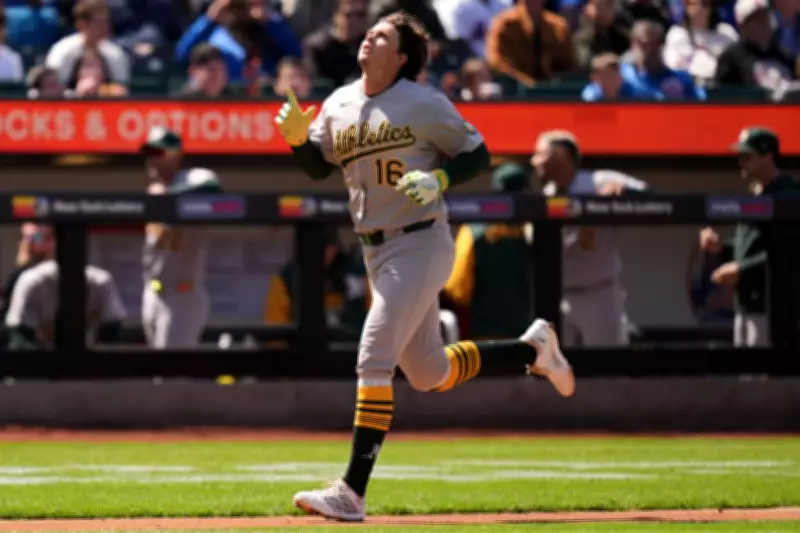
On the player side, Athletics slugger Nick Kurtz exemplified the accelerated path, winning the AL Rookie of the Year award in 2025 just one year after concluding a decorated college career at Wake Forest. His rapid ascent through the minor leagues, requiring only 210 plate appearances before dominating MLB pitching, underscores the new reality.
"The college game has definitely taken a bigger step toward the pro game — mainly because of the almighty dollar," said Arizona State coach Willie Bloomquist, a veteran of 14 big league seasons. "Essentially what’s happened, the Power 4 Conferences are basically the minor leagues."
Financial Investment and Technological Parity
One of the core drivers behind this shift is a massive influx of cash into top-tier college programs. Coaching salaries have skyrocketed, with leaders like LSU's Jay Johnson earning over $3 million annually and Mississippi State's Brian O'Connor close behind at $2.9 million. While these figures are outliers, it is now common for power conference coaches to command seven-figure salaries.
Although MLB managers at the top end earn around $8 million, the financial gap for assistant coaches has narrowed significantly. The advent of Name, Image, and Likeness (NIL) money has also made college baseball more lucrative for players, even if payouts remain behind those in football and basketball.
Technological investment has been equally transformative. Elite NCAA programs now boast advanced facilities and data analytics capabilities that rival professional organizations.
"We have one of the better pitching labs on the West Coast," Bloomquist noted. "I think it would rival a lot of professional organizations. From a data standpoint, it’s all trickled down to the college level."
Trust in College Development and Draft Trends
This enhanced infrastructure has led MLB teams to place greater trust in NCAA programs to develop professional-ready talent. The trend reduces the risk associated with drafting unproven 18-year-olds directly from high school.
Athletics general manager David Forst, who selected Kurtz with the fourth overall pick in 2024, highlighted this evolution. "There’s no doubt that top-level college baseball is High-A or Double-A now. It’s really close," Forst said. "The timeline is squashed because these guys are coming out of college so ready, so physically advanced. Some of them — frankly — don’t need the minor league at-bats they used to need."
This trust is reflected in draft statistics. In the 2025 MLB draft, 56 college players were selected within the top 90 picks, demonstrating a clear preference for developed collegiate athletes.
Persistent Differences and Adaptation Challenges
Despite the convergence, real differences remain, particularly regarding schedules and player demographics. The college season is condensed, with all 56 regular-season games carrying immense weight. A three-game losing streak can feel catastrophic, whereas in professional baseball's 162-game marathon, it is merely a minor setback.

Georgia baseball coach Wes Johnson, who has successfully moved between MLB and NCAA roles, emphasized this point. "With the Twins, we played 33 spring games, then played 162 in the season and then made the playoffs," Johnson recalled. "It’s every day there. That's the hardest challenge you have when you go from college to the big leagues."
Bloomquist also noted the motivational differences between coaching 18-to-20-year-olds in college and managing veteran professionals earning millions.
A Unified Future for Baseball
The consensus among insiders is that the fundamental aspects of winning baseball remain consistent across levels. San Francisco Giants third baseman Matt Chapman, a five-time Gold Glove winner who played at Cal State Fullerton, expressed confidence in Vitello's transition despite the learning curve.
"Winning baseball looks the same," Chapman stated. "It’s pitching and defense, knowing how to run the bases and then managing personalities. He has a lot of experience with that. He’s a baseball guy."
The ongoing integration of money and technology continues to erase historical barriers, creating a more fluid and dynamic ecosystem between college and professional baseball. This evolution promises to reshape coaching careers, accelerate player development, and further blur the lines that once distinctly separated the NCAA from the MLB.