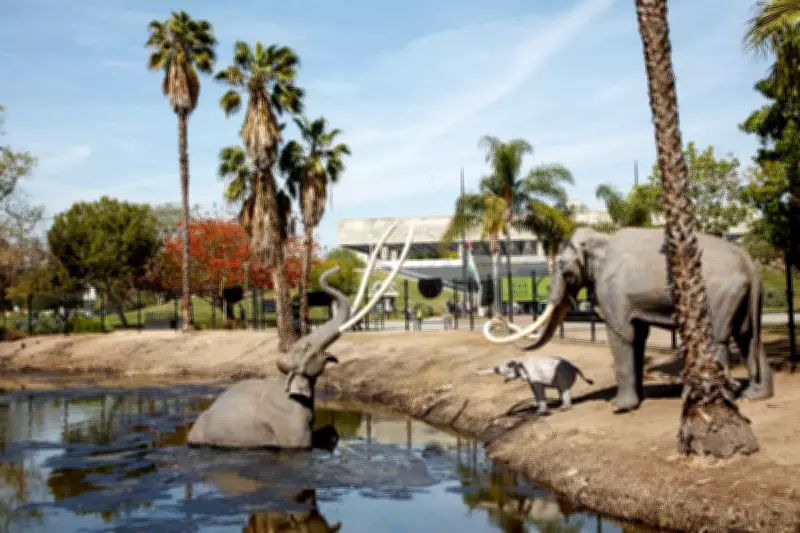
The La Brea Tar Pits and Museum, home to one of the world's most remarkable fossil sites, is set to close in July for a two-year, $240m renovation. This marks the first major overhaul in nearly 50 years for the only active urban ice age excavation site in the world.
A Unique Urban Fossil Site
Located in the heart of Los Angeles, the La Brea Tar Pits contain the remains of over 2 million ice age plants and animals, including mastodons and saber-toothed cats, trapped in naturally occurring asphalt seeps that still bubble today. Since opening in 1977, the site has attracted tourists, school groups, and researchers alike.
Emily Lindsey, the museum's associate curator and excavation site director, described it as "like Pompeii, but in the middle of a massive city." The site's 5.2-hectare park and research center are the only active ice age excavations in an urban setting worldwide.

Renovation Plans
The renovation, led by New York design firm Weiss/Manfredi, will keep the museum's brutalist exterior but completely reimagine the interior and surrounding park. Features include new walkways, bridges, an outdoor classroom, and native plant landscaping. The iconic Lake Pit with its fiberglass mammoth family will remain.
Lori Bettison-Varga, president of the Natural History Museums of Los Angeles County, emphasized the goal of creating a seamless indoor-outdoor experience: "Right now, you can be out in the park and not even see a museum... The whole project has been to reimagine it as a true indoor, outdoor experience."
Scientific Significance
The site's fossils are exceptionally well-preserved due to tar permeation, retaining collagen for accurate carbon dating. About 90% of remains are from carnivores or scavengers, suggesting the pits acted as a predator trap. The collection includes 59 mammal species, 135 bird species, and abundant plant and insect life.
The renovation will update the Fossil Lab and storage facilities while maintaining public viewing windows so visitors can observe scientists at work. New dioramas will place skeletons in dynamic scenes to tell the story of ice age Los Angeles and the extinction of megafauna.
Community Engagement
The project began in 2019 with public input. Bettison-Varga noted that while the museum has been seen as a children's destination, it is "a place for everybody – cradle to cane." The renovation aims to boost scientific literacy and showcase the process of discovery.
The La Brea Tar Pits' history dates back to the early 20th century when oil drilling uncovered tar-stained bones. Today, it remains a vital research site and public attraction, now poised for a transformative update.