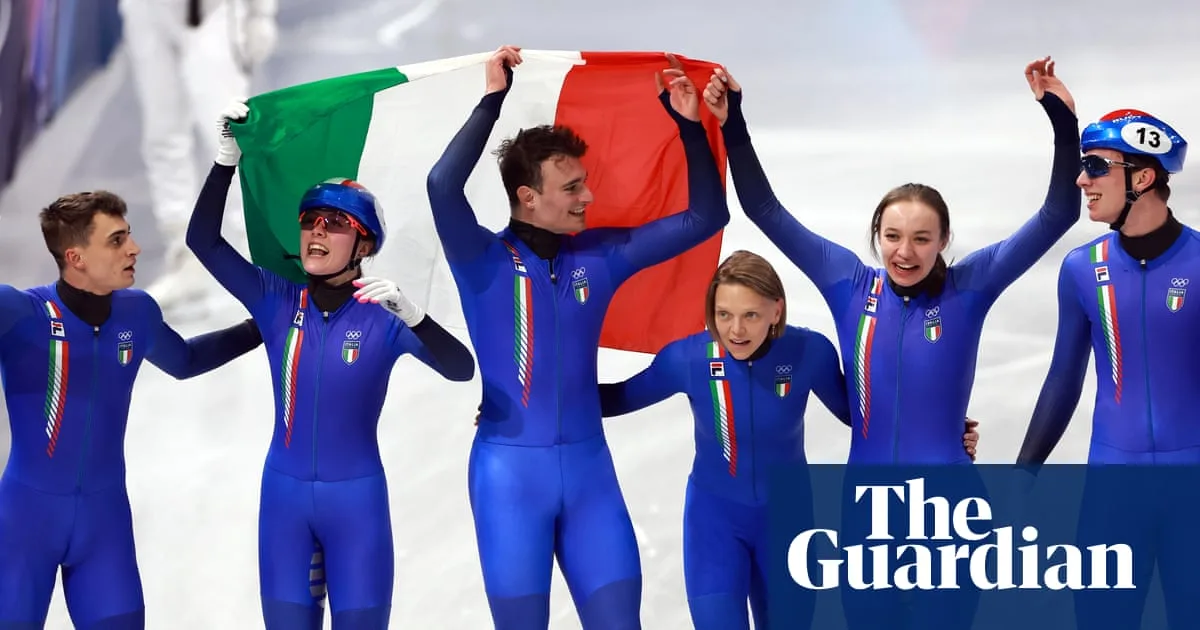
Italy has emerged as the surprise leader of the Winter Olympics, amassing 17 medals through the first five days, already surpassing their total from Turin 2006. The host nation's success spans multiple disciplines, from speed skating to luge, with six gold medals placing them second only to Norway in the gold medal count.
The Italian surge began on the opening weekend with medals in men's downhill, women's 3,000m speed skating, snowboard, biathlon, and luge. Figure skater Matteo Rizzo's emotional bronze in the team event marked Italy's first-ever medal in that competition. By Tuesday, Italy had added medals in curling and short-track speed skating, and continued to accumulate golds in doubles luge, women's super-G, and women's 5,000m speed skating.
While a host-country boost is common in the Olympics—as seen with the US in 2002, Canada in 2010, and South Korea in 2018—Italy's performance is particularly notable given their underwhelming showing at the 2006 Turin Games, where they won only 11 medals. The current tally already exceeds their total from Sochi 2014 (eight) and Vancouver 2010 (five), and they are closing in on their record of 20 medals from Lillehammer 1994.

Home advantage in winter sports can be literal, as familiarity with tracks and venues benefits athletes. Italy's success may also reflect long-term investments, similar to Canada's 'Own the Podium' programme before Vancouver 2010. However, the country that failed to capitalise on hosting in 2006 is now making up for lost time, with world-class facilities and a passionate home crowd fuelling their renaissance.