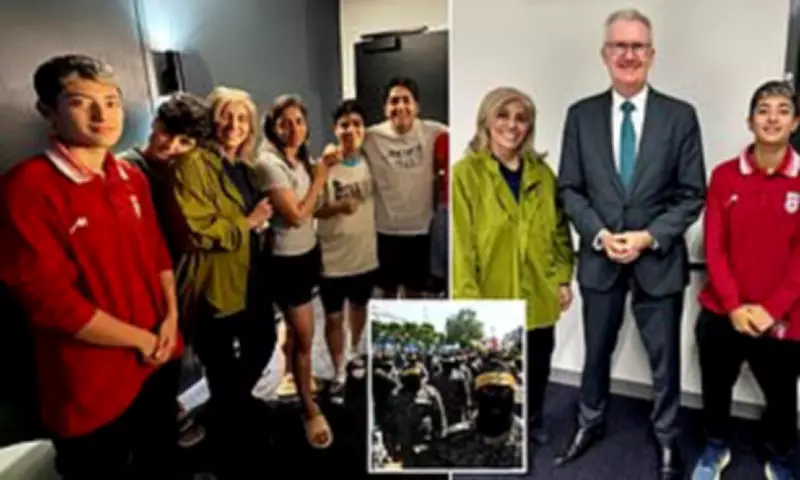
Iranian Women Footballers Face Coercive Threats Over Asylum Bid
Lawyers representing Iranian women's soccer players who sought asylum in Australia have revealed a chilling campaign of intimidation designed to force their return home. The athletes received whispered warnings stating simply: "Your families are missing," followed by the ominous addition: "We don't know what has happened to them." This psychologically devastating message proved immediately effective, with every player who received it promptly informing officials of their desire to leave Australia.
Systematic Pressure from Iranian Authorities
Immigration lawyer Ian Avayee disclosed to the Daily Mail that this sinister threat was delivered by third parties acting on behalf of Iran's feared Islamic Revolutionary Guard Corps (IRGC). Avayee described the tactic as "very effective" in reversing the players' decisions to remain in Australia. "It meant their loved ones were in the IRGC's hands and what were they going to do with them," he explained, adding that he himself would likely return to Iran under similar circumstances despite having been away for seventeen years.
Five members of the national team have already rejoined their squad in Malaysia, with Avayee anticipating that the two remaining players—33-year-old Atefeh Ramezanizadeh and 21-year-old Fatemeh Pasandideh—will also reverse their asylum decisions "because of the pressure put on them."

Regime Control Extends Beyond Borders
Avayee and fellow Iranian-born lawyer Kambiz "Kam" Razmara detailed how the Iranian regime maintains control over athletes even when they travel internationally. According to Avayee, all members of the touring Lionesses team except the players and coach are "regime supporters," with every individual required to pass security checks before being permitted to travel with the team.
Despite Australia's refusal to grant visas to IRGC members on terrorism grounds, the regime's influence persists through other channels. Avayee revealed that five people accompanying the team belonged to Iran's Herasat—the mandatory security and intelligence branch embedded within all government agencies. These officers monitor regime loyalty, enforce Islamic codes, and act as informants, with Australian authorities reportedly aware of their identities yet still granting visas to three male and two female Herasat officers.
Political Context and Consequences
The situation unfolded against a backdrop of heightened tensions. Iran brought twenty-six players to Australia for the Women's Asian Cup, but on the eve of the tournament's first game, the United States and Israel attacked Iran, killing Ayatollah Ali Khamenei. When players remained silent during the national anthem before their opening match against South Korea on March 2, Iranian state television branded them "traitors," raising fears of persecution upon their return home.
This prompted five players to arrange asylum through Immigration Minister Tony Burke on March 9, briefly swelling to seven defectors before dwindling back to just two following the family threats. Iranian football chief Mehdi Taj—a former IRGC commander whose visa application was rejected by Australia—claimed the would-be defectors had received "false information" suggesting they would be "captured and killed" if they returned.
Long-Term Implications for the Athletes
Lawyer Kam Razmara expressed little surprise that most players reversed their asylum decisions, noting "a lot of people influencing the thought processes of these girls" through harsh media language including threats to "bring your mothers to the grave to mourn your loss." He predicted that those returning would initially be treated as heroes but would eventually "cop it" and "pay the price," possibly through imprisonment once they fade from the international spotlight.
Razmara further suggested that none of the players would likely be permitted to tour overseas again, and argued that only military intervention by the United States and Israel could give Iranians sufficient confidence to defy their government. He noted that the strike killing Khamenei—who was already dying of cancer—had ironically made "a martyr" of him, potentially strengthening regime cohesion.

The case highlights the extraordinary pressures faced by athletes from authoritarian regimes who seek freedom abroad, demonstrating how threats against family members can effectively nullify asylum claims even in democratic nations.