

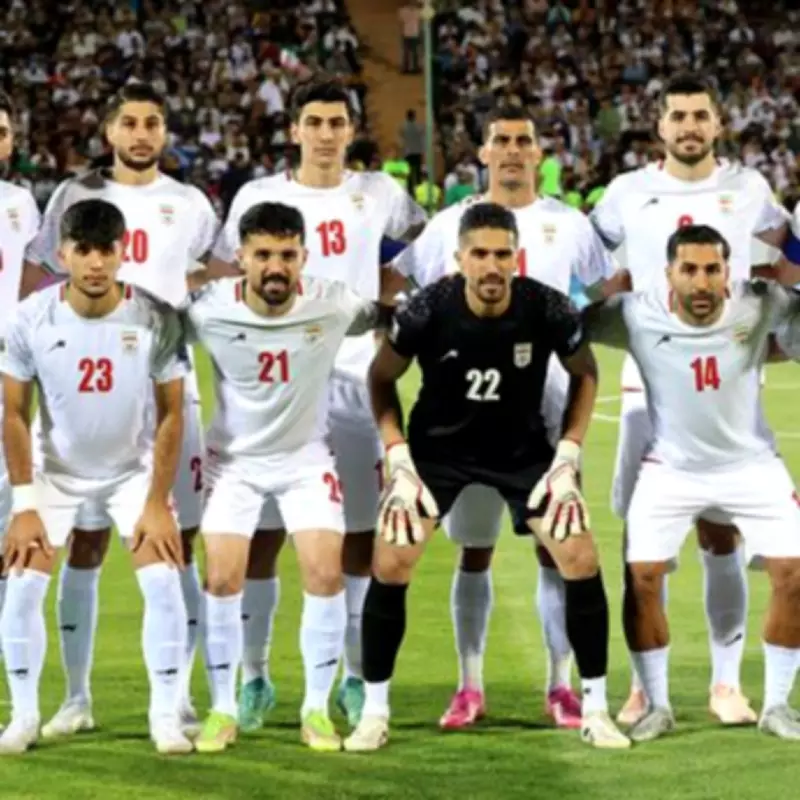
In a dramatic escalation of sports diplomacy tensions, Iran has formally announced its national football team will boycott the upcoming 2026 FIFA World Cup. The decision, attributed directly to the ongoing military conflicts involving Israel and the United States, throws the prestigious tournament into unprecedented political turmoil just months before kickoff.
Official Declaration Amidst Geopolitical Strife
Iran's Sports Minister, Ahmad Donyamal, made the definitive statement during a televised interview, citing the assassination of a key Iranian leader and the devastating human cost of recent wars as the primary reasons for withdrawal. "Since this corrupt government assassinated our leader, we have no conditions under which we can participate in the World Cup," Donyamal asserted. He elaborated further, highlighting the severe impact on the nation: "In view of the malicious measures taken against Iran, two wars were forced upon us within eight or nine months, and several thousand of our people were killed. Therefore, we definitely have no possibility of participating in this way."
Contradicting FIFA's Stance on Global Unity
This announcement starkly contradicts the public position maintained by FIFA's leadership, which has consistently advocated for the tournament to serve as a bridge between nations. FIFA President Gianni Infantino recently expressed optimism, noting on social media: "During the discussions, President Trump reiterated that the Iranian team is, of course, welcome to compete in the tournament in the United States." Infantino emphasized the unifying power of football, adding, "We all need an event like the FIFA World Cup to bring people together now more than ever, and I sincerely thank the President of the United States for his support, as it shows once again that Football Unites the World."

FIFA CEO Heimo Schirgi also addressed the situation, acknowledging the tournament's inevitable continuation while expressing hope for full participation. "The World Cup will go on obviously, right? The World Cup is too big, and we hope that everyone can participate that has qualified," Schirgi stated, underscoring the organization's desire to see all qualified teams, including Iran, compete.
Implications for the Tournament and Group G
Iran had successfully qualified for the 2026 World Cup, set to be hosted across the United States, Canada, and Mexico, with the opening match scheduled for June 11. The team was drawn into Group G, where they were slated to face New Zealand, Belgium, and Egypt. Their withdrawal now necessitates urgent logistical adjustments by FIFA, including potential replacements or a restructuring of the group stages, which could significantly alter the competitive dynamics of the tournament.
Broader Context of Speculation and Conflict
The decision follows months of intense speculation regarding Iran's participation, fueled by the nation's ongoing wars with the United States and Israel. Hosting a significant portion of the event in the United States added a layer of complexity, making Iran's involvement politically sensitive. The boycott represents a clear instance of sports being leveraged as a tool of geopolitical protest, challenging FIFA's long-standing efforts to keep international football ostensibly separate from political disputes.
This development marks one of the most significant boycotts in World Cup history, echoing past instances where global events have been impacted by international tensions. It raises critical questions about the future of sports diplomacy and the limits of FIFA's influence in an increasingly divided world, setting a precedent that may affect other nations' participation in future tournaments.






