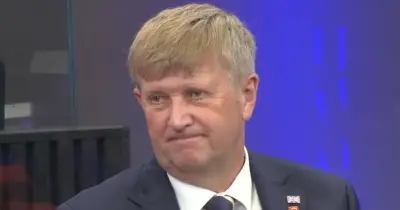
Huw Irranca-Davies had barely had time to process Labour's catastrophic election loss before attention turned to his next move. As deputy to the defeated First Minister Eluned Morgan, his name was put forward as a potential leader when she resigned. Conversations about the roles Welsh Labour needed to fill began alongside questions about who would take over the speaker's chair in the Senedd.
Elin Jones had been the Llywydd for a decade, during an era when Plaid was in opposition. Within days of the party's election victory, she was given the finance brief by new First Minister Rhun ap Iorwerth. The role of Llywydd is equivalent to the speaker in the House of Commons, requiring political impartiality, chairing plenary meetings, overseeing the Senedd Commission, and representing the institution ceremonially.
A Swift Decision
As Labour's surviving nine members met in party offices off Cathedral Road in Cardiff on May 9, they had to decide not only their leader but whether any would bid to succeed Ms Jones as Llywydd. Ultimately, Mr Irranca-Davies chose the latter. He said conversations about his next steps happened "exceptionally fast" after the party's disastrous result.

"You're instantly speaking to not only the colleagues who have been re-elected with a much smaller Labour group in this situation but you're also speaking with colleagues who've lost their seat who expected to be back here," he said. "Politics is an unforgiving game as well. So it was within that weekend that I was having cross-party calls with people saying: 'Look, we need somebody to put their name forward [as Llywydd] who can hopefully command the authority of the chamber, who has the background and skills to do it, understands the minutiae of how this place works – standing orders, procedures, legislation, committees, all of that'."
Long-Standing Ambition
Mr Irranca-Davies, who held the deputy first minister and climate change briefs in the last Welsh Government, said the role of Llywydd was something he had always fancied. "In some ways it is something I've always considered," he said. "So way back before I was brought back into government, when I was chairing the legislation and social justice committee and working as a sort of die-hard backbencher, I was thinking: 'Well, what if the opportunity ever did come up?' because it's such a cracking position to hold."
He described his background in committee chair roles, Westminster law and regulation, and government positions as "probably the best apprenticeship I could have had for a role like this alongside being a minister, alongside having been a government whip."
Passing the Baton
Asked if he fancied rebuilding Labour, he said it was clear the party needed someone with "the hunger and the drive and the enthusiasm" to look at new ideas. He expressed delight that Ken Skates took on the role, saying, "I definitely had the hunger and drive," but added that having run the campaign with Eluned Morgan, "out of fairness to them – even though some people were indeed saying to me: 'Put your name forward' – my strong feeling was I needed to pass the baton on."
As Elin Jones indicated she was standing down and Plaid Cymru were the largest party re-elected, his name circulated by the Monday after the result. "That's the speed at which you're in, in this strange game, both of politics, government, and our democracy. Things move very fast," he said. "You move from the grief of losing colleagues, the relief at being re-elected, to then thinking: 'Crikey – I've been asked to put my name forward for something else.'"
Facing Dissent
There were dissenting voices to his appointment, with some arguing he shouldn't move from a senior government role to one requiring impartiality. He acknowledged this: "I genuinely say this, to my surprise, it was overwhelming backing but, yes, there were some voices who said you should not have somebody going from a senior government position into a position as Llywydd or even Deputy Llywydd." He argued the privilege of the role is enabling every voice to speak without fear or favour.

His style, he said, is akin to a referee who uses quiet words rather than constant whistle-blowing. He described moments when the Llywydd must intervene decisively, but also times for private conversations. "There is a really good understanding of the role that I'm trying to do and the way that I'm trying to do it and a willingness from the party leaders, all of the party leaders and business managers, to play ball with it," he said.
Managing the Chamber
His approach was tested in early exchanges, including one that led to a walkout over a contribution by Reform UK MS Joe Martin. He said later debates have shown contested matters can be handled "in a respectful way," and he has made a statement from the floor about his expectations. "Kerry and I are like hawks in that chamber," he said, referring to Deputy Llywydd Kerry Ferguson.
He noted early viewing figures for Senedd TV and social media output are higher. Comparing the role to his previous positions, he said, "It's a different type of pressure entirely. So I no longer go from 8am in the morning until 10pm at night thinking: 'Policy, policy, policy'." He is enjoying the challenge of managing a bigger chamber with more diverse views and building Senedd capacity. "Probably the best Llywydd is the Llywydd that you can ignore and focus on the debates instead," he said. "By and large and when the Llywydd or Deputy Llywydd do intervene, do have to lay down the law, then they do it with really good cause and it is definitive, and it is heard, and then we get on with doing the job."