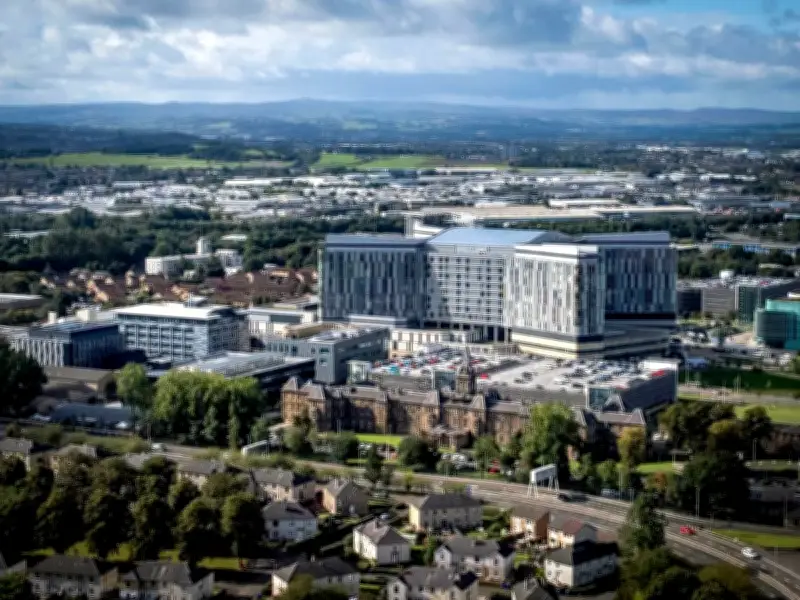
First Minister John Swinney is seriously considering slashing the number of scandal-hit NHS boards in a bid to save money. SNP ministers are discussing a bonfire of health quangos in what would be the biggest health service shake-up in decades.
Swinney, who was returned as First Minister in May, will unveil his Government's legislative plans on Tuesday. Reshaping the public sector is a priority over the next five years, with Cabinet Secretary Ivan McKee tasked with rooting out inefficiency.
Reduction of health bodies on the table
The country has fourteen territorial boards – such as NHS Lothian and Greater Glasgow and Clyde – and seven special boards, but it is understood a big reduction is on the table. Health Secretary Angela Constance and other ministers are believed to have held talks about cutting the number of health bodies.

One Holyrood insider speculated that the fourteen territorial boards could be reduced to a handful.
Spending and criticism
Health and social care spending came to £22.5bn this year, with £17.5bn routed through the boards. Critics believe having so many bodies is an inefficient use of public money, with the quangos having their own chief executives and finance directors.
NHS boards have also angered voters over the child infection scandal in Glasgow and the disgraced surgeon Sam Eljamel in Tayside.
Manifesto promises and political reaction
The SNP manifesto for Holyrood left the door open for cutting the number of NHS boards. The Nationalists promised a reduction in the “duplication of corporate activity”, adding: “This will see service delivery improved while the number of corporate health bodies are substantially consolidated.”
McKee said in June: “In our first 100 days, we will lay out our plans for public service renewal and the bill that will follow.”
Scottish Labour had a manifesto commitment to reduce the number of boards from fourteen to three. Party health spokesperson Jackie Baillie said: “Frontline NHS services are stretched to breaking point and hardworking staff are being asked to do the impossible, but huge sums of money are still being spent on bureaucracy and red tape.
“The SNP cannot continue with the broken status quo while our NHS is on life support, but any changes must deliver for patients.
“Scottish Labour has long called for an overhaul of Scotland’s Health Boards in order to redirect resources to the frontline and remove barriers to care, but the National Care Service farce shows good ideas often don’t survive contact with the SNP.
“The stakes are too high for either inaction or incompetence from the SNP.
“The SNP must work with communities, staff and experts to develop workable plans that genuinely deliver for patients and make our NHS fit for the future.”
Lib Dem MSP Adam Harley said his party opposed the move: “This is the wrong move. Many communities, especially those in more rural parts of the country, have already been failed by the SNP’s obsession with centralisation. Cutting the number of health boards will only make things worse by giving local people even less control over decisions that directly affect them.
“The government needs to be focused on fixing the underlying problems with our health service, including workforce pressures and the social care crisis. Sadly, it doesn’t look like that’s on the SNP’s agenda.”
Funding pressures and savings plans
It comes as the SNP Government is facing a £4.7bn funding black hole by 2030. Scotland's auditor general Stephen Boyle has claimed the Government needs to “prepare more detailed plans” on how it will “close that gap by the end of the decade”.
The Scottish Fiscal Commission revealed this week that more than £700m will be cut from the Government's Budget next year. One of the ways the Government is planning on making savings is cutting up to 20,000 public sector jobs.
A Scottish Government spokesperson said: “As Ministers have set out, Public Service Reform focuses on delivering the things that matter most to people, such as easier access to the NHS and more efficient services that are high quality and sustainable for generations to come.
“The Programme for Government will be announced on Tuesday, 1 September.”