

Team Dentist Recounts Olympic Dental Drama After Hughes' Gold Medal Performance
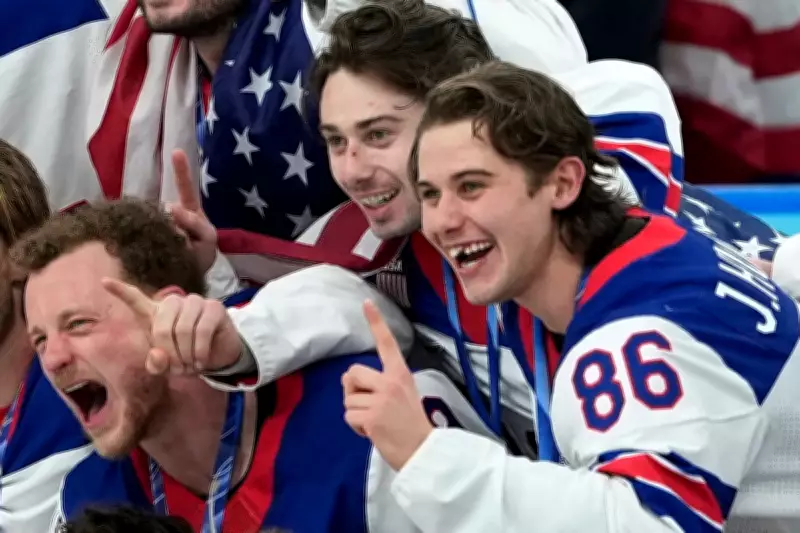
Jason Schepis, the New Jersey Devils team dentist, was watching the Olympic gold medal men's hockey game at home with his children in New Jersey when he witnessed a familiar sight: his own dental handiwork being shattered on the ice. Team USA forward Jack Hughes, aged 24, had just taken a stick to the mouth from Canada's Sam Bennett, leaving at least one full tooth and fragments of others scattered across the playing surface.
Schepis immediately recognised those teeth. He had previously repaired them after Hughes suffered a high stick injury during the playoffs several years earlier. "We performed the root canals and fixed everything up," Schepis recalled. "Those were undoubtedly his teeth." Demonstrating typical hockey resilience, Hughes shook off the painful injury and proceeded to score in overtime, securing a 2-1 victory and America's first men's hockey gold medal since the legendary 1980 triumph.
The Gap-Toothed Grin as Hockey's Badge of Honour
Hughes' resulting gap-toothed smile became a perfect representation of a sport where missing teeth is considered a badge of honour. The phrase "spittin' chiclets" has become so embedded in hockey culture that it serves as the title of a popular podcast, referencing both the candy-coated chewing gum pieces and the tooth fragments frequently seen on ice. To suggest that hockey players require dentists is a significant understatement; every professional team employs dental specialists who work alongside team physicians and medical staff at every NHL game, prepared to intervene immediately when dental emergencies occur.

"When mouth injuries happen, our physicians express genuine relief that we're present because they couldn't manage such situations alone," explained San Jose Sharks dentist Mark Nishimura. "Some games are relatively quiet for us, while others become extremely challenging when serious injuries occur." Nishimura experienced one such difficult moment during the 2019 playoffs when he was handed Joe Pavelski's teeth after the player took a puck to the jaw—an incident that paradoxically resulted in a goal. Later that same year, Keith Yandle lost nine teeth during a game, returned to play, and subsequently completed 168 consecutive games.
Hockey Dentistry as Emergency Triage Medicine
Former player Chris Clark, who required three hours of reconstructive surgery involving braces, screws, and cadaver bone after a puck ramped into his mouth in 2006, describes hockey dentists as "triage doctors." He learned this firsthand through his own tooth-loss and palate-fracturing experience with the Washington Capitals. Longtime Capitals dentist Tom Lenz, who attended that game, has witnessed every imaginable dental trauma, including driving players to his office for emergency nighttime procedures when time was critical.
Because puck or stick impacts to the mouth typically cause damage unlike ordinary dental injuries, Lenz admitted feeling nervous during his early career over two decades ago. "You never know what you'll encounter until you examine the injury, so constant readiness is essential," Lenz stated. "Injuries range from simple chipped teeth to completely knocked-out teeth and even jaw fractures. Our priority is stabilising players and alleviating their discomfort by any means necessary." This responsibility extends beyond players to include officials and coaches who sustain facial lacerations, with home dentists during the regular season also caring for visiting teams.
Remarkable Player Resilience and Specialised Care
When Alex Ovechkin lost a front tooth from a stick impact in October 2007, Lenz provided a temporary implant known as a "flipper," planning a permanent solution post-retirement. Ovechkin insisted on immediate replacement, though he eventually lost the implant, making his toothless smile part of his iconic image—despite his mother's disapproval. Now the NHL's all-time leading goal scorer at age 40, Ovechkin continues playing with his distinctive grin.

Hughes, however, informed Jimmy Fallon that missing teeth would not become his permanent look, having already received dental repairs. Meanwhile, veteran player Brenden Dillon, now in his 14th NHL season, wore mouthguards as a child due to requiring braces three times from hockey incidents. After abandoning mouth protection in the minors, he took a punch to the mouth during his first NHL fight and has worn one consistently since. "It's not enjoyable," Dillon acknowledged. "While other sports might see occasional dental injuries, hockey experiences them constantly from sticks, pucks, glass, and ice—it seems someone gets dinged up every game."
The Unique Demands of Sports Dentistry
Schepis, Lenz, and other NHL team dentists also work across different sports. Lenz noted that many NBA players he treats have never required sutures before, whereas hockey players frequently ask how many stitches they'll need. "If it's just two or three sutures, many players will decline anaesthesia, requesting immediate stitching so they can return to play," Lenz revealed.
Nishimura recalled being asked if he could reinsert Pavelski's teeth after the player lost them from a shot by teammate Brent Burns. Following numbing and suturing, Pavelski returned to finish the game, contributing to a 5-2 victory over Vegas. "Hockey players simply don't quit—they represent a special breed of athlete," Nishimura affirmed.
Dillon, now with New Jersey, has undergone multiple root canals and experienced several chipped teeth, realising he should wear mouthguards during practices as well. Lenz has observed decreased facial injuries since visors became mandatory, with only four grandfathered players still skating without them. Clark, who wore visors sporadically during his career, applauds their widespread adoption by current players, similar to how helmets became standard equipment.
"Dental trauma is essentially part of the hockey experience," Clark remarked. Consequently, having hockey dentists on constant call remains essential. Schepis recounted performing a root canal on Jaromir Jagr at 1 a.m. and inserting over thirty sutures for another player whose puck injury penetrated completely through his mouth. "Sports dentistry involves numerous nuances compared to regular dentistry because situations are never standard," Schepis explained. "Speed and prioritising players' best interests are crucial, but we understand their desire to return to play and teams' needs to have them available. We remain on call twenty-four hours a day."





