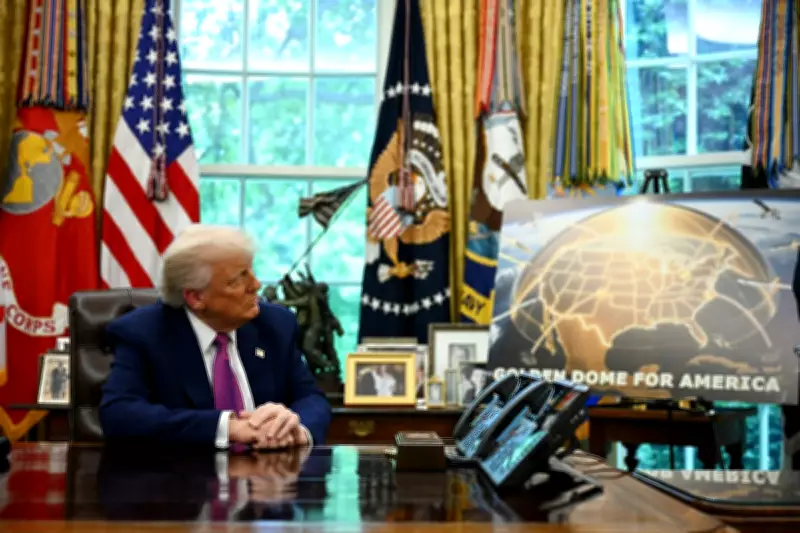
The true cost of President Donald Trump's proposed Golden Dome missile defense system has been revealed, and it surpasses the entire Defense Department's spending for the previous year. According to a new report from the Congressional Budget Office (CBO), a non-partisan federal research agency, the space-based system would require approximately $1.2 trillion to develop, deploy, and operate over two decades. This figure is more than six times the $175 billion price tag the president provided last May.
Breakdown of Costs
The latest estimate encompasses personnel compensation, research and development, maintenance, upgrades, and space-based interceptors, which represent the most expensive components. The CBO noted that its projection relies on limited information, as the administration has yet to specify the exact type or scale of the anti-missile systems it plans to deploy.
Background of the Initiative
The 79-year-old president first unveiled his plans for this futuristic technology in an executive order signed on January 27, 2025, just one week after his inauguration. In the order, he stated, "The United States will provide for the common defense of its citizens and the Nation by deploying and maintaining a next-generation missile defense shield" capable of defending against any foreign aerial attack on the Homeland. Trump indicated that the system, which will include ground and air components, is slated to be "fully operational" by the end of his term in January 2029. He also suggested it could be used to protect other nations and territories, including Canada and Greenland.

The technology appears to be inspired by Ronald Reagan's failed Strategic Defense Initiative, derisively dubbed the "Star Wars" program, as well as Israel's Iron Dome, a network of interceptors designed to disable incoming enemy rockets. The Independent has reached out to the White House for comment.
Congressional Funding and Delays
Lawmakers approved approximately $24 billion for the initiative through the "Big Beautiful Bill," the GOP-backed spending measure passed last summer, according to The Associated Press. However, in February, Politico reported that the ambitious project had barely gotten off the ground, partly because the White House had withheld billions in congressionally approved funds. Industry insiders expressed reluctance to invest their own money into the Golden Dome, as many fear the massive undertaking may not outlast the current administration due to the complexity and unproven nature of the technology. "I don't think anyone in industry is banking on space-based interceptors surviving into the next admin," an industry representative told the outlet.
Despite these challenges, the Pentagon stated at the time that the project "continues to meet the goals" outlined by the president's executive order, noting that the plan's implementation is "dynamic." Beyond the funds already approved by Congress, additional money could soon be directed to the project. Last month, the administration requested a $1.5 trillion Pentagon budget for 2027, the largest in history, which includes funding for Golden Dome technology. By comparison, Trump requested a $892.6 billion national defense budget last year, and a subsequent $150 billion supplemental request brought the total above $1 trillion for the first time, according to Reuters.