The US military campaign to protect merchant shipping from Iranian attacks in the Strait of Hormuz mirrors a 200-year-old mission when Commodore John Rodgers led a US squadron to the Mediterranean to defend American ships from Greek pirates. That earlier effort prioritized US trade over Greece's independence struggle, much like the current US-Iran confrontation has devolved into self-serving commerce protection.
Free Sea Principle Under Siege
Although the US has not ratified the 1982 UN Convention on the Law of the Sea, it historically upheld the principle of freedom of navigation, or mare liberum, developed by Dutch jurist Hugo Grotius. US Secretary of State Marco Rubio declared in June that "no country is allowed to charge tolls or fees on an international waterway." Yet President Trump has since suggested the US might impose tolls, and a memorandum of understanding with Iran accepts Iran's right to monetize transit through the Strait of Hormuz alongside Oman.
This equivocal stance reflects a broader breakdown in the free sea consensus. Trump believes nation states have an absolute right to act unilaterally, unconstrained by laws or treaties. Other countries are emulating this approach, leading to a 21st-century war of the sea with frontlines in defence, security, borders, free trade, money, and power.

Copycat Blockades and New Fronts
In Yemen, Iran-aligned Houthi militias have begun a copycat blockade of the Bab al-Mandab strait at the mouth of the Red Sea. Two oil tankers were struck recently, spooking energy markets. Indonesia is debating imposing tolls in the Strait of Malacca, through which 22% of global maritime shipping passes. Similar discussions could arise for Turkey's Bosphorus or Spain's Strait of Gibraltar, with dire implications for global trade, as 80% of goods by volume travel by sea.
Overt maritime clashes between regional rivals are increasing, especially in the South China Sea and waters around Taiwan. China's creation of artificial islands and confrontations with neighbours like the Philippines are the root cause. Beijing rejects the 2016 ruling by the Permanent Court of Arbitration that found its sovereignty claim over most of the South China Sea lacked legal basis.
China and Russia Escalate
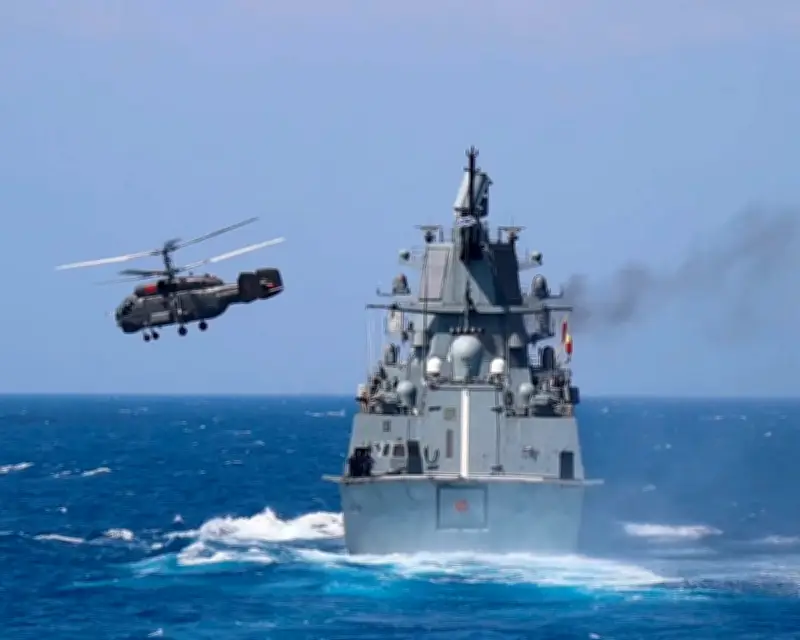
China crossed a red line when one of its missile destroyers held a live-fire drill inside Japan's exclusive economic zone, about 180 km from Okinotori island. Tensions rose after Japan's new prime minister, Sanae Takaichi, suggested a Chinese bid to seize Taiwan could trigger a Japanese military response. A Russian frigate accompanied the Chinese warship off Japan, highlighting Russia's role.
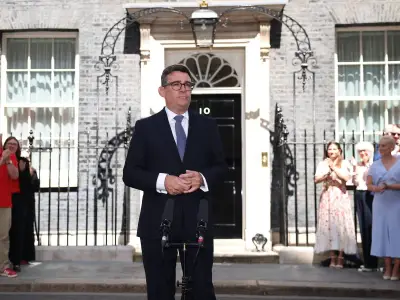
Russia's Black Sea fleet has suffered severe losses from Ukrainian missiles and drones since 2022. To compensate, it has expanded hybrid maritime operations against Ukraine's European allies, targeting Baltic pipelines and communications cables. Russia has also stepped up surface fleet and submarine activities in the North Atlantic, North Sea, and the English Channel, suspected of mapping underwater infrastructure. Last Monday, a Russian warship conducted a live-fire drill 70 nautical miles south of Plymouth on the first day of UK Prime Minister Andy Burnham's term. Last month, a Russian frigate fired warning shots near a private yacht off the Isle of Wight.
Lawlessness and Arms Race
Other incidents include the unlawful US sinking of an Iranian warship off Sri Lanka in March, a clash between Chinese and Philippine ships, Trump's revived threats to forcibly annex Greenland, and bombing of civilian boats off Venezuela. A Chinese nuclear submarine test-fired a long-range ballistic missile in the South Pacific, angering Australia. This instability fuels an accelerating global arms race, pressuring the UK to increase defence spending on the Royal Navy, including upgrades to the Trident nuclear deterrent.
This many-fronted war of the sea reveals how centuries-old maritime cooperation protocols are breaking down. International legal norms on free trade, offshore defence, sovereignty, borders, fisheries, deep-sea mining, and environmental pollution are sinking beneath the waves. It is a story of powerful countries imposing their will on others, discarding the concept of global commons, and resorting to gunboat diplomacy writ large.