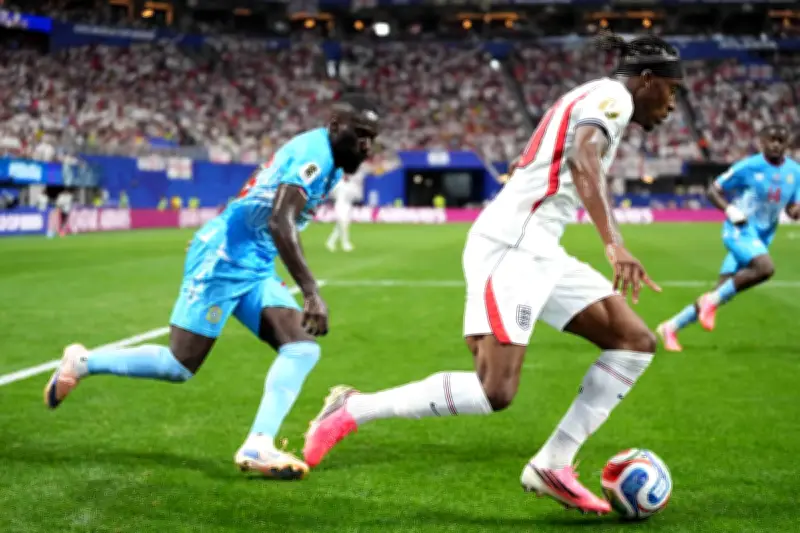
England's 2-1 victory over the Democratic Republic of the Congo (DRC) in the World Cup marked a historic first: winning a match after trailing 1-0 for the first time since the 1966 final. According to Opta, England had lost 17 of the previous 22 matches in which they conceded first in the tournament.
Beyond the comeback, a more niche statistical feat emerged: England attempted 35 crosses in open play, their most in a single World Cup match since 1966. That year, under Alf Ramsey, England also recorded high cross volumes. Seven of England's top-10 open-play cross matches occurred under Ramsey, with other instances in 1982 and 1998. This throwback performance highlights a tactical shift under Thomas Tuchel.
Crossing as a Strategic Choice
Tuchel's side faced a deep-lying DRC defence, similar to the challenge against Ghana in a goalless draw. Crossing became a viable strategy to bypass a compact block. While crossing can be inefficient—only 22.8% of crosses reach a teammate in the Premier League over 17 seasons, with 12.6% creating a chance and 1.4% becoming assists—it can be effective against stubborn defences. These figures include set pieces; open-play numbers are lower.

England's crosses often found Harry Kane. Anthony Gordon's cross led to Kane's equaliser against the DRC. Jude Bellingham also assisted Kane from a similar left-side position against Panama. Open-play crosses have been integral to England's creativity this summer, generating a higher expected-goal total than any other delivery method, according to Opta.
Chance Creation and Big Opportunities
Passes between players outside the box remain the most common source of created chances, occasionally yielding goals—like Bellingham's dribble against Croatia or Kane's winner against the DRC. However, passes into the box produce the highest-quality chances on average, though they are harder to complete against deep defences. Against more open opponents, England may have fewer opportunities but could exploit space.
Opta defines big chances as shots where an attacker is reasonably expected to score. England have had 20 big chances, the most of any team after Wednesday's matches. Six originated from open-play crosses, and three from corners, meaning nearly half came from wide areas. This reliance on crossing could continue, suggesting fans may not wait another 60 years to see such volume.