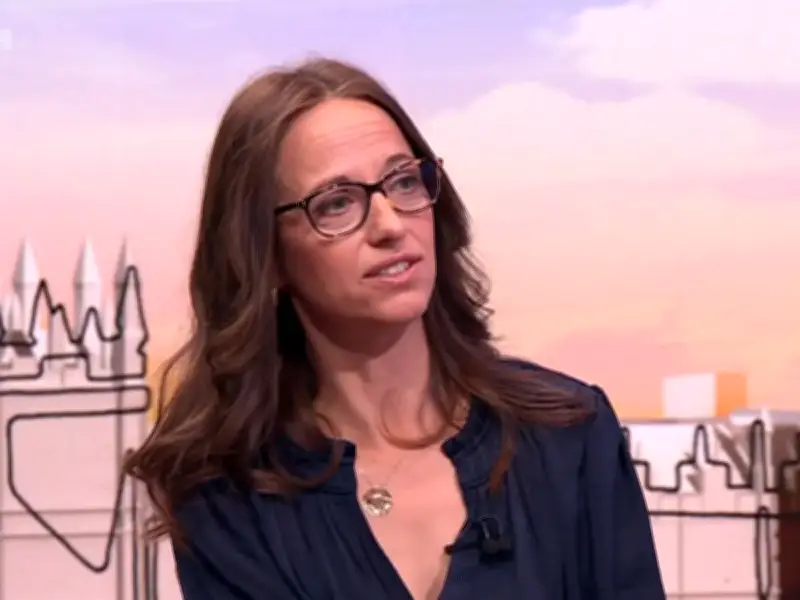
The Department for Work and Pensions has been urged to remove those with certain disabilities from receiving a key cash benefit. Shadow welfare secretary Helen Whately says she wants to reform Disability Living Allowance.
As of March 2026, there are 1,403,700 people claiming Disability Living Allowance (DLA) under Department for Work and Pensions (DWP) policy ownership, excluding claims administered in Scotland, where DLA has been replaced by devolved social security benefits.
Whately's proposal for DLA reform
Conservative Ms Whately said she wants to end DLA payments to families of children with “milder cases” of behavioural disorders, learning difficulties or ADHD. Appearing on Sunday with Laura Kuenssberg she said it would mean more than half a million children losing cash benefits.
She said: “What we’ve seen since 2019 is we’ve seen a doubling of the number of children whose families are getting benefits for behavioural conditions, for neurodiversity, for learning difficulties. But the fact is we haven’t seen a doubling in the actual prevalence of those conditions.
“It’s just a lot more being handed out. And what is happening here is a real labelling of children. Children being given this label at school as young as primary school that you have something wrong with you and you can’t do stuff and that you’re going to need cash benefits. And many of these children go on to pay And then they will end up some of these young people in employment and training.”
How many children could be affected
Host Laura Kuenssberg asked: “Some people watching might think more money is being given out because more support has been required. But I’ll ask you again, you’re planning to make a significant reduction to these kinds of benefits in future. How many children would lose benefits under your plans?”
Ms Whately said: “So we are going to say that there are around uh 70% of those who were claiming for those conditions and it’s the less serious ones and there’s due to be an increase over rule over the coming parliament.”
Ms Kuenssberg said: “So, how many children stand to lose under your plans? Because we we’ve looked at the numbers. Currently, there are 910,000 children who receive this. You’ve said you want to reduce the claims down to 30%, not 70%. By our numbers, that means 500,000 children might lose out under your plans.”
Ms Whately said: “Yes, it is. And but what I’m saying, to be clear, but they’re not losing out. I think this is this is the difference. They’re not losing out. Instead, we’re going to spend an extra billion pounds on support for those children to help them on CAMS a child mental health service that children that families say it’s so hard to access on family hubs on extra support for those children at the moment the families are given cash sometimes that’s used to help the children sometimes it goes to other things what those children need and many families will say they really want is support for those kids this is a better way round let’s focus on what these children young people can do not what they can’t stop telling them they need handouts.”
Broader benefit cuts proposed
The party is proposing that in cases where a claim is for a behavioural disorder, learning difficulty or ADHD, only those with the highest need will be eligible for cash payments.
The party’s other previously-announced cuts include:
- £13.7bn from changes to sickness and disability benefits including restricting payments to claimants with “milder mental health issues and neurodiversity conditions such as anxiety, depression and ADHD”
- £9.5bn by making it harder for foreign nationals to claim benefits
- £4.5bn by reducing local housing allowance payments
- £3.1bn by reintroducing the two-child benefit cap
- £1bn from tackling fraud
National insurance paid by businesses on workers aged under 25 should be gradually cut to get more young people into jobs, a major report into youth unemployment is expected to say. Alan Milburn is set to propose reducing employer contributions over five years for 21 to 24-year-olds, starting in retail and hospitality, in his review to be published on Tuesday.
The former Labour health secretary will recommend doubling the threshold at which businesses start paying national insurance on earnings from this age group from £5,000 to £10,000, the BBC reported. He has made clear one of his suggestions will be for a “legal guarantee” of work, training or employment support for young people, with those who refuse to take up the offer potentially losing benefits.
Mr Milburn is expected to argue that equipping young people with skills is pointless if they cannot go on to access jobs, with changes to national insurance brought in “when economic conditions allow”.