Kirsty Coventry's First Year: Transforming the IOC Amid Mounting Challenges
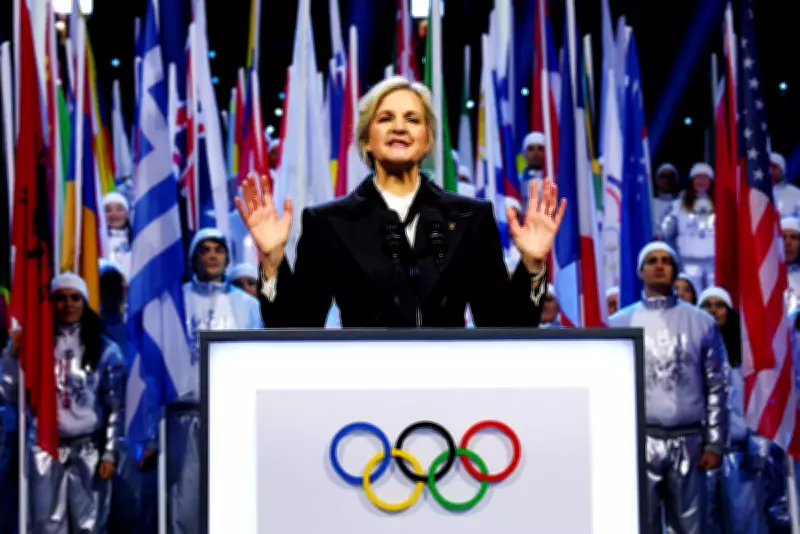
It has been precisely one year since Kirsty Coventry was sensationally elected as President of the International Olympic Committee, making history as the first woman and first African to hold the most powerful office in global sport. Her victory came after defeating formidable competition, including British candidate Lord Coe, and she officially succeeded Thomas Bach nine months ago. IOC members and officials now speak of significant cultural shifts following Bach's twelve-year reign, with Coventry's leadership bringing a more open and modern atmosphere to the organisation's headquarters in Lausanne, Switzerland.
A New Era of Internal Dialogue and Family-Centric Leadership
Soon after assuming the presidency, Coventry conducted private consultations with IOC members to genuinely understand their perspectives on critical issues. Czech representative Jiri Kejval notably expressed that it was the first time in his five-year membership that someone had actively sought his opinion. This inclusive approach marks a departure from previous administrations and has fostered a less pressurised, more relaxed environment within the IOC's walls.
Coventry has further demonstrated her commitment to balancing professional responsibilities with personal life by relocating her young family to Lausanne. She typically concludes her working day at 5pm to spend time with her family, a practice she maintained even during the recent Winter Olympics in Milan-Cortina, where she was seen having breakfast with her baby son. This "normal" approach to leadership has resonated internally, where she is viewed as tough yet capable of wearing her considerable responsibilities lightly.

External Challenges Begin to Surface
While internal support remains strong, external challenges have started to emerge. Ukrainian skeleton racer Vladyslav Heraskevych, who wore images of Ukrainians killed in Russia's war during competition, presented an early test. Coventry personally intervened, moved to tears in her efforts to persuade him to remove the helmet while upholding the principle of no political messaging within the field of play. Heraskevych remained unmoved and has since been highly critical of her handling of the situation.
Coventry has openly expressed her desire to refocus the Olympics away from the expanded geopolitical role it assumed under Bach, who often positioned the IOC as an arm of the United Nations and an agent of world peace. Elected on an athlete-first manifesto, she aims to return the IOC to its primary mission of organising Olympic sport. This intention was evident last month when the committee issued a belated statement on the USA's bombing of Iran, downplaying the Olympic Truce as merely "an aspirational and non-binding resolution" rather than a tool to criticise the next summer Olympics host nation.
The Looming Trump Problem and Political Inevitabilities
Despite her efforts to avoid political entanglements, Coventry finds this increasingly impossible. At a recent press conference, she was blindsided by questions ranging from FIFA President Gianni Infantino's relationship with Donald Trump to the prospect of Germany hosting the Olympics on the centenary of the Nazi-organised 1936 Berlin Games. Coventry half-joked about dismissing her team for not briefing her adequately, revealing both irritation and a potential strategy of claiming ignorance on contentious issues.
She is already confronting deeply emotive matters including war and gender identity. Her recent announcement that the IOC will ban transgender women from women's events in future Olympics was welcomed by many within the committee and the wider sporting world, demonstrating her strength and clarity. However, the decision to employ controversial gene-screening for gender verification is likely to face significant ethical criticism.

The 2028 Los Angeles Olympics and Trump's Shadow
The most formidable challenge on the horizon remains Donald Trump. An IOC source revealed that Coventry is quietly dreading her political dance with the US president ahead of the 2028 Los Angeles Olympics. The Games will be held in California, a Democratic heartland that Trump openly despises, adding further complexity. Governor Gavin Newsom, a potential future Democratic presidential nominee, and Olympic committee chairman Casey Wasserman, a prominent Democrat supporter, are both figures Trump intensely dislikes.
Wasserman's position has already come under severe pressure following the release of the Epstein files, creating additional complications for the LA Olympics. Coventry is unlikely to emulate Infantino's approach of cosying up to Trump, but those who resist his ego often face his wrath. This dynamic will require Coventry to navigate treacherous political waters with exceptional skill.
Additional Complexities and Future Legacy
Further challenges include Russia's participation, complicated by the Paralympics' decision to fully reinstate Russia and its ally Belarus. Sustainability concerns surrounding the bloated 36-sport LA Games and efforts to make the Olympics relevant for youth audiences also demand attention. While Coventry has made a solid impression internally, her ultimate legacy will be determined by how she manages these external pressures.
Her aspiration to focus purely on organising sports events will inevitably be disrupted. The Olympics' immense power and desirability make it impossible to escape hard questions or avoid being used for political point-scoring. Coventry's task is to chart the IOC's course through these increasingly choppy waters. One year after her historic election, the real work is only just beginning.