ESPN's Buster Olney Issues Stark Warning on Sports Journalism Ethics
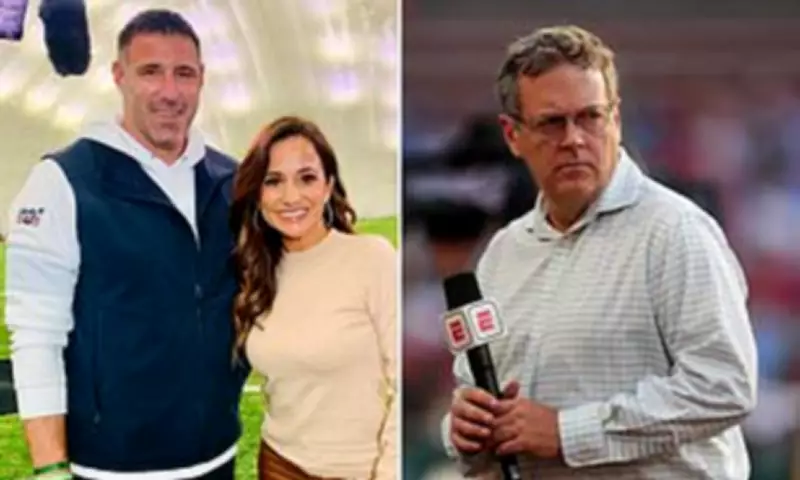
Major League Baseball insider and long-time ESPN reporter Buster Olney has delivered a powerful warning about the deteriorating state of sports journalism in the wake of the Dianna Russini-Mike Vrabel controversy. Speaking on ESPN radio in New York, Olney expressed deep concern over the prevalence of quid pro quo arrangements in the industry.
'I do hope this whole thing opens up a larger conversation about the potential destructiveness of quid pro quo in our business, because let me tell you something: It's as bad as I've ever seen,' Olney stated emphatically during his radio appearance.
The Controversy That Sparked the Conversation
The controversy erupted after the New York Post's Page Six published exclusive photographs showing New England Patriots head coach Mike Vrabel and top NFL insider Dianna Russini greeting each other and socializing poolside at Ambiente, an adults-only resort near Sedona, Arizona. Both individuals have vehemently denied any improper conduct, but the images of a reporter fraternizing with someone she regularly covers have raised significant questions about journalistic ethics and professional boundaries.

While Vrabel has faced no disciplinary action, The Athletic's parent company, The New York Times, has placed Russini on administrative leave pending an investigation into both the photographs and her reporting practices. This development has sent shockwaves through the sports journalism community and prompted serious reflection on industry standards.
Olney's Broader Concerns About Industry Practices
Olney, who previously worked for The New York Times before joining ESPN in 2003, clarified that he was not specifically addressing Russini's situation and claimed no inside knowledge about her reporting on Vrabel or the NFL generally. However, the 62-year-old baseball reporter did not mince words when criticizing what he described as blatantly transactional interactions between journalists and their subjects.
'The other day, I was having a conversation with an executive of a team who said: "When I read a story, I can connect all the dots. You know this person, you know this reporter has a relationship with this agency, and here's how the truth is being bent because of that relationship and that man."' Olney revealed, adding 'I see it too. I'm aware of what's going on behind the scenes.'
The veteran journalist painted a troubling picture of behind-the-scenes arrangements, suggesting that some reporters might compromise their integrity in exchange for exclusive information. '"Hey, if I give you this quote-unquote scoop, then you can bend the number this way, or you can bend the truth this way…"' Olney explained, highlighting what he perceives as a growing problem in sports coverage.
Historical Comparisons and Industry Impact
Olney drew a striking parallel between current journalistic practices and baseball's steroid era in the late 1990s, when certain sluggers were widely suspected of using performance-enhancing drugs but faced no formal allegations for years. 'It's as if I'm a player, who is in the middle of the 90s steroid era, where you're looking around going: "Come on with some of the stuff that's happening,"' he remarked.
The ESPN reporter emphasized that the ultimate victims of these questionable practices are sports fans and consumers of journalism. 'And you know, the people who suffer for it, of course, are the viewers, the listeners, because they don't have the context in the way that someone like me or the executive I was talking with has about what's going on behind the scenes,' Olney stated, concluding with a call for greater scrutiny: 'I really hope it's something that gets scrutinized here as we move forward.'
Broader Industry Reactions and Concerns
Olney is not alone in expressing concern about the implications of the Russini-Vrabel controversy. Sports Illustrated's Albert Breer acknowledged that the situation 'raises questions' about Russini's reporting, whether fairly or not. Speaking to 98.5 The Sports Hub in Boston, Breer noted the particular challenges faced by female journalists in such circumstances.

'The lines get blurred in these sorts of situations sometimes, and again, it's hard because I think a lot of times, my female colleagues get questioned in ways when they're seen, with these guys, out, in ways that I do not get questioned,' Breer observed, adding 'And I think a lot of that is totally unfair.'
Breer expressed concern about potential collateral damage, stating: 'And if this is what it looks like, then this is really bad for all the women who are doing it on the level. Dianna's done such a good job covering the league, but if that line was crossed, well then she's screwing over a lot of other women. It's going to make people make assumptions about a lot of other women that don't deserve to have those assumptions made about them.'
Internal Criticism and Organizational Response
Some criticism has reportedly emerged from within The New York Times organization itself. According to insiders who spoke with Status News, The Athletic's response to the suggestive photographs has been described as 'unnecessarily messy,' 'reckless,' 'premature' and 'intentionally sneaky.'
The Athletic's executive editor Steven Ginsberg issued a statement defending Russini's professionalism while criticizing the photographs as 'misleading' and lacking 'essential context.' 'These were public interactions in front of many people,' Ginsberg told Page Six. 'Dianna is a premier journalist covering the NFL, and we're proud to have her at The Athletic.'
Personal Context and Ongoing Investigation
Both Vrabel, the reigning NFL Coach of the Year, and Russini, a top reporter for The Athletic, are married to other people with whom they share children. They have each issued statements confirming their March 28 interaction at the Arizona resort but have denied any improper conduct, with Vrabel specifically calling the story 'laughable.' Russini told Page Six that she and Vrabel were at the resort with larger groups of people present.
The Daily Mail has since confirmed that Russini remains on leave while The Athletic investigates both her coverage and the circumstances surrounding the photographs. Representatives from both The New York Times and The Athletic have declined to comment further on the ongoing controversy, leaving many questions unanswered as the sports journalism community grapples with these significant ethical concerns.