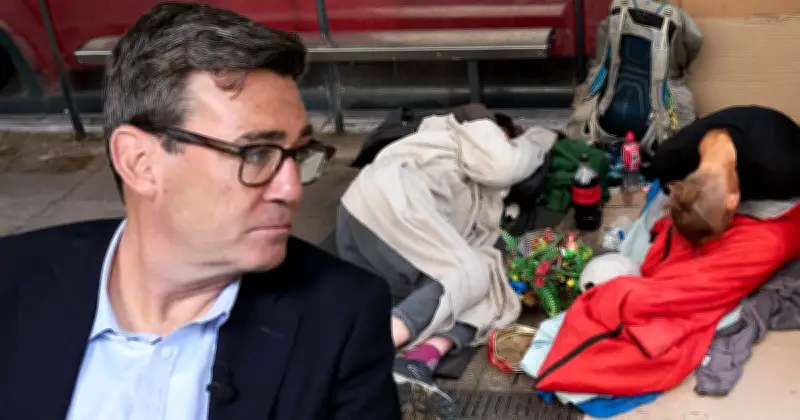
St Mungo's chief executive Emma Haddad has said that Andy Burnham's bid to end rough sleeping must address the causes of homelessness, not just respond to the crisis. Writing in an opinion piece, she said that a safe place to sleep is just the start and that short, sharp interventions can only go so far.
Haddad said that it has been less than a week since the Prime Minister announced a national drive to provide routes off the streets for anyone forced to sleep rough by Christmas. She said St Mungo's shares the belief that nobody, whoever they are, should be forced to sleep on the streets.
Day and night, frontline teams are out on the streets trying to find people, build trust and bring them into the right accommodation for their needs. However, this work remains challenging because there haven't been the resources or the right services to enable long-term recovery and break the cycle.

National ambition is only the beginning
Haddad said that the national ambition to bring in as many people as possible by Christmas is not a permanent fix, it's only the beginning. During the pandemic, thousands of people were brought off the streets as additional accommodation was unlocked. Through bold and decisive action, St Mungo's worked with people facing complex and multiple challenges for months and years, helping them to find permanent routes off the streets.
As Mayor of Greater Manchester, Andy Burnham's Homelessness Prevention Scheme had a similar impact, almost halving the number of people recorded as rough sleeping there. Haddad said that getting people out of crisis situations and off the pavements can be done, but both in Manchester and across the country, the number of people rough sleeping has continued to rise because short, sharp interventions can only go so far.
A safe place to sleep is just the start; it's no use giving people an offer to come in for Christmas, only for those people or a new group of people to find themselves homeless by Boxing Day. Following the pandemic, St Mungo's advised the government that rough sleeping couldn't be ended through crisis responses alone.
Long-term support and accountability needed
As secretariat for the Kerslake Commission on Rough Sleeping, St Mungo's rightly predicted that the government were unlikely to meet their targets to end rough sleeping without clear routes into housing, support and long-term recovery. For a long time, the growing numbers and growing tragedy of people sleeping on the streets has, by many, just been accepted as the norm.
Charities like St Mungo's, working with local authorities and other agencies, have been on the frontline of this emergency, supporting people who are long-term rough sleeping, navigating multiple challenges and who may have complex support needs. All of these challenges are only getting harder the longer people remain on the streets.
Haddad said that the path towards recovery isn't a straight line. It takes person-centered support to build independence, resilience and wellbeing, and established routes into education, training and employment. The support offered to anyone brought inside needs to continue with long-term focus, commitment and funding. Without it, there is a risk of thousands of people being trapped in a temporary response or being turned back onto the streets.
Prevention and housing investment
It also requires accountability across government to ensure health, housing, immigration and support services are working together to prevent people from coming onto the streets in the first place. Discharging people directly onto the streets from hospitals, prisons, the immigration system or the care system needs to stop now.
Across England, too many people are falling through the cracks because genuinely affordable housing has not been prioritised. People on housing benefit, and those on the lowest incomes, are being priced out of the private rented sector as rents continue to soar. Local Housing Allowance is no longer keeping up and raising it would help tackle a big driver of homelessness.
The warning signs for someone falling into homelessness are well known; from people struggling with the cost of living, to those who have lost their jobs and can't maintain their tenancies. Intervening when these signs begin to show is far more effective and less costly than waiting for the crisis to hit.

St Mungo's is ready to bring people in for Christmas and provide those first steps to rebuild their lives away from the streets. Beyond this, Haddad said, we need to pull together to support these people to rebuild their lives and make sure no-one else is left out in the cold.