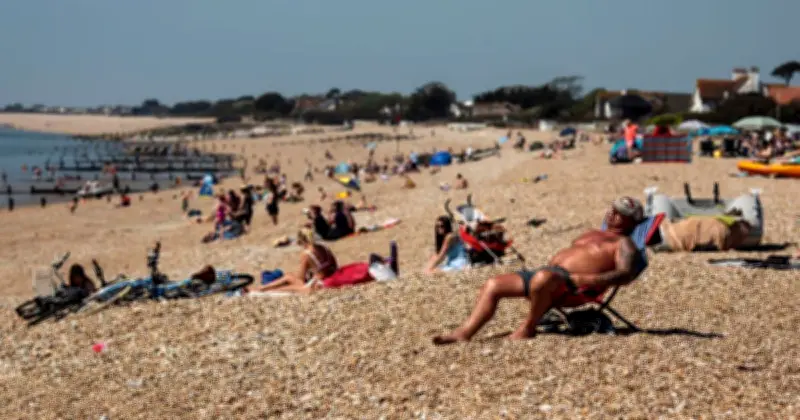
As the new Prime Minister prepares his first PMQs, Andy Burnham must look beyond his urban comfort zone and consider how to support coastal communities and seaside resorts, writes Duncan Barkes. Not a week passes without a report listing the UK's worst seaside towns, which is depressing and demeaning to some once great coastal locations.
A recent Which? Travel survey has decreed that Bognor Regis is the worst seaside town in the UK – a claim that is as insulting as it is incorrect. The conclusion was reached by 3,872 panellists reporting on 8,952 coastal trips across 11 categories including value for money, shopping, parking, food and drink, scenery, tourist attractions, peace and quiet and quality of the seafront. Bognor Regis scored the lowest across the range of categories and therefore has been branded the worst seaside town in the country.
Local Perspective and Wider Challenges
Bognor Regis is just along the coast from where I have lived for over 20 years – I have also previously worked as a local journalist and radio presenter in the area and once organised a “Bognor Is Beautiful” campaign on local radio. The town does have its challenges, but then so do the other locations that received poor rankings on the list that only seems to exist to enforce negative stereotypes. Lowestoft, Great Yarmouth, Blackpool, Fleetwood, Bangor, Skegness, Clacton-on-Sea and Burnham-on-Sea all received a walloping from the panellists.

Britain’s seaside towns have long been let down by politicians over the years despite solid local attempts to reinvigorate them. The situation has not been helped by government departments and outside local authorities using them as a dumping ground for tenants with anti-social behaviour or addiction issues.
Health and Economic Disparities
It is no coincidence that an Office for National Statistics report last year found that Blackpool has the lowest life expectancy for men in the UK with an average of 73.7 years – compared to Hart in Hampshire where the average man can expect to live until he is aged 83.4 years. But this 10-year life expectancy gap is not about the kind of north/south divide that our Prime Minister seems keen to address – the government’s own Ministry for Housing, Communities and Local Government research reveals that Hastings, a town on the south coast in East Sussex, is home to some of the most deprived areas of the UK.
Social and health disparities aside, the Labour government must take responsibility for how their recent policies have damaged seaside towns trying to entice more visitors and investment. Businesses that operate in the tourism sector and until recently would hire staff on a casual basis along seasonal requirements now face less flexibility and more red tape due to Labour’s Employment Rights Bill. The last two budgets drawn up by then Chancellor Rachel Reeves saw the minimum wage go up and an increase in the National Insurance paid for by the employer.
MP's Call for Recognition
These additional costs, along with added bureaucracy, have made it even tougher for small businesses that rely on tourism for custom. Alison Griffiths is the MP for Bognor Regis and Littlehampton – the latter a town that also scored poorly in the Which? Travel survey. She said: “People in Bognor Regis and Littlehampton are fiercely proud of our coast, and with good reason. Tourism gives our towns their character and supports local jobs, from family attractions and hotels to cafes, pubs and guesthouses, yet Whitehall still treats seaside economies as an afterthought.”
Alison added: “Andy Burnham says he wants growth in every postcode – he should start by recognising that a coastal economy is not an urban high street with a beach attached.”
As the Prime Minister continues his carefully managed tour of the UK, he must visit our seaside towns in various parts of the country and not just in the north. If he is genuinely committed to changing the country in its entirety, then he needs to hear from those living and working in these locations to understand their frustrations and needs. And the solution is not just about giving more money to these communities – something our country can ill afford.

He can start off by working with his Chancellor on ways to help those employers in seaside resorts hire more people and invest in their businesses thereby creating vital employment opportunities for local people and enhancing their offering to tourists. When not preparing for his first Prime Minister’s Questions next week in the House of Commons, Mr Burnham needs to be heading to beaches without his bucket and spade to ensure that our seaside towns do not get left behind forever.