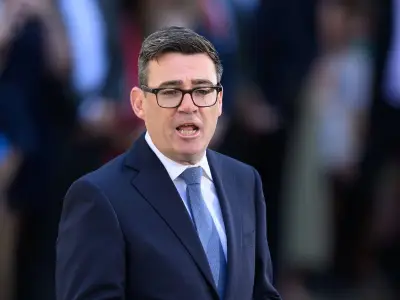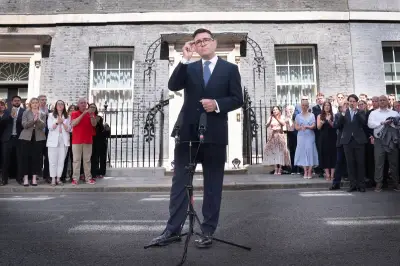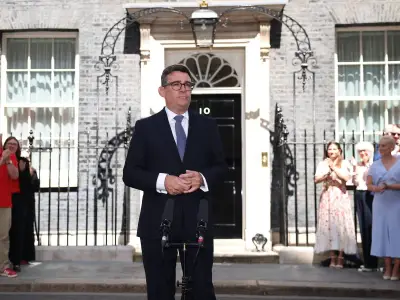
The government of Prime Minister Andy Burnham is examining proposals that could lead to the complete switch-off of Freeview, the digital terrestrial television service that serves 12.9 million households. A consultation is underway, with the public given until August 31 to submit their views.
Consultation and deadline
In a parliamentary question, Tory Sir Gavin Williamson asked Culture Secretary Lisa Nandy about the cost to households on fixed incomes of switching from Freeview to broadband television, and the potential impact of ending licenses for digital terrestrial television in 2034. He also asked whether she intends to extend the Freeview contract beyond 2034.
Ian Murray, Minister for Creative Industries, Media and Arts, responded that a consultation is ongoing, with the deadline for submissions being August 31. He said: "Parliament has secured the future of freeview, also known as digital terrestrial television (DTT), until at least 2034 and no decision has been made about what happens beyond this. On 23 June the Government published a Green Paper, Watch this Space: A new strategic direction for UK media which consults on both 2034 and 2044 as possible timeframes to switch off DTT."

Reasons for potential switch-off
The government notes that viewing habits have moved away from traditional linear broadcasting to online streaming. Broadcasters argue that maintaining both the terrestrial aerial network and online streaming is increasingly costly, and shutting down Freeview would cut millions in distribution costs, freeing up funds for programming.
Murray added: "The Government recognises that millions of households continue to rely on DTT. At the same time audiences are increasingly choosing internet-based television services (IPTV), and maintaining a traditional broadcast infrastructure for a declining audience is becoming increasingly costly for our public service broadcasters."
Campaign against switch-off
A significant campaign has emerged to rescue the service, arguing it would disproportionately affect the elderly, vulnerable, and rural communities. Households might need to sign up for broadband and potentially buy new televisions. A Change.org petition has amassed over 150,000 signatures.
Countryside Alliance said: "For many people living in rural communities, television is more than just entertainment: it is a vital lifeline for news, information, and connection - particularly for older residents or those who may feel isolated. Most people are unaware this decision is even being considered."
Support package and future plans
Murray indicated that should the plan proceed, a support package would be available. He said: "The Government is clear that no one should be left behind as television watching increasingly moves online. A core objective of the DCMS's future of TV distribution work is to ensure that any transition is inclusive."
The Future TV Taskforce, a collective of public service broadcasters and Everyone TV, supports a planned transition. A representative stated: "The Taskforce supports a carefully planned, managed transition from digital terrestrial television (DTT) to internet‑delivered TV and a potential switch‑off in the mid‑2030s, as part of a broader, UK‑wide digital inclusion and transition plan."
The BBC has proposed switching off Freeview by the mid-2030s, which would require households to have a high-speed broadband subscription to access BBC channels, potentially costing hundreds of pounds per year.