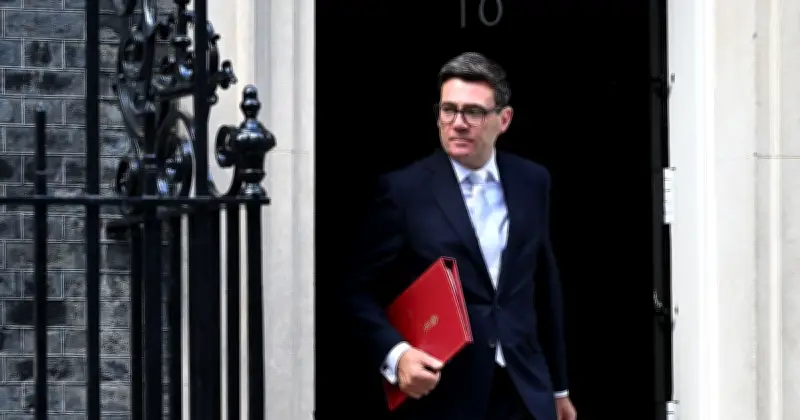
Prime Minister Andy Burnham is increasingly likely to remove the pension triple lock, according to a recent survey that shows a drop in public support for the policy.
Last month, Mr Burnham announced plans to end the triple lock in its current form at a conference in Liverpool. He said that if Labour wins the next general election, a new “adjusted” version of the lock would see the state pension rise each year by at least inflation or 2.5 per cent.
Poll Shows Shift in Public Opinion
A BMG poll for The i Paper shows Labour has increased its lead in the polls compared to last month, and the poll also showed a drop in support for the triple lock. However, 48% still support the lock.
Robert Struthers, head of public perceptions at BMG, offered a different view. Quoted by The i Paper, he said: “You might be tempted to argue that Burnham remains on the wrong side of public opinion on the issue. Far more continue to support it, after all. But I don’t think that’s the right reading. A drop of this size so soon after a major intervention suggests Burnham has perhaps started to win the argument.”
He added: “Polling on the triple lock is also tricky, as results can vary widely depending on how the question is asked. Yes, many people back the triple lock in principle – but there is a paradox: framed differently, many also back replacing it. Other polling has shown that when Burnham’s plan is presented as replacing the triple lock and putting the savings into social care, people support that too.”
Government and Ministerial Support
“So, I think the fall in support for the triple lock in principle here is what’s telling. Much of the detail – and all of the implementation – is still to come, but the public have responded well at least initially. He has taken on a tricky argument and, so far, there are signs he is winning it.”
Recently, Pat McFadden, the Work and Pensions Secretary, said reforming the triple lock is the “right answer to a difficult question”. He also said the Pensions Commission, a Government-backed body set up to look at retirement outcomes, had been tasked with exploring ways of “further supporting lower-income pensioners”.
The state pension is currently guaranteed to rise by either average wage growth, consumer price index inflation (CPI) or 2.5%, whichever is highest. Under the proposed, changed model, pensions would rise by the highest of either inflation, 2.5% “or what is required to maintain its record high level against average earning”, the minister added.
Savings and Future Plans
The state pension would “continue to rise but not permanently grow as a share of average earnings”, he said. By making the changes, ministers expect to save £15 billion a year by the end of the next decade, rising to around £50 billion a year by 2050.
These savings would help support a new national care service, which Mr Burnham has said would be “a person-centred, high-quality care service that starts in the home”, with “no care charges paid out of your basic state pension”.