

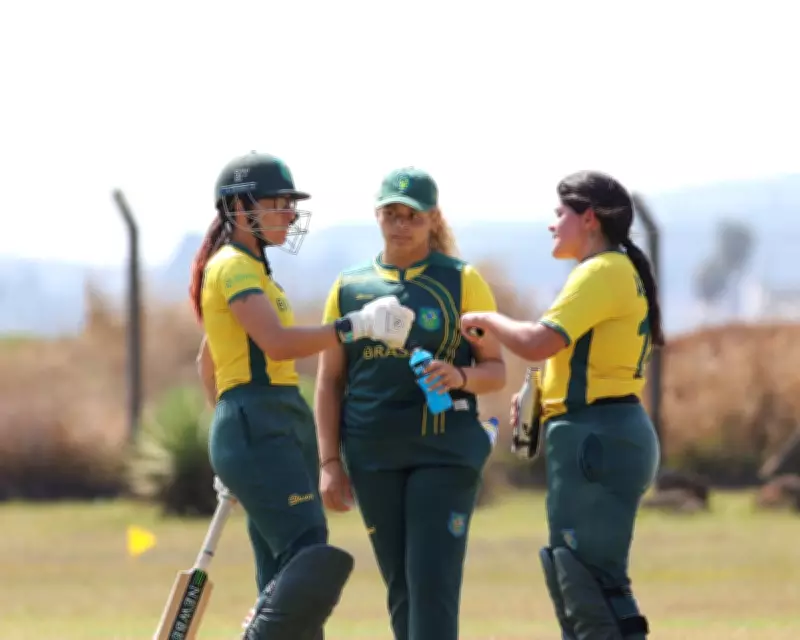
Brazil's Cricket Revolution: A Small Town's Global Impact
In a remarkable turn of events, Brazil has emerged as a standard bearer for cricket's global expansion, with the small town of Poços de Caldas near São Paulo at the heart of this sporting transformation. The Brazilian Cricket Confederation (BCC) reported running events for 100,000 people last year, predominantly women and girls, showcasing the sport's rapid rise in a nation traditionally dominated by football.
The Accidental Origins in Poços de Caldas
Located approximately 250km north of São Paulo in south-east Brazil, Poços de Caldas is known for its thermal baths and unique geology, but it is now gaining fame for its cricket culture. The sport's arrival was purely serendipitous, stemming from two chance romances. In 2000, Matt Featherstone, a former Kent cricketer, moved to the town after falling in love with a Brazilian student he met in London, bringing cricket with him. Years later, Roberta Moretti Avery, after witnessing the 2005 Ashes in England and initially dismissing the game as boring, convinced her English husband to relocate to her hometown, coincidentally also Poços de Caldas.
Moretti Avery eventually embraced cricket, becoming captain of the national team and now serving as president of the BCC. From having no organised cricket before Featherstone's arrival, the region alone saw 7,000 people under 30 playing regularly last year, with the mayor suggesting cricket might even surpass football in popularity locally. Across Brazil, participation has surged to 12,000, with the sport primarily attracting underprivileged communities, leading to donations of kit and a visible presence of cricket attire on the streets.

Explosive Growth and International Recognition
The BCC's efforts have been instrumental in this surge:
- In 2023, the confederation organised presentations, competitions, and festivals for 44,000 people.
- By 2024, this number increased to 80,000.
- Last year, it reached 100,000 participants, with a strong focus on women and girls.
Most players are native Brazilians, and the BCC has even begun producing its own cricket bats. This growth has captured the attention of the International Cricket Council (ICC) in Dubai. Will Glenwright, ICC's head of global development, highlighted Brazil alongside Nigeria as key drivers of global cricket expansion, noting a 24% year-on-year growth in participation among associate members.
Global Strategies and Digital Engagement
The ICC is leveraging events like the men's T20 World Cup to boost international interest. Finn Bradshaw, ICC's head of digital, explained initiatives to reach new audiences:
- Broadcasting matches in non-English languages, including Urdu, Nepali, Japanese, and Bahasa for the first time.
- Using AI to produce highlights in Arabic and Portuguese.
- Streaming high-profile games like India vs. Pakistan on YouTube in territories without broadcasters, attracting thousands of viewers in languages such as Japanese.
Digital engagement metrics show significant increases: traffic to the ICC website rose by 42% in the Netherlands, 52% in South Africa, 72% in Italy, 145% in Japan, and 600% in Zimbabwe compared to the previous T20 World Cup period.
A Vision for the Future
Glenwright emphasised that the ICC's goals encompass performance, participation, and monetisation, aiming to make cricket more significant globally. In Brazil, ICC support has been crucial for sustainable growth over two decades. Moretti Avery noted that increased visibility has fostered a sense of community, with Brazilians starting to see cricket as their own sport. This shift represents a massive step for the country's sporting landscape, as children now believe they are part of a larger international cricket community.






