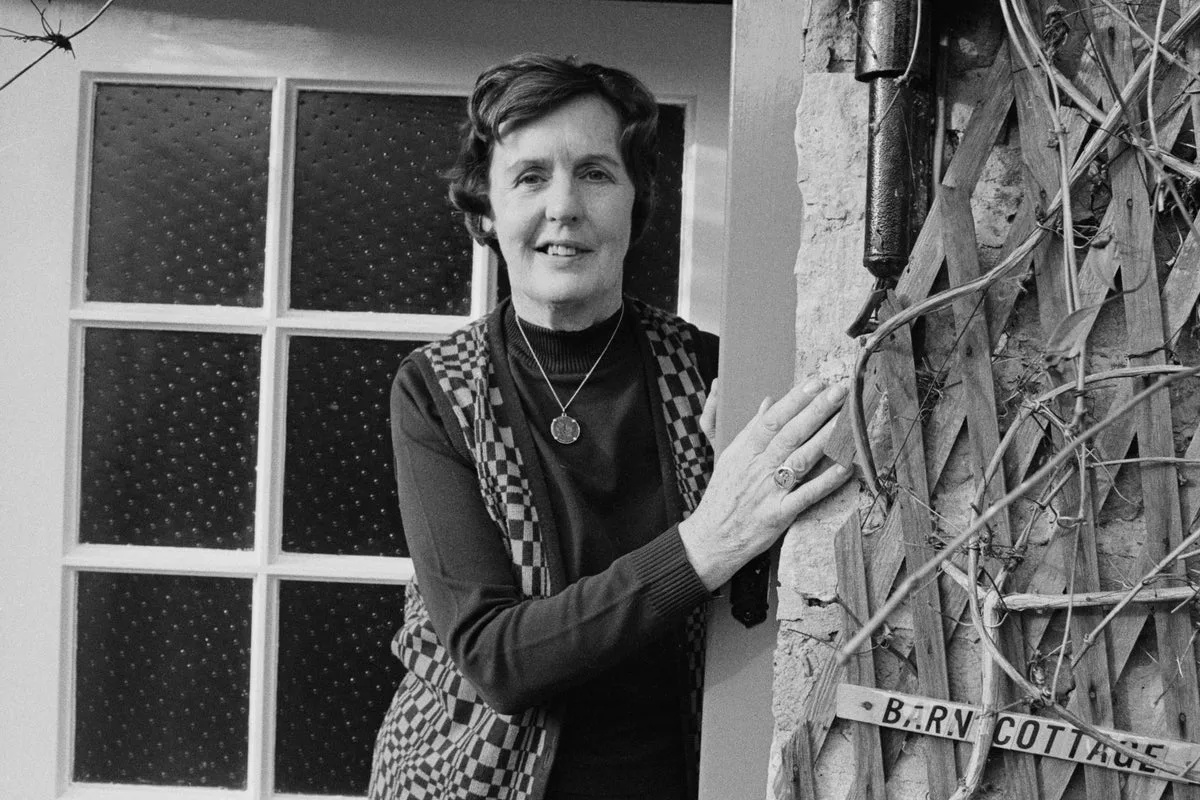
In the 1970s, author Barbara Pym languished in literary obscurity. In 1963, her long-time publisher Jonathan Cape rejected her seventh novel, An Unsuitable Attachment. Subsequent attempts to publish elsewhere met similar fates. 'I get moments of gloom and pessimism when it seems as if nobody could ever like my kind of writing again,' she wrote in 1970.
Fortunately, Pym's fears proved unfounded. A revival, spearheaded by poet Philip Larkin, saw her next novel, Quartet in Autumn, nominated for the Booker Prize in 1977. Now, nearly 50 years after her death in 1980, her work enjoys renewed popularity. The latest 'Pymnaissance' includes a stage adaptation of Quartet at London's Arcola Theatre, written by Booker-winning author Samantha Harvey, with a TV drama reportedly in development.
Pym's fiction depicts a distinctly English milieu of vicars, spinsters, and parish committees, often populated by 'excellent women' like Mildred Lathbury, the heroine of her 1952 novel. These characters are clever, self-reliant, and capable, with rich inner lives that belie their mundane circumstances. 'Might not the experience of “not having” be regarded as something with its own validity?' ponders Letty in Quartet in Autumn, a sentiment that resonates with single, child-free women today.

Yet by the 1960s, Pym's world seemed out of step with the swinging era. Her books were deemed too cosy and old-fashioned, concerned with trivialities. Manuscripts piled up unpublished in her linen cupboard. However, in 1977, Larkin named Pym the most underrated writer of the last 75 years in the Times Literary Supplement, a sentiment echoed by academic Lord David Cecil. This support prompted a publishing turnaround, and Pym's resilience—she had several completed works ready—led to the swift publication of Quartet in Autumn.
Since then, Pym has enjoyed a resurgence, buoyed by interest in overlooked writers. Her sharp dialogue and ironic viewpoint, often compared to Jane Austen, continue to captivate readers. As one character notes, 'the experience of “not having” has its own validity'—a theme that feels strikingly modern in today's conversations about singlehood and female independence.