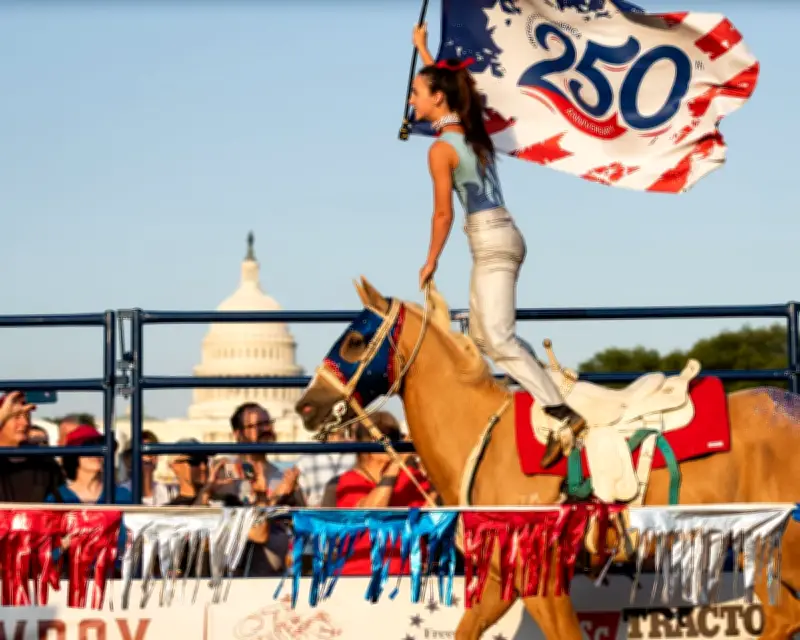
Jamil Smith, a Guardian US columnist, argues that America's 250th birthday is a comfortable fiction, as the nation is broken and requires repair, not celebration. He writes that 1776 was a declaration, not a birth certificate, and the founders wrote claims of human equality while enslaving human beings. A truer account of American freedom, he says, runs through 1619 and Juneteenth, when Americans forced the country to begin making its promises answerable to reality.
Widespread Dissatisfaction with the Country's Direction
Smith notes that he is not alone in his lack of enthusiasm for 'America 250'. The Pew Research Center found that 69% of Americans were dissatisfied with the country's direction early this year. He asserts that this is not ingratitude but clear vision.
In the final days before 4 July, the US Supreme Court gave the country a diagnosis of itself. It preserved one of the country's greatest repairs – birthright citizenship under the 14th amendment – while loosening a guardrail against corruption and weakening another promise of equal protection. Nearly 250 years later, the US is not a finished monument, but a structure still under repair, still contested, and in places being quietly stripped for parts.

Repair as the Unglamorous Work of Keeping a Structure Standing
Smith defines repair not as nostalgia or a fresh coat of patriotic paint on a crumbling house, but as the unglamorous work of keeping a structure standing: protecting democracy and civil rights, building enough homes for people to live with dignity, limiting the power of money, and preserving public memory that tells a country what it has broken and why.
He highlights that the president tried by executive order to read the children of undocumented and temporary residents out of the 14th amendment. The court blocked him, six to three, though only five justices joined the chief justice's full constitutional reasoning. Justice Ketanji Brown Jackson, concurring, called the Reconstruction amendments 'an anticaste, antisubordination reset', not 'a mere spot treatment for the dark stain of slavery'.
Birthright Citizenship: A Repair, Not a Gift
Smith emphasizes that the citizenship clause was not a gift the founders left us; it was a repair, built after Dred Scott, slavery, and war to overrule a court that had made blood the measure of belonging. He writes that repair is not merely restoration but how we get better. Birthright citizenship is proof that the founding promise did not preserve itself; it had to be rebuilt into the constitution after the country's own highest court exposed the lie beneath the celebration.
However, the victory did not last the afternoon. Within hours, the president called the ruling 'too bad for our Country' and told Congress to 'start TODAY' on ending birthright citizenship, insisting no amendment was needed. Smith notes that ordinary legislation cannot rewrite a constitutional guarantee, but Brett Kavanaugh wrote that Congress could carve out exceptions by statute. A repair can be upheld in the morning and marked for demolition by nightfall.
Memory as a Form of Repair
Smith argues that distortion, not just forgetting, is how an old hierarchy returns in new language. He cites the civic work of Bryan Stevenson and the Equal Justice Initiative's Legacy Sites: memory as infrastructure, not sentiment. The Thomas dissent recast the 14th amendment as a narrow favor to freed slaves, while Jackson named the danger: a retelling that pits Black Americans against immigrants, when the people who fought for Reconstruction did no such thing.
As it protected citizenship, the court took down a guardrail meant to keep representation from becoming a market. In a case brought by Republican campaign committees, the justices struck decades-old limits on how much a party may spend in direct coordination with its candidates. Those limits stopped donors from buying through the party what they could not buy through the candidate.

Repair Means Seeing People as People
Smith notes that the court upheld state laws barring transgender girls from girls' sports, and in the West Virginia case it let the category decide without asking whether excluding one child – who socially transitioned in grade school and took puberty blockers before she ever competed – actually served the state's stated interests. He calls that permission to discriminate, not equal protection.
Repair is not only constitutional; it is material. Days earlier, Congress passed a rare bipartisan housing bill to make homes easier to build and afford. The president canceled the signing ceremony, calling the bill 'a big yawn' and less urgent than a voting bill that would make registration harder – a restriction he called a 'National Emergency'.
Conclusion: Get Busy Fixing
Smith concludes that celebration will not house people, protect voters, or repair what power is trying to break. A country can be taken apart slowly, lawfully, one ruling at a time – and the people taking it apart are not vandals but officials: a president who cancels a housing signing by lunchtime, a court that clears the way for the largest checks, all of it done in the name of patriotism. The answer is not fireworks, and it is not despair. It is to name plainly what is being damaged, and by whom – then to get busy fixing it. He ends with the quote: 'A republic does not survive because its people praise it. It survives because they repair it.'