

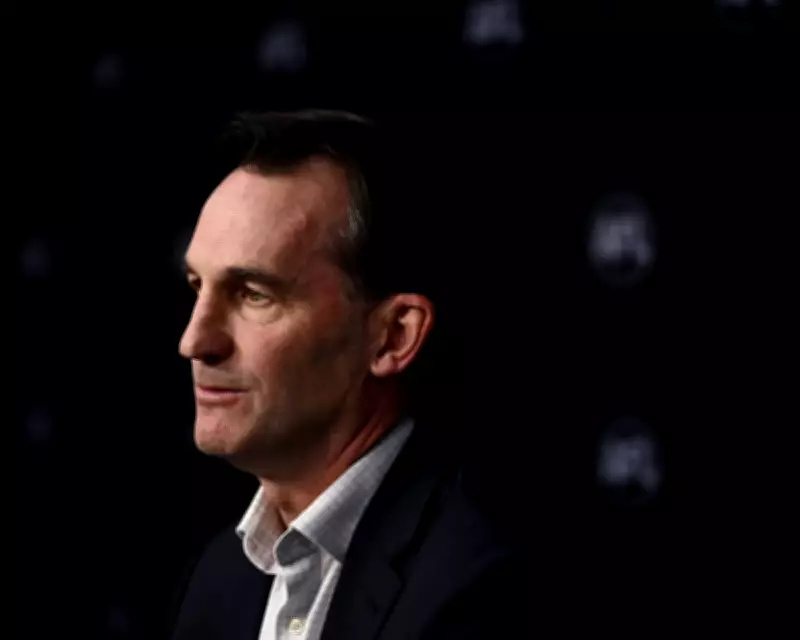
AFL chief executive Andrew Dillon has demonstrated competence in many aspects of his role, but his ability to communicate authentically and persuasively in public forums is increasingly under the microscope. In an era where media presence is paramount, this skill has never been more vital for a sports leader.
The Backroom Operator Turned Frontman
Dillon's journey to the AFL's top job began unexpectedly in the early 2000s when he was spotted by senior administrator Ben Buckley while driving after a game for amateur club Old Xaverians. Buckley recruited him as an in-house counsel, setting Dillon on a path that would see him become a key behind-the-scenes figure for over two decades. Known for resolving disputes, from minor issues to major crises like the Hawthorn racism scandal, Dillon earned respect for his diplomatic approach, often leaving parties feeling positive even after penalties or fines.
Public Speaking Challenges
Recently, Dillon's media appearances have highlighted his communication style. During rounds on major radio stations, his responses to pressing issues were often wooden and equivocal. For instance, on competition unevenness, he stated, "Look, I think it's something you keep an eye on." Regarding cost-of-living pressures affecting fan attendance, he said, "It's a really good question and it's something we are acutely aware of." These answers, while not disastrous, reflect a scripted and unsatisfactory approach that contrasts sharply with his predecessor, Gillon McLachlan, who was praised for his charm and ability to deflect criticism effortlessly.

Comparing Leadership Styles
McLachlan, a natural frontman, could banter with comedians on shows like The Front Bar and handle tough questions with ease, making him a potential candidate for politics or corporate leadership. Dillon, however, lacks this charisma and often relies on talking points, which can undermine public trust. While his commercial acumen, delegation skills, and love for the sport are undisputed, his failure to engage authentically in nuanced conversations on topics like homophobia, terrorism, and grand final scheduling is a significant weakness.
The Broader Implications
The AFL faces not only football-related issues such as fixturing and equalisation but also societal concerns where leadership requires decisive and thoughtful communication. Dillon's tendency to cite metrics like crowds, ratings, and finances, though indicative of business success, does little to address the angst among stakeholders. In today's media landscape, authentic persuasion is essential, and Dillon's struggles in this area could hinder the league's ability to navigate complex challenges effectively.
Ultimately, while Andrew Dillon excels in many operational facets of the AFL, his public communication remains a critical area for improvement, impacting his effectiveness as the face of Australian rules football.






