

England Rugby Star Abi Burton's Remarkable Comeback from Brain Inflammation
Two-time Olympian and tenacious England rugby player Abi Burton has courageously revealed how a life-threatening diagnosis of autoimmune NMDA receptor encephalitis and a subsequent medically induced coma profoundly reshaped her outlook on life. The 26-year-old from West Yorkshire, who made an astonishing return to international rugby, described the entire ordeal as deeply traumatic.
A Sudden and Mysterious Onset
Burton was diagnosed and treated for the rare autoimmune condition at just 22 years old. She had never even heard of encephalitis before her diagnosis. In the months following the high of her first Olympics in Tokyo 2021, her family began noticing concerning changes in her behaviour and mood.
"Initially, a lot of people put it down to the fact that I’d been injured... but I actually felt confident in my own rugby-playing ability. It was more that I just felt like deep sadness, and I couldn’t put my finger on why I felt like that," said the back-row forward, who now plays for Trailfinders Women and the England Red Roses.

During this troubling period, Burton described losing her usual vibrant spark and was prescribed antidepressants. "I was always one of the loudest people in the room, but I just I didn’t want to spend time with anybody," she recalled.
Escalation to a Terrifying Crisis
Her memories from May to September 2022 remain incredibly hazy. Her family has recounted a terrifying escalation in her behaviour, which progressed from profound sadness to outright aggression. "My mum said during this time I ran around the house unclothed, punched her in the face and ripped the spindles off the stairway," Burton revealed.
Despite having no personal recollection of these events, she has battled with lingering guilt over the immense distress caused to her loved ones. Given the timing after the Olympics and upcoming major tournaments, the initial assumption was a severe mental health crisis. "The phrase ‘stress-induced psychosis’ was thrown around a lot," she added.
Diagnosis and Drastic Treatment
Following multiple seizures and further alarming behaviour, Burton was admitted to the psychiatric unit at Fieldhead Hospital in Wakefield. It was there that a crucial blood test finally confirmed the correct diagnosis: autoimmune NMDA receptor encephalitis.
Dr Ava Easton MBE, chief executive of Encephalitis International, explained the condition: "Encephalitis simply means inflammation of the brain and this can be caused in one of two ways. The first way is through infection... the second way is through a person’s own immune system going rogue and attacking the brain in error."
Burton's extreme, aggressive agitation initially prevented doctors from treating her, leading to the drastic measure of a medically induced coma. She eventually received Rituximab, a second-line immunotherapy, after numerous plasma exchanges proved ineffective.
The Long Road to Recovery and Rugby
"I still have some things that I struggle with, such as my memory and fatigue, but ultimately, I don’t have any lasting physical damages – which I know some people aren’t so lucky in that area – so I feel privileged and lucky," she reflected on her recovery.
Her lifelong passion for rugby, unwavering family support, and sheer stubbornness were the crucial pillars of her remarkable return to the international stage, culminating in her representing England at the Paris Olympic Games in 2024.
"The doctors said to me they weren’t sure if I’d ever be able to rugby play again, but one thing about me is that I’m stubborn," Burton stated. "I just had the attitude of ‘let’s just go at it’." She recalled doing bicep curls with dumbbells in the physio room shortly after treatment, surprising the medical staff who nonetheless didn't stop her determined efforts.
A New Perspective and Advocacy
The traumatic events have granted Burton a profound new perspective on life and sport. "If I wasn’t selected for the Tokyo Olympics, that would have crushed me. But after everything that happened afterwards, I remember that when it got to the Paris Olympics in 2024, I just thought, I don’t get selected, it’s OK," she explained.

"I’m still competitive, don’t get me wrong, but I also now know that selection doesn’t define me. It’s not the be-all and end-all."
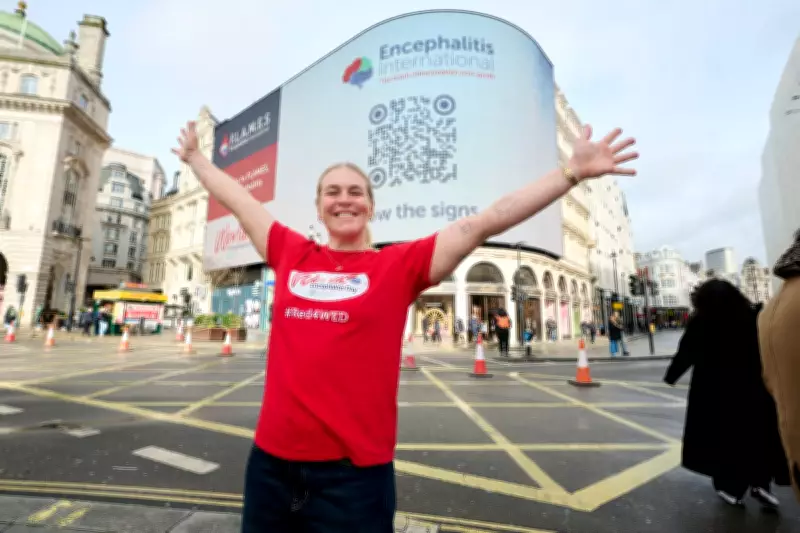
Given that encephalitis is often misdiagnosed, Burton has now joined prominent figures like former Olympic swimmer Rebecca Adlington and Strictly Come Dancing finalist George Clarke to support Encephalitis International’s new F.L.A.M.E.S campaign. This acronym stands for:
- Flu-like symptoms
- Loss of consciousness
- Acute headaches
- Memory problems
- Emotional or behavioural changes
- Seizures
The campaign is designed to help the public recognise these early warning signs. "Of course lots of people experience these symptoms in isolation, but collectively when these symptoms came together this might suggest there’s something neurological going on and indicate that people should seek urgent medical attention," Dr Easton highlighted.
Burton concluded with a powerful message born from her experience: "The way that I look at life now is you can’t take anything for granted. You never know which game is going to be your last, so you’ve got to go out and enjoy the moment for what it is."





