Twenty English strategic authorities have been given powers to impose a tax on overnight stays, a move that could raise tens of millions of pounds for local public services but has sparked backlash from the tourism industry.
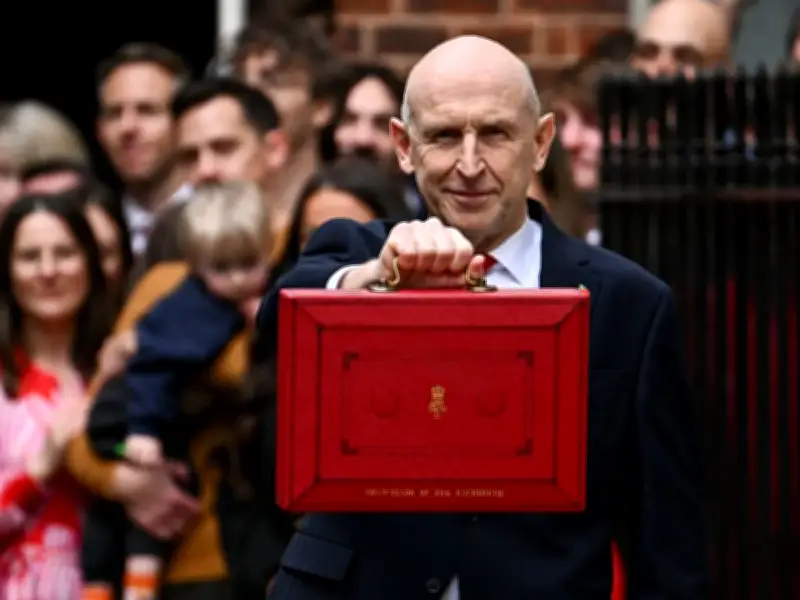
Chancellor of the Exchequer John Healey announced the measure in the first Budget from Prime Minister Andy Burnham's government. Healey told MPs: "From 2028, mayors and other strategic authorities will have new powers to introduce an overnight visitors levy."
Which areas could introduce a tourist tax?
The levy would be available to 'mayors and other strategic authorities', meaning the rule could come into force in all 20 of England's strategic authorities, 14 of which have a directly elected mayor.
The list of areas includes Cambridgeshire and Peterborough, Cheshire and Warrington, Cumbria, Devon and Torbay, East Midlands, Greater Lincolnshire, Greater London, Greater Manchester, Hampshire and the Solent, Hull and East Yorkshire, Lancashire, Liverpool City Region, North East, South Yorkshire, Sussex and Brighton, Tees Valley, West Midlands, West of England, West Yorkshire, and York and North Yorkshire.
How does a tourist tax work?
Local leaders will be allowed to apply the levy as a percentage on the cost of hotels, bed and breakfasts and other types of accommodation. Holidaymakers would be charged a percentage of their bill rather than a flat fee, to shield tourists staying in budget hotels from paying the same rate as luxury guests.
Local leaders will have flexibility to offer exemptions, such as for campsites, and temporary accommodation, shelters or refuges would not be included. They will also be free to set the rate, which has no upper limit, but it is understood that Labour's metro mayors have agreed it won't exceed five per cent. Revenue will be funnelled directly to local areas rather than the Treasury, and could go towards public services, transport and investment in promoting culture and tourism.
The levy is part of a package of measures in the Budget to devolve tax revenues, as Healey told MPs the levy would sit alongside the transfer of business rates and income tax receipts to mayors. These moves could provide long-term methods of funding local infrastructure, so that "more of the money that is raised locally can be invested and spent locally".
Where are tourist taxes in place already?
Manchester became the first city in the UK to launch a tourist tax via the city's Accommodation Business Improvement District. A £1 per room, per night fee was introduced in April 2023 to pay for measures aimed at attracting more visitors. Around £2.8m was raised in its first year, and Liverpool then began to follow a similar model.
A five per cent overnight levy was also introduced in Edinburgh this summer for the first five nights of a stay, applying to everything from hotels and B&Bs to self-catering apartments and hostels. In London, officials are yet to make a decision on how the scheme will work, but the charge will be no higher than five per cent. Analysis earlier this year suggested a three per cent tourist tax on overnight visitors to the capital could raise more than £350m-a-year.
The move, which is not expected to come into force before 2028, would bring England in line with popular holiday destinations in Europe like Rome, Barcelona and Paris, as well as the US and Canada.
What is the debate?
The levy could boost threadbare council finances by millions of pounds, but industry chiefs, who have been lobbying heavily against the move and claiming it will further dent demand, have slammed it. Downing Street has insisted the "overwhelming majority" of hospitality firms would not be directly affected, as the charge only applies to overnight stays and would be at the discretion of mayors and strategic authorities.
Meanwhile, the Local Government Association has warned councils in England are facing a £7 billion funding gap within three years, more than what councils spend on roads, transport, homelessness and housing services combined.
Steve Rotheram, Mayor of Liverpool City Region, said a modest levy could generate £18 million-a-year that could be poured back into his area. "We're going to try and judge it so that it's not an impediment to people," he told The Mirror in September. "Within the overall cost of a weekend stay, the additional few quid that comes our way would pale into insignificance in the greater scheme of things. It'll be the price probably of a coffee or something like that."
He added: "It means that when we get huge visitor numbers - and we have - then the infrastructure needs to be kept upgraded. So we want to have clean streets for when people come. We want to have a brilliant transport system for when people come. We want to have more visitor offers, so more attractions and all of that, and that's part of it."
But industry bosses have warned it could put off visitors and hammer hospitality and tourism businesses. UKHospitality said estimates suggest it could cost 33,000 jobs and increase tax for holidaymakers by £1.6 billion.
Jon Hendry-Pickup, boss of Butlin's, warned it would "no doubt" impact the investment plans for its sites. "It is a tax on UK holidaymakers," he told The Mirror last month, predicting it would harm local communities in which tourism is the main source of income. "There has been no reflection of all the things we have told government throughout this process," he added. "The mayors can do whatever they want. This is a tricky situation for us because we have different mayors across the country so they can have different levies. That means more red tape and the complexity will be huge."
Business travel leaders have also argued that their industry should be exempt, saying those who travel as part of their employment are not tourists.