

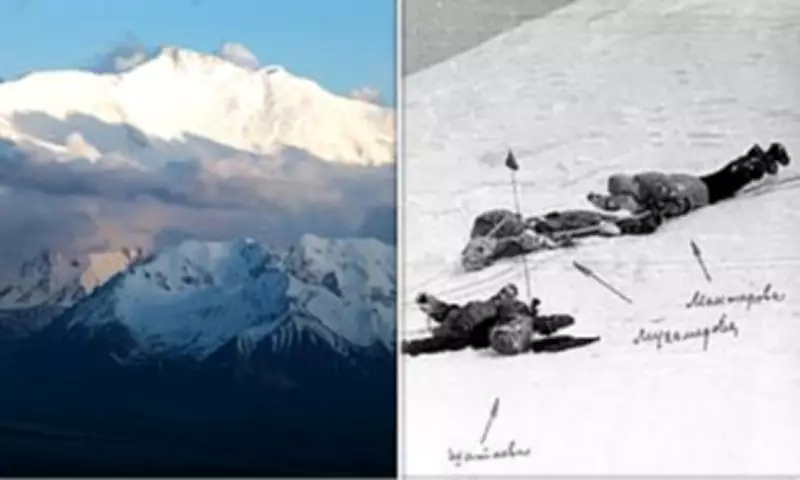
The 1974 Lenin Peak Tragedy: Eight Russian Women's Final Ascent
"Now we are two. And now we will all die. We are very sorry. We tried but we could not… Please forgive us. We love you. Goodbye."
These were the last recorded words of Galina Perekhodyuk, delivered in barely-audible gasps over a radio receiver at the summit of Lenin Peak during a subfreezing blizzard in August 1974. She was one of eight Russian women who died during their descent from the 7,000-meter peak on the border of what are now Tajikistan and Kyrgyzstan.
An Ambitious All-Female Expedition
The group, led by 36-year-old Elvira Shatayeva, was participating in an international climbing camp involving hundreds of mountaineers from Germany, Austria, Italy, the Netherlands, Switzerland, Japan, and the United States. This marked the first time a major American expedition had been granted access to the Soviet Union.

Shatayeva, a steely-eyed professional athlete and celebrated Russian mountaineer, had assembled a squad of seasoned climbers—four of whom had previously scaled Lenin Peak—to combat prejudice against women in alpine sports. She held the unique ambition of conquering the mountain by climbing from the eastern side and descending via its western ridge, aiming for her crew to complete the peak's first-ever traverse.
From left to right: Tatyana Bardashova, Nina Vasilyeva, Irina Lyubimtseva, Lyudmila Manzharova, Ilsiyar Mukhamedova, Galina Perekhodyuk, Valentina Fateeva, Elvira Shatayeva.
Degrees of Difficulty
Lenin Peak, while not considered especially technical, is towering and subject to extreme weather conditions, with sections of steep ice on the Lipkin route the women were attempting. The 1974 summer season had already been plagued by tragedy before their ascent, with five climbers—including three Estonians, a Swiss photographer, and an American pilot—having perished in the unusually cold conditions.
Christopher Wren, a climber and Moscow correspondent for the New York Times who participated in the American expedition, first met Shatayeva at base camp in mid-July. He later described her in his book The End of the Line as "a striking blonde with high cheekbones and cat-like blue eyes" who possessed a "steel core" beneath her facade.
The Fateful Climb
After leaving base camp on July 30, the women's progress initially seemed excellent. On August 2, Shatayeva radioed her husband Vladimir at base camp with the message: "Everything so far is so good that we're disappointed in the route."
However, in a grim twist of fate, Shatayeva's decision to order her team to take a rest day on August 3—while three squads of Soviet men were fast approaching—may have contributed to the eventual disaster. Vladimir later speculated in his memoir Degrees of Difficulty that the women might have been "trying to break loose from the guardianship" of male climbers.
Had they reached the summit one day earlier as planned, they would have been lower on the mountain when the catastrophic storm hit.
The Storm Approaches
On August 3, weather conditions began deteriorating. An American climber reported "cloudy weather" and "route-finding problems" in whiteout conditions. The following day, British biomedical scientist Richard Alan North encountered the women about 400 feet below the summit, noting they were "moving slowly up but in high spirit."
Organizers began sending urgent warnings: "A storm is predicted. Do not try to climb." However, not all mountaineers received this message.
The Soviet women's team reached the summit late afternoon on August 5, weighed down by carrying full loads of equipment. At 5 PM, they radioed base camp with growing concerns about deteriorating visibility preventing them from seeing their descent route. In response to the whiteout, they decided to set up tents and wait for conditions to improve.
Equipment Disparity and Deteriorating Conditions
While the American climbers had nylon tents with zippers and aluminum poles, the Russian women had only cotton tents with toggle closures and wooden poles that bent and deformed in the violent winds. Wren recorded in his journal: "The wind builds to such force that one morning before dawn it snaps the aluminum tent pole."

On August 6, violent gusts reached 80 mph, with five inches of snow at base camp and a foot higher up the mountain. Shatayeva reported increasingly alarming news: zero visibility, and two teammates ill with one deteriorating rapidly.
Base camp instructed them to descend immediately, but they managed only a few hundred feet. When told they might need to leave the very sick woman behind to save themselves, Shatayeva responded defiantly: "We cannot, we would not leave our comrades after all they have done for us."
The Final Hours
Unable to dig caves in the firm, granular snow, the remaining women managed to erect two tents on a ridge several hundred feet below the summit. Soon, hurricane-force winds pummeled them, exploding the tents and blowing away their rucksacks, stoves, and warm clothes.
Four Japanese climbers at 6,500 meters received panicked transmissions in Russian and attempted to help, but strong gusts blew them off their feet and forced them back.
Robert 'Bob' Craig, deputy leader for the American team, recorded the women's final correspondences on August 7. At 8 AM, Shatayeva reported: "Three more are sick; now there are only two of us who are functioning, and we are getting weaker."
By midday, she radioed: "They are all gone now. That last asked: 'When will we see the flowers again?' [Two] others earlier asked about [their] children. Now it is no use."
At 3:30 PM, a distraught voice accepted defeat: "We are sorry, we have failed you. We tried so hard. Now we are so cold."
By 5 PM, rough winds had reached 100 mph with temperatures sinking to -40°C. There was no hope of rescue.
The Final Transmission
An hour and a half later, Shatayeva uttered her last recorded words: "Another has died. We cannot go through another night. I do not have the strength to hold down the transmitter button."
At 8:30 PM, base camp heard another woman's voice, believed to be Galina Perekhodyuk, the last survivor: "Now we are two. And now we will all die. We are very sorry. We tried but we could not… Please forgive us. We love you. Goodbye."
Discovery and Aftermath
The women's bodies were discovered inadvertently by Japanese and American climbers who had weathered the storm in camps little more than 1,000 feet below the peak. They stumbled upon Shatayeva's body lying still in the snow in the sunlight.
Wren wrote in his journal: "With a chill of recognition, I know it is Elvira Shatayeva, the women's team leader with whom I sat and talked one evening several weeks earlier." He described finding the other women "frozen in desperate acts of escape," still wearing their parkas, goggles, and crampons on their icy boots.
Vladimir Shatayev was tasked with identifying the bodies and initially wanted to bury his wife in Moscow, but later decided she should be laid to rest with four other teammates at the Edelweiss meadow at the foot of Lenin Peak.
Arlene Blum, a biophysical chemist and environmentalist from Berkeley who participated in the climb, commented in her memoir Breaking Trail: "The women were so very loyal to each other. They stayed together until the end."
A Soviet climber later told Wren with confidence: "They died because of the weather, not because they were women." The 1974 Lenin Peak tragedy remains one of mountaineering's most heartbreaking stories of ambition, loyalty, and fatal weather conditions.





