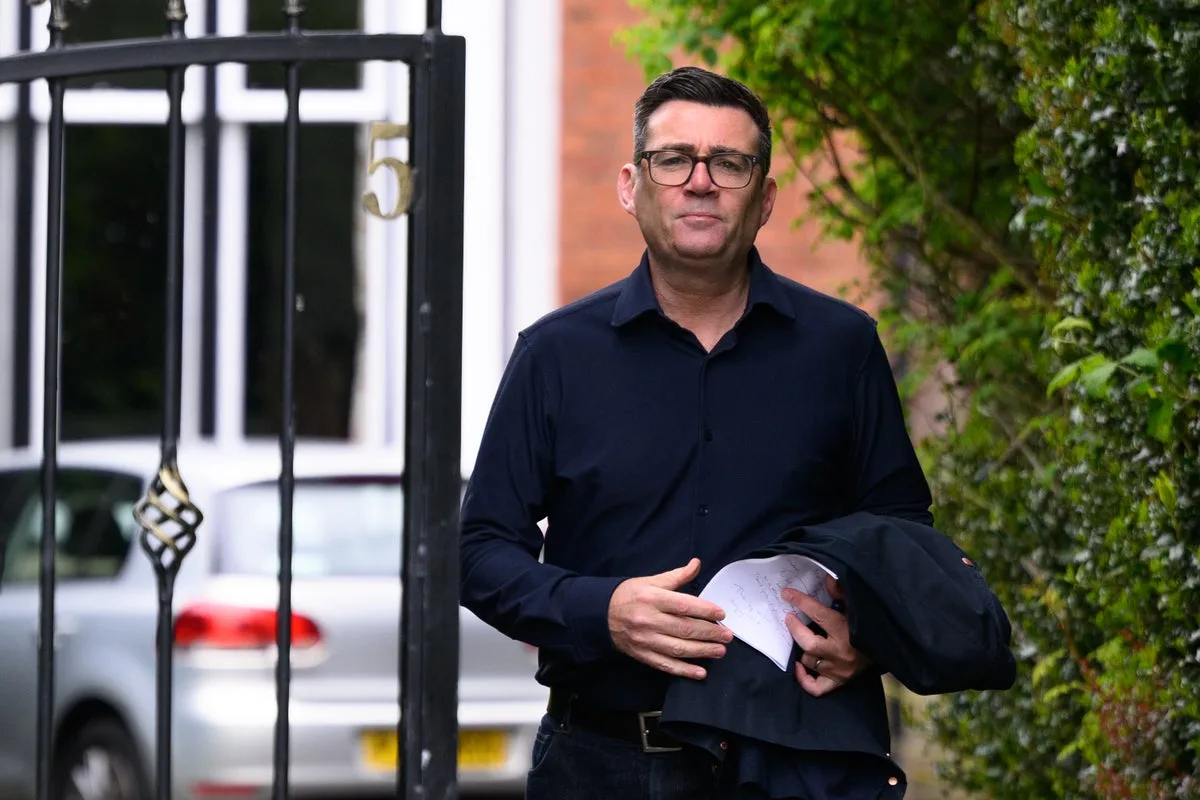
Who would want to be Andy Burnham’s chancellor? Given the Labour candidate for Makerfield’s penchant for blue-sky thinking on public spending, it matters greatly who he would pick to look after the cost of borrowing and keeping the markets happy, says John Rentoul.
Burnham's Fiscal Pledge
It seems that an Andy Burnham government would be in hock to the bond markets after all. Yesterday, he swore allegiance to Rachel Reeves’s existing fiscal rules, and in full. His spokesperson confirmed that any blue-sky thinking about borrowing off the books for defence is now for the birds. At the same time, Burnham – now confirmed as the Labour by-election candidate – repeated his line that Britain has been on the “wrong path” for 40 years, pursuing an economic model that has failed to deliver for places such as Makerfield.
The Chancellor Question
It therefore matters greatly who will be chancellor in a Burnham government: who will be charged with resolving the challenge of changing everything while keeping the markets happy? The question is naturally brushed off as premature by Burnham’s people, although they are quite happy to feature vox pops with voters saying that he should be prime minister, doing for the country what he has done for Manchester, in a video for a by-election. We do not know what deals have been done in Burnham’s publicised meetings with Angela Rayner, but we suspect that the Treasury was not on offer. Rayner has spent some of her enforced absence from government talking to City people and impressing them by exceeding their low expectations, but underpaying tax is not an obvious qualification for a chancellor. She is likely to come back to a big job, but not that one.
Market Reassurance
The overriding consideration ought to be to reassure the markets. We have seen how they responded to the uncertainty surrounding Keir Starmer’s premiership, pushing up the cost of borrowing. The first aim of appointing a chancellor will be to get that cost down again. Which means that Ed Miliband should be off the list. He may think that the mantle of Gordon Brown’s Treasury qualifies him for the post, but his record as energy secretary alone ought to contradict him. The economics of energy and of carbon reduction is complex, but he has ended up in a situation where he accepts that Britain will need oil and gas for decades to come, yet he would prefer to import it than increase North Sea production.
Keeping Reeves?
What about going to the other extreme, and giving the markets the stability they crave by keeping Rachel Reeves in 11 Downing Street? However unpopular she is with the voters, she has some credibility with the markets – indeed, part of her unpopularity is because she is prepared to stand against demands from her party for even higher public spending. She hasn’t done it well, and she has given in to pressure from the prime minister to restore most of the pensioners’ winter fuel payment, allow disability spending to continue to rise and restore benefits to larger families. And she may have put up the wrong taxes, but she has refused to budge on the fiscal rules that keep borrowing under control.
Andy Burnham says Britain’s economy has been on 'the wrong path for 40 years' (Getty). All the same, for a new prime minister trying to present himself as “change” and “the end of neoliberalism”, keeping the same chancellor would be too obvious an admission that he was offering pie in the sky. Besides, Reeves has no base in the party. For her, it is likely to be thank you and good night.
Other Candidates
Who else, then? Once upon a time – in the middle of last week, perhaps – Wes Streeting would have had a good claim. On the so-called right of the party, his instinct is that taxes, borrowing and public spending are all too high and should be reduced. But his stock in the party has fallen to UK Eurovision entry levels, according to yesterday’s YouGov poll of Labour members. Perhaps, given that the NHS is showing early signs of recovery, he should be asked to return to that difficult task. And it cannot be Yvette Cooper, because her husband Ed Balls would immediately if unfairly be dubbed the real chancellor – even if his views on devolution are a good fit with Burnham’s.
In my view, the best candidates would be Pat McFadden, the work and pensions secretary, or Shabana Mahmood, the home secretary. Either would reassure the buyers of gilts that the national finances were in safe hands. McFadden is not a flashy politician, and he is not close to Burnham, but he is a team player and a solid media performer. Mahmood has fewer economics credentials, although she, like McFadden, has been shadow chief secretary to the Treasury. But she is needed at the Home Office to hold a strong line on immigration.
Anyone talking about “the end of neoliberalism” either doesn’t understand economics or is trying to appeal to people who don’t understand economics. We must hope Burnham is in the second category. If he wins in Makerfield, his choice of chancellor will be the test.