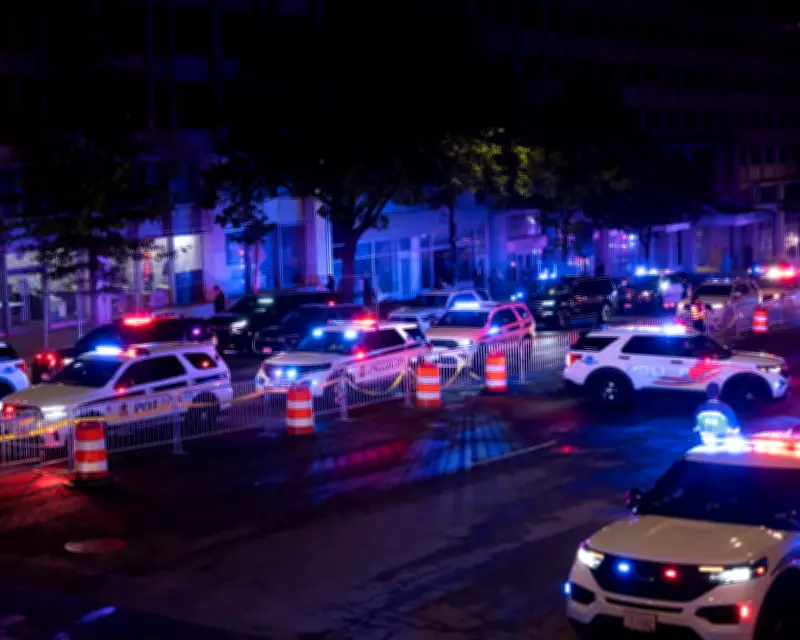
Law enforcement surrounded the Washington Hilton hotel after shots were fired near the White House correspondents' dinner on 25 April. The event, intended to celebrate press freedom, instead ended in chaos, mirroring a pattern of gun violence that has become all too common in the United States.
A Night of Celebration Turns to Fear
Ahead of this year's White House correspondents' dinner, discussions focused on the role of the media and freedom of the press as journalists prepared to dine with the president. However, instead of a speech filled with sharp critiques of the media, the evening concluded with gunfire. A man was apprehended at the Washington Hilton, the same hotel where President Ronald Reagan was shot in 1981. The shooter was located outside the ballroom housing the president, cabinet officials, and thousands of media personnel. Donald Trump described the suspect as a "lone" gunman, though details regarding his identity and motives remain unclear.
Political Violence as a Staple of American Life
Trump has been the target of two prior assassination attempts, including one in Butler, Pennsylvania, where a man attending a Trump rally was killed. Right-wing commentator Charlie Kirk was killed while speaking at a Utah university event. Democratic state lawmaker Melissa Hortman and her husband were killed in a political assassination at their Minnesota home. Elected officials frequently report threats against their lives, and more states have passed laws allowing officials to use campaign funds for security, reflecting the rise in targeted violence.

Shortly after gunshots were heard on Saturday night, journalists and their guests overturned chairs and hid under tables in their formal attire, frantically asking each other what had happened and calling loved ones. The Secret Service and security evacuated the president and top officials, while some attendees remained inside the ballroom. Initially, the correspondents' association intended to continue the event, but the notion of resuming festivities after a shooting underscored the normalization of gun violence in American life.
"Every few months, Americans are asked to resume their banquet and pretend a shooting didn't just happen," one commentator on Bluesky wrote. Another responded, "Well, in fairness, that's what we ask of school kids." Eventually, the dinner was canceled and rescheduled. The president held a press conference to share minimal details and vowed to hold a makeup event that would not be as critical of the media as originally planned.
When asked about the rise in political violence, Trump remarked, "It's a dangerous profession," referring to being a politician. He claimed the job of president is statistically more dangerous than being a racecar driver or bullfighter. "If Marco would have told me, maybe I wouldn't have run," he said, referencing Secretary of State Marco Rubio.
"It is a bit surprising because this is supposed to be the most secure place in Washington DC with cabinet members, president, vice-president, everybody here," said Marcin Wrona, a US correspondent for TVN Poland who was near the incident. "Yes, there are tensions. Yes, we had attempts on President Trump's life in Butler, Pennsylvania, in Florida. Am I very surprised? Unfortunately not."
The fact that political violence has become a feature, rather than an anomaly, of American life resonated on a night dedicated to celebrating press freedom.