Walking the Weavers' Path: Lancashire's 1826 Uprising Remembered
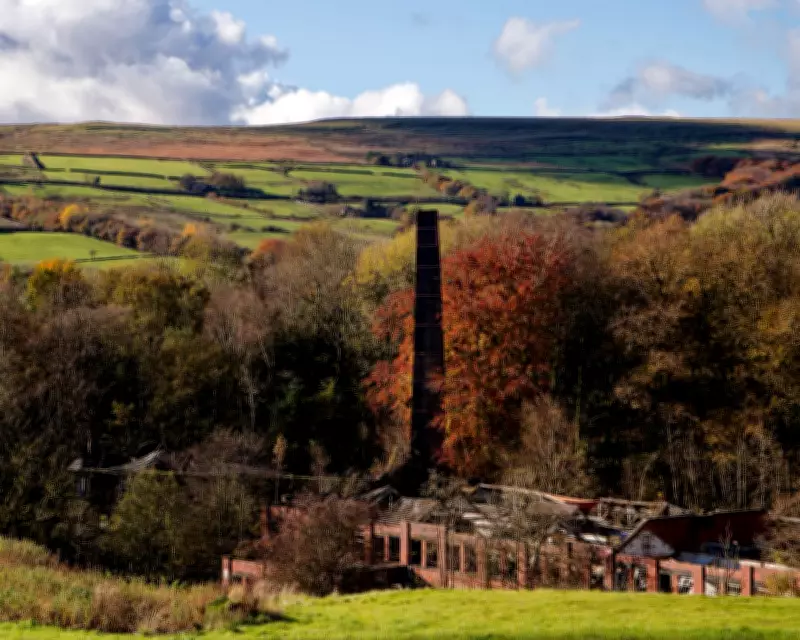
Nestled in the valley of the Dearden Brook, Lancashire, the chimney of Edenwood mill ruins stands as a silent sentinel to a turbulent past. This evocative scene, captured by photographer Martin Moss, sets the stage for a journey back in time to the Lancashire weavers' uprising of 1826. Two centuries later, former mill towns in the West Pennine Moors are telling the story of a workers' rebellion against power looms, the new machines that decimated their livelihoods and sparked a desperate struggle for survival.
The Historical Chasm at Whinney Hill
At the top of Whinney Hill, a massive hole in the ground marks a shale quarry that once supplied raw materials for Accrington's famous Nori brickworks, used in iconic structures like the Empire State Building and Blackpool Tower. This unprepossessing spot on the edge of the West Pennine Moors holds a chasm in history. On the morning of 24 April 1826, about 1,000 weavers gathered here to plan their day, assessing the land and weather before setting off on a mission born of desperation.
A banking crisis in December 1825, dubbed the Panic of 1825 by historians, had hammered the cotton industry. Lancashire's weavers, already suffering years of declining wages and living standards, faced destitution and even starvation. In response, they decided to carry out large-scale breakages of power looms, sending a symbolic message to their employers and the government. On that fateful April day, the first of four days of action, they split into groups to walk many miles to Clitheroe, Oswaldtwistle, and Blackburn. These mill towns were met by soldiers, cavalry, and yeomanry armed with guns and swords. By the end of their protest marches, at least six people had lost their lives.

Retracing the Routes with Local Guides
The views from Whinney Hill, once past the fencing around the old quarry now used as a landfill, are extensive, especially on a pin-sharp winter's day. Local guide and historian Nick Burton, who is leading this year's remembrance walks for the Weavers Uprising Bicentennial Committee (WUBC) charity, accompanied a recent reconnaissance of one of the weavers' walks. Eight guided walks, taking place across Lancashire between March and August, will follow the routes used by the 1826 protesters as closely as possible.
From the hilltop, one can make out the moorlands around Darwen to the south, Burnley to the east, and Pendle Hill in the north. Below, Accrington Stanley's Wham Stadium features a terrace named after Whinney Hill. Opting for the Clitheroe route, the journey began on the old turnpike road, now the A680, dotted with Victorian and earlier properties. Mill Lanes, once access points to workplaces now turned into housing estates, and Moor Lanes were plentiful along the way.
The route passed through Clayton-le-Moors, known for its fell running team once presided over by the legendary Ron Hill, and Great Harwood, another textile hub and birthplace of printing and dyeing innovator John Mercer. Things turned greener around the Grade II-listed Martholme railway viaduct, where the River Calder meanders wildly as it approaches the River Ribble. Following what was probably an old limers way, used by traders to carry lime, the path climbed to a shoulder of the Nab, a prominent, wooded hill above Whalley, with its stirring Cistercian abbey ruins and Lancashire's longest viaduct.
Art and Memory in the Whitaker Museum
A second walk, a week later on a colder, crisper day, started and finished at blue plaque sites in Haslingden, heading south. The first plaque, on the former New Inn, recorded that on 25 April 1826, handloom weavers were arrested for destroying 100 power looms in nearby Helmshore. Charged with riot, they were released when an angry crowd protested, though some were transported to Australia for life. A bystander named Mary Hindle was sentenced to death, later commuted to transportation.

This route, taken by the weavers on the third day of the uprising, passed pitstops for coffee and culture, including the Whitaker museum and art gallery. Its social history collection features a painted panel capturing the moment handloom weavers smashed power looms in the Whitehead family's mill in Rawtenstall, destroying 96 looms in just half an hour. A new commemorative WUBC banner, Rise Up!, by textile artist James Fox, is on display. On 16 April, a newly commissioned sound and film installation by Blackburn-based artist Jamie Holman, responding to the original painting, will be unveiled.
From the gallery windows, Hardman's Mill, with its 49-metre high chimney postdating the uprising, is visible. Before it was bought by self-made textile magnate Richard Whitaker, the grand mansion containing the museum was the home of George Hardman, who reportedly liked to see the mill from the windows. The weavers also took action at Hoyle and Ashworth's Mill at New Hall Hey and Longholme Mill, a site now occupied by an Asda.
Traces of the Past in Modern Landscapes
Many of east Lancashire's textile buildings have been razed, but traces of foundations or old walls remain in some places, with repurposed mills used as offices or carpet shops. Wherever a big supermarket stands, checking old Ordnance Survey maps on the National Library of Scotland website often reveals that a supermill once occupied the site. In Rawtenstall, the walk passed Mr Fitzpatrick's temperance bar and Old Man Greenwood's vintage chippy, serving splits and babby's yeds since 1932.
After passing the terminus for the East Lancashire heritage railway and through a small industrial estate, the path ran along the River Irwell, peaceful and pastoral with herons, mallards, and songbirds, all enhanced by an all-day frost. At the border with Greater Manchester, on Plunge Road, the woodland beside Dearden Brook revealed crumbling stone walls of a mill, draped in undergrowth like Angkor Wat. From Edenfield, distant views over the valley to Musbury Tor, a miniature Pendle Hill, stood out amid the moortops.
The Chatterton Massacre: A Tragic Legacy
A hard-to-read small blue plaque in Chatterton, bearing the specious title The Chatterton Fight, informs passersby that handloom weavers were fired on by soldiers of the 60th Foot. Four men and one woman were killed, with a fifth man, an onlooker, later shot dead. The local magistrate, William Grant, had read the Riot Act, giving a green light to the violence. Soldiers fired 600 bullets into a crowd of 3,000 people over 15 minutes. Actor Maxine Peake has read their names aloud on behalf of the WUBC, honouring their memory.
Lancashire historians believe the significance of the April 1826 rising and the Chatterton Massacre have been unjustly overlooked. These events, brave and tragic, form a historical bridge between the Luddite risings, Peterloo, and Chartism. In the heartfelt words of Dr David Gordon Scott, founder and chair of the WUBC, who began organising remembrance walks in 2022, walking in the protesters' footsteps deepens our understanding and empathy with those who risked their lives 200 years ago to ensure their loved ones had enough to sustain them in the bleakest of times.
For more information on the history of the Weavers' Uprising and details on guided walks, visit the WUBC website. This journey through Lancashire's industrial past offers a poignant reminder of the struggles that shaped the modern world.