

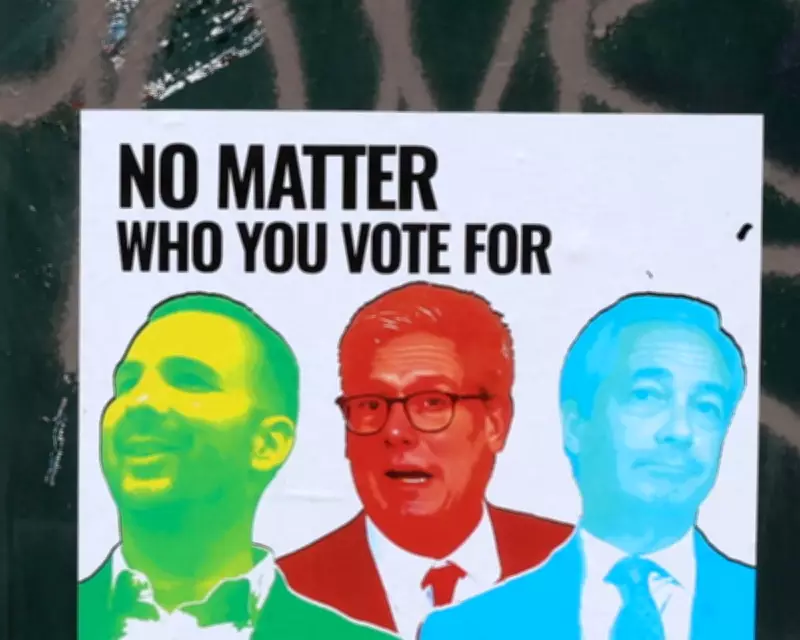
A viral politics game has revealed the difficulty of determining a candidate's party affiliation based solely on their appearance. The game, titled Guess the Party, was created by Sam Hamill-Stewart and quickly spread across Westminster and among party activists on Thursday. It challenges players to examine photographs of local election candidates and correctly identify their political allegiance.
Game Statistics Reveal Guessing Rates
By the time polls closed on Thursday evening, over 3.9 million guesses had been submitted by approximately 134,000 participants. The statistics show significant variation in how easily candidates are identified. Green candidates proved the easiest to guess, with 37.5% of players correctly identifying them. Reform UK candidates followed closely at 35.4%. However, Liberal Democrat candidates were the most challenging, with only 15.2% of players guessing correctly.
Stereotypes and Surprises
Some candidates strongly matched the stereotypes associated with their parties. For instance, Jacky Carr, a freelance theatre producer and artist standing in Broxborne, was correctly identified as a Green candidate by 91.3% of players. Similarly, Alan John Outlaw, standing in Keighley East, was correctly guessed as a Reform UK candidate by 80.7% of players.

Yet many candidates defied expectations. Martin Radbon, the Green Party candidate for Erith, was correctly identified by only 1.7% of players, with most mistakenly believing he was standing for Reform UK. Laura Caroline Harrison, a Conservative candidate, also confused players due to her non-conservative purple hair. Only 2.5% of players correctly identified her as a Tory, while many assumed she was a Green candidate.
Colorful Hair as a Red Herring
The game highlighted the misleading nature of colorful hair. Among the top five candidates incorrectly identified as Greens, four had pink, red, or purple hair but were actually standing for the Conservatives, Labour, or the Liberal Democrats. This phenomenon underscores the unreliability of visual cues in political identification.
The game, which sourced images from Democracy Club, removed profiles with visible party logos to avoid giving away answers. A red tie, for example, could indicate Labour but also serve as a red herring. Overall, the game demonstrates that judging a candidate's political stripe by appearance alone is far from straightforward.






